





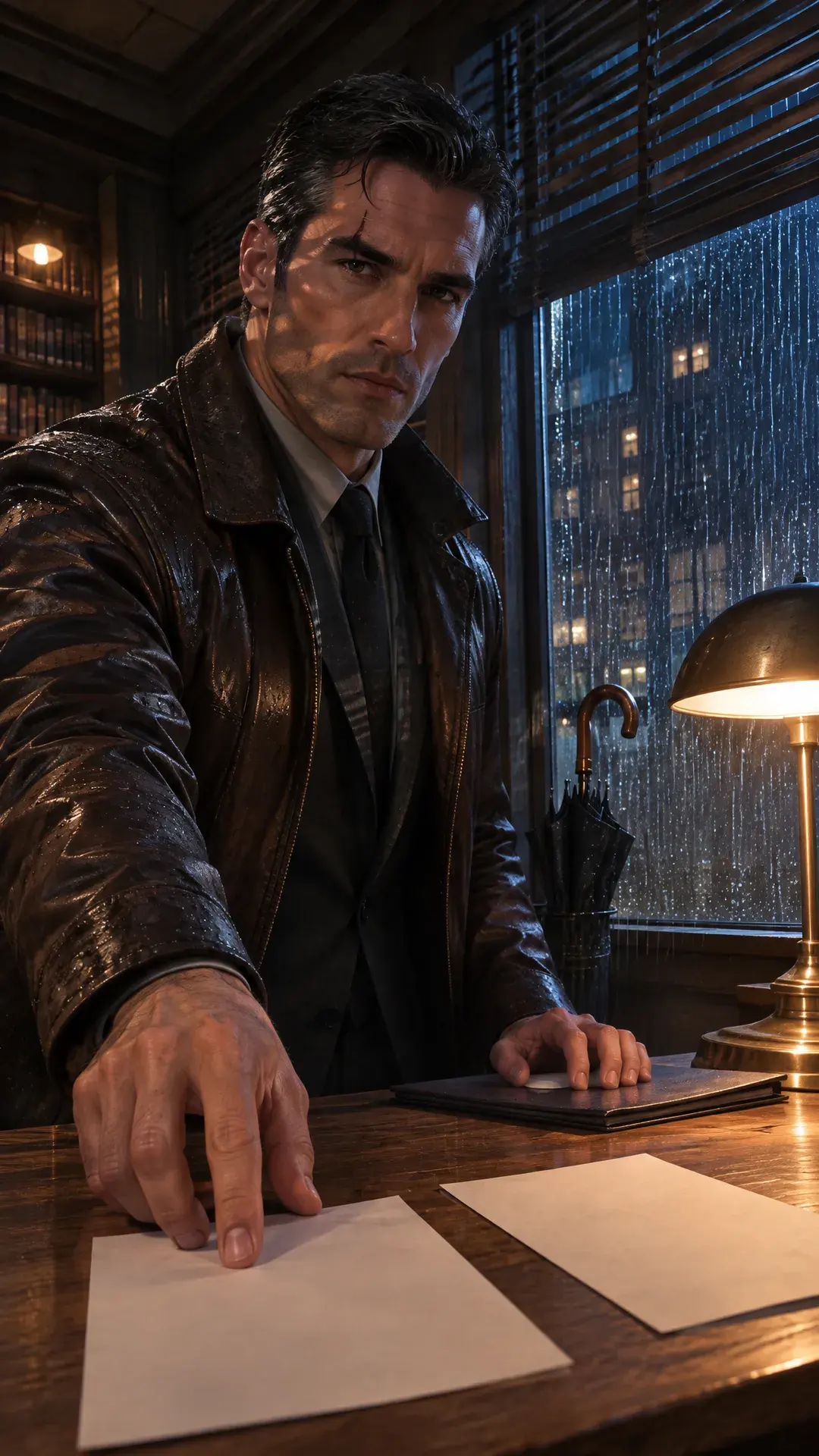
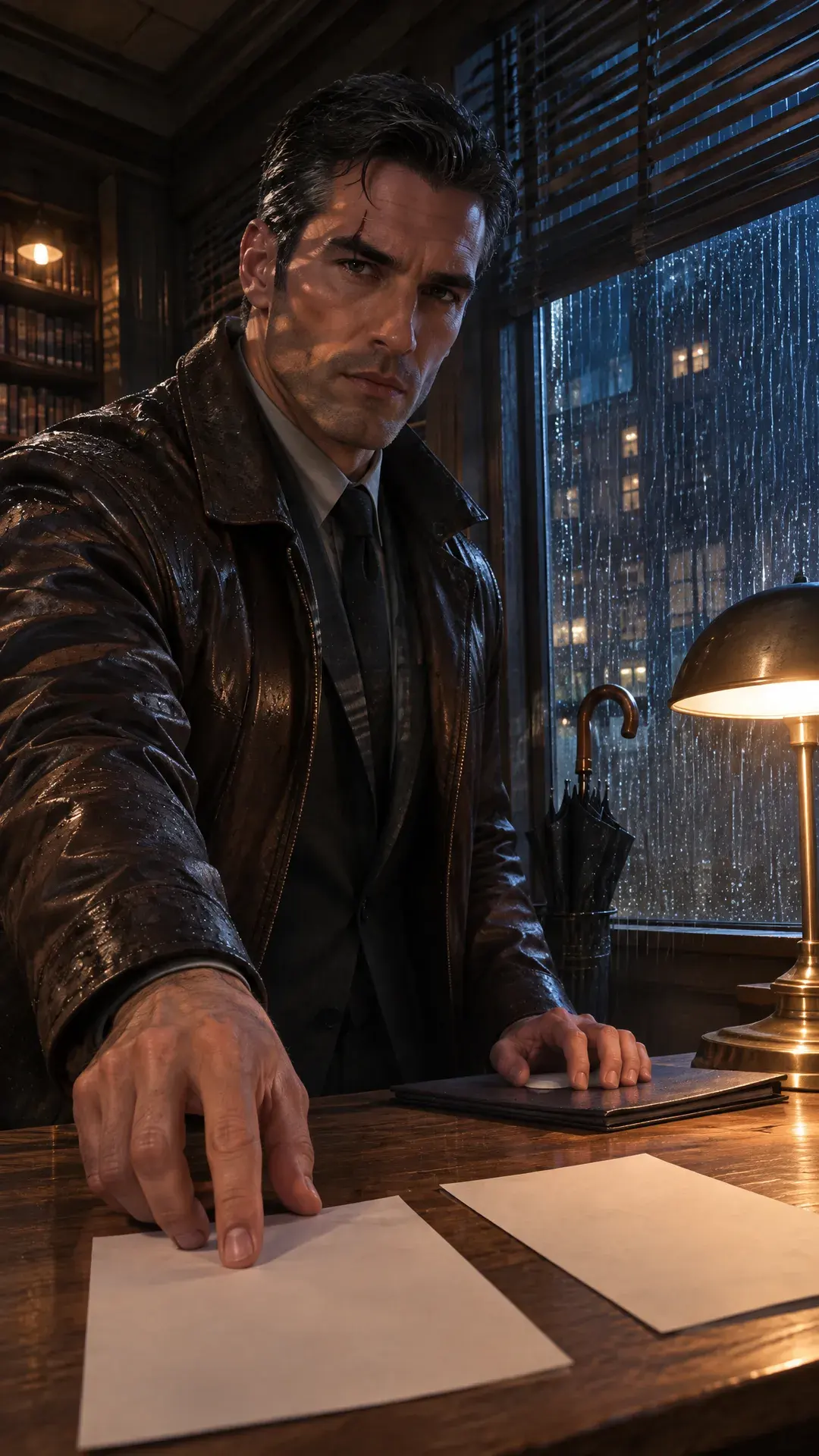



The shop is dark except for the reading lamp by the window. Rain taps the glass. The air smells of paper and old wood, and the floorboards creak under his weight as Anders Mercer steps inside. Water has soaked the shoulders of his coat, but he doesn't seem to notice.
He closes his umbrella with practiced precision, sets it in the stand, and crosses to the counter.
You came,
he says.
He places a folder on the counter, then folds his hands behind his back.
Final offer. Eighty percent over appraised value, relocation costs paid in thirty days, first right of refusal on the ground floor of the new building.
The folder sits between you. This is the fourth time he has asked; the first time he has come in person.
The preservation board's hearing is Thursday,
he says.
My lawyers think they can have it dismissed by Friday.
He turns the folder around.
Because there's a line in your petition I didn't expect. 'The timber frame was constructed by the Harlow family in 1909.'
He pulls a folded paper from his coat.
My grandfather worked this block until 1924. That's her signature in the city archive.
Silence. Rain fills it.
It doesn't change the project,
he says.
I still intend to build. But I've withdrawn the expedited order.
He slides a second paper across the counter.
The hearing goes ahead. Full review, no shortcuts.
I want to see the upstairs floor. The frame, the original beams. If you show me, I'll leave the offer open another week. If you don't want that, tell me now, and I'll leave.
He waits. The two documents lie side by side: the acquisition agreement and the withdrawal notice. Both are unsigned.