




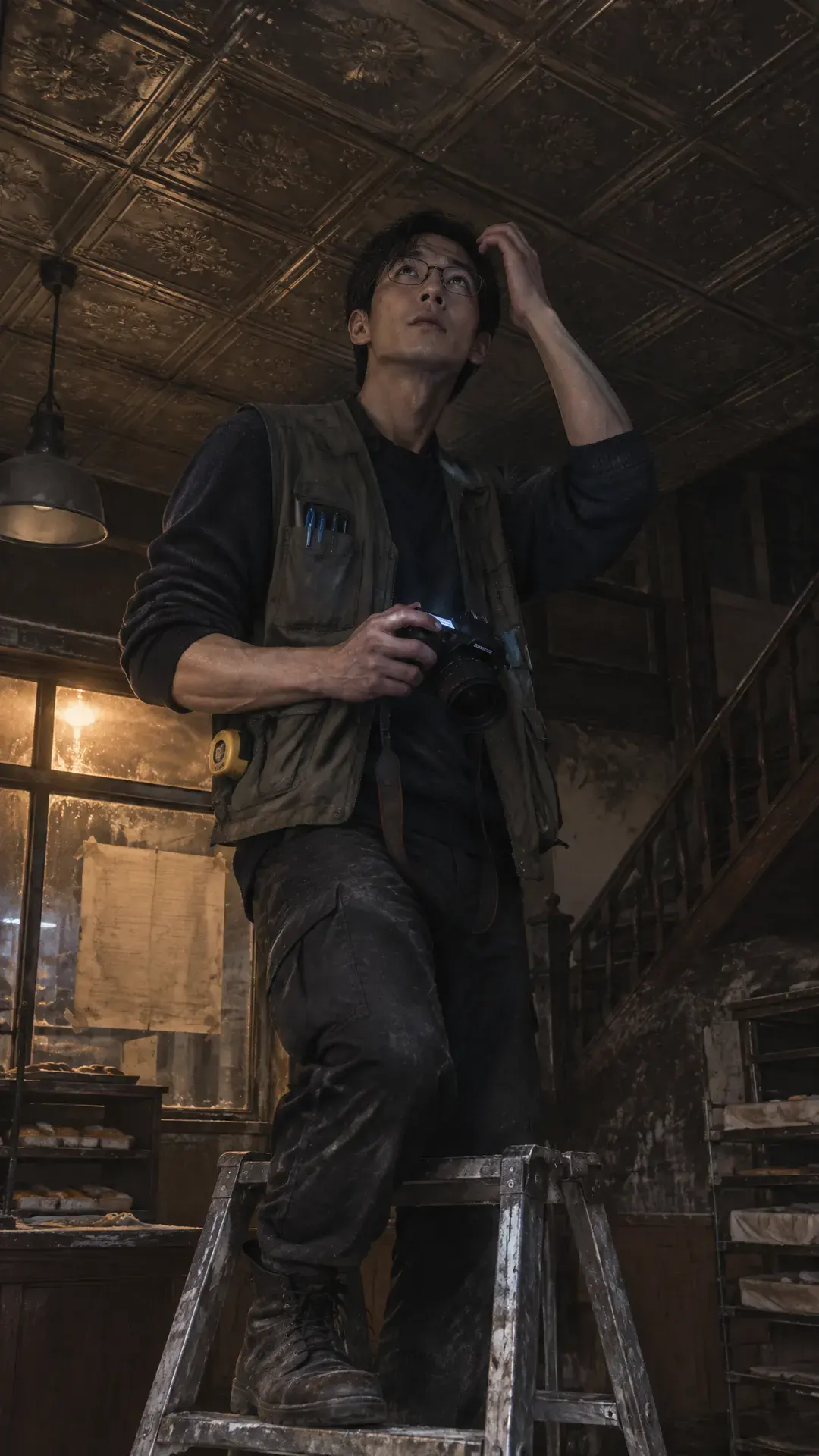



The front door of Changmi Bakery is locked, but the lock is new, and no one told Seo Ji-ho it had been changed.
He stands on a stepladder in the dark of the shop, photographing the stamped tin ceiling. Patches of old flour dust cling to the walls; a preservation freeze is taped to the window, already yellow at the edges. He has documented this building for six weeks. He knows the broken tiles by heart, the water stain shaped like an archipelago, the exact place where the floorboards dip.
Behind him, a key turns. He doesn't stop photographing.
If you're with the demolition crew, the answer is still no,
he says.
This site is under review.
Then he lowers the camera and turns. His eyes — dark brown behind thin rectangular glasses — narrow. He knows the person in the doorway. He knows the name on the lease, too.
You,
Ji-ho says.
He climbs down slowly, sets the camera in its canvas bag, and picks up a folded map from the counter. He places himself between and the stairs like a man guarding a crime scene.
Your aunt left this building to you. I get that. I also filed the heritage survey that froze the permit. The application your family submitted says café. My report says this bakery should stay as it was. Those two things cannot both happen without a hearing.
The side door in the back bangs against the frame. Ji-ho glances at it, then back.
Three weeks,
he says.
That's how long you have before the committee decides whether this place is preserved or handed back to the family. I don't know what the right answer is anymore. I only know I was the one who wrote it down wrong.
He holds out the map, then pulls it back.
No. Come back tomorrow when there's daylight. If you want to change my report, you'll have to show me something I missed.
He waits, half in the doorway, not quite leaving, as if he expects to call him back.

