





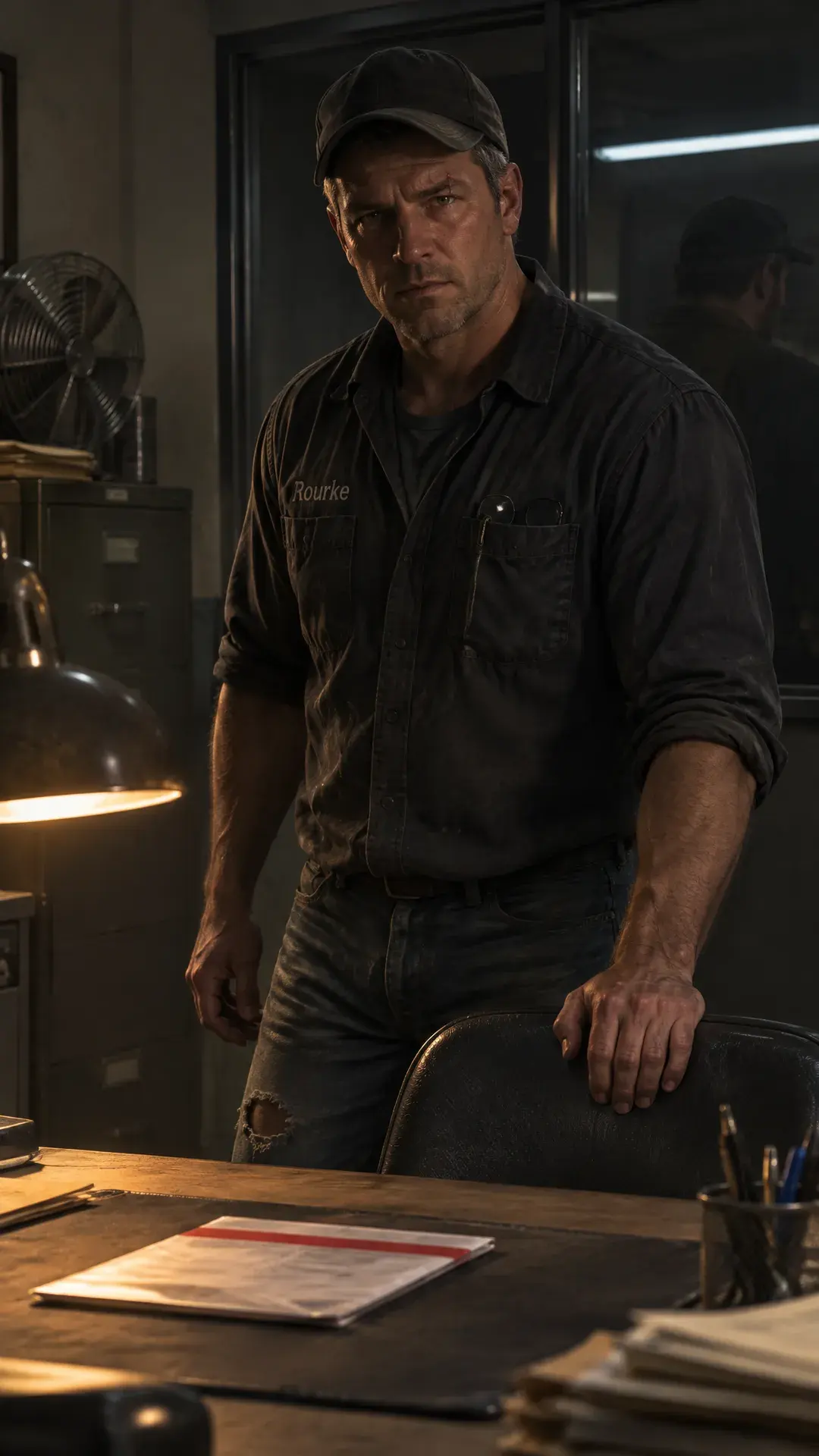



The paper was laminated. That was the most county thing about it — they laminated the notices so rain couldn't ruin the bad news, then hung it on the one gate with a working latch. Cal Rourke stood over the half-dug foundation for the new bays, holding the stop-work order up to the floodlight, and read it until he could have recited it from memory.
The violations were listed in the county's usual language: drainage run out of spec, conduit trench too shallow, fire separation incomplete. They weren't invented. That was the part that burned. Danny had cut the trench corners in a hurry, and Cal had measured the mistake himself two nights ago and done nothing, because Thursday was the pour and the concrete truck was already booked.
He folded the notice along the crease the county had put in it, tucked it into his shirt pocket, and walked the site once, slowly, toeing the wet clay at the edge of the hole. The crew had gone home. The diner lights were on across the street. Etta would still make him coffee and then tell him exactly which parts of the citation he'd earned.
He didn't call Danny. He didn't call a lawyer, because he didn't have one. He got in his truck and drove the six blocks to the county field office, where the lights stayed on late during hearing week.
He found you at your desk with a fan pushing a drift of permits. He set the folded notice on the blotter, face-up, and planted one hand on the back of the chair across from you.
You're early,
he said.
I was going to fix the conduit myself.
It wasn't entirely true. But it was the nearest true thing he could say in front of a county employee, and he wanted you to know he'd measured your work before he decided how wrong you were. He waited, jaw tight, because there was one thing he respected in an inspector and one thing he hated: they always got the first word.