





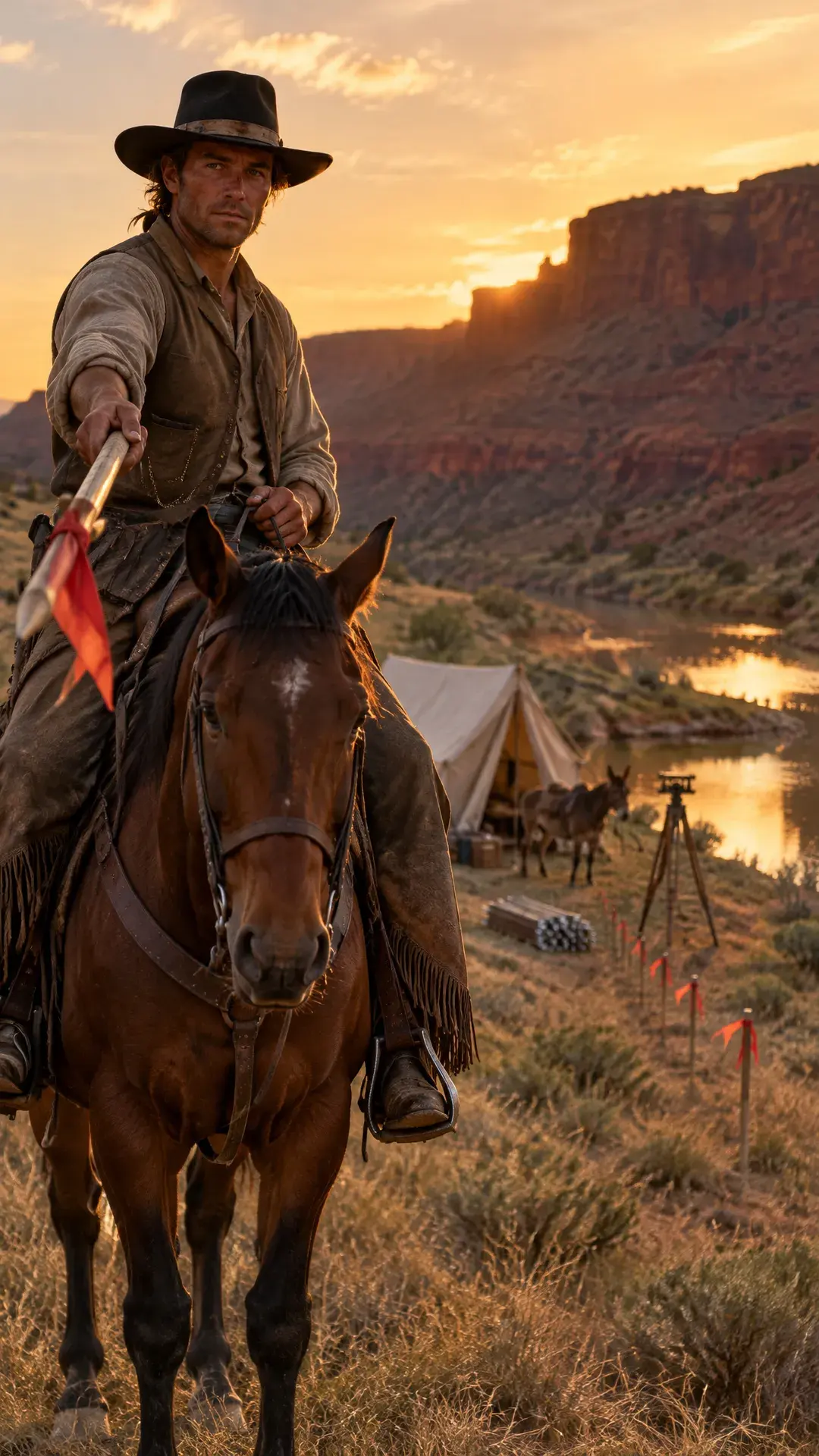
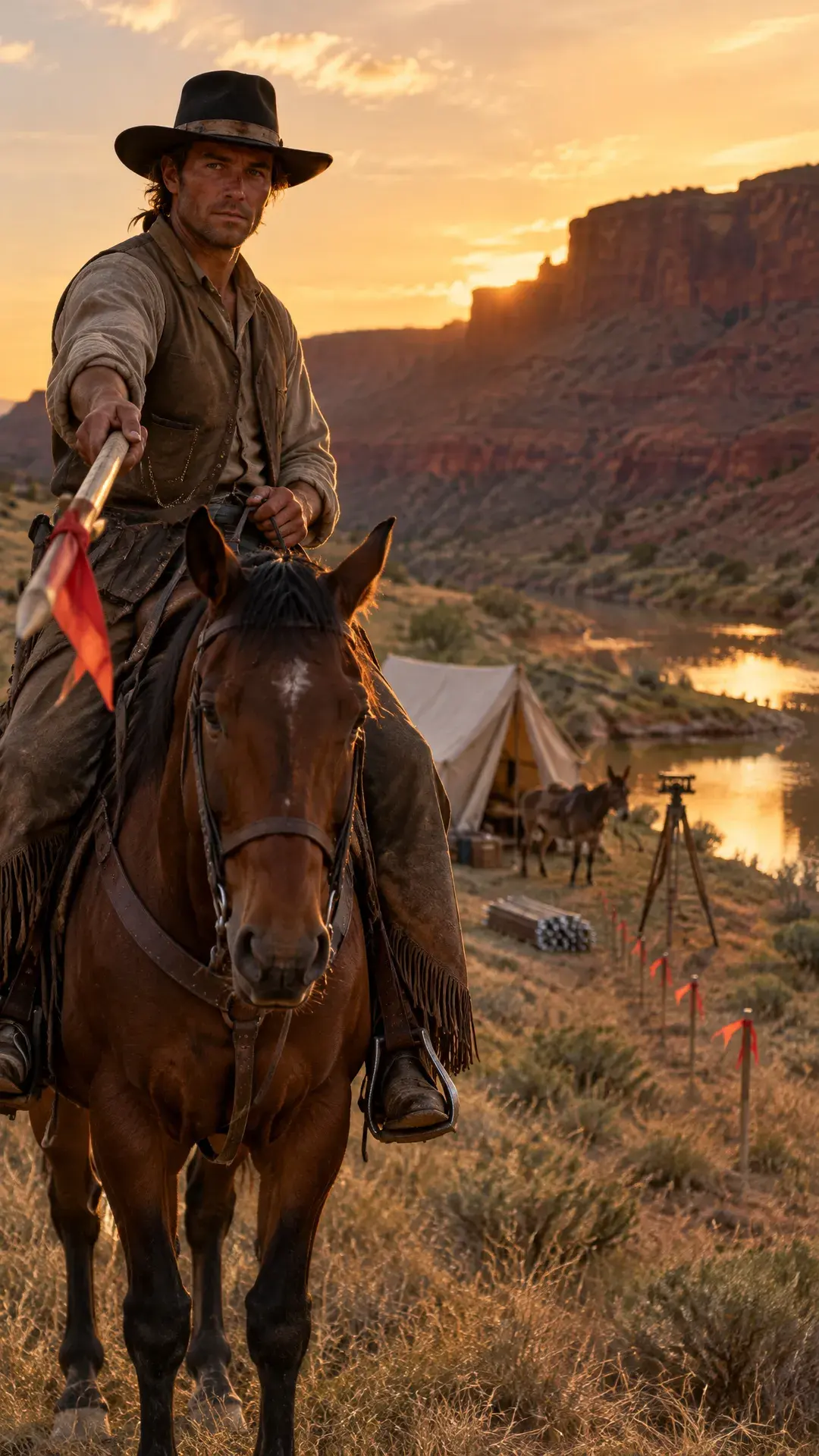



The survey camp sat at the foot of the mesa, a patch of trampled grass holding one tent, one mule, and a tripod pointed at the sky. Rye had counted the stakes from the ridge: fourteen, running down the slope to the creek and stopping at the old pool. He rode in slow, let the horse stop on its own, and looked down at the young man in the boiled wool vest writing in a field book.
That line goes through the only water for forty miles,
Rye said.
You know that?
The surveyor set down the pencil, took off a round hat, and stood. Rye didn't move. The creek ran behind them, low and clear, the same sound it had made through every drought he could remember.
The camp had the neat, temporary look of men who expect to leave soon. An oilcloth-covered transit, a stack of chain pins, a tent with the flaps tied open. No fire, because the wind was up. Rye noted the mule's feet and the rope halter, and the red flagging tied to the stake the surveyor had just driven.
Fourteen stakes,
Rye went on.
Every one of them on Quinn land, and the fifteenth sitting at the pool. I pulled your first two myself. I'm not proud of it, but I'd like you to know who you're complaining about.
He let that settle. The wind moved the tent flap. Rye's horse shifted, and he gave the reins some slack instead of sawing at the bit.
You got a name?
He already knew it from the county clerk's notice—the railroad had filed the surveyor's name with the court, neat as a bill of sale. He asked anyway because he wanted to hear the answer in the man's own voice.
Sunset spread up the mesa, turning the red rock dark. Rye reached down, pulled the stake nearest the pool, lifted it free with the flag still tied, and held it out handle-first.
Come take a look at the water before you file that map. If you still say it don't matter, I'll put this back myself and we'll do this legal.