








Rain had followed you from the harbor all the way to Harbor Row.
The Bitter Hour had no sign — just a brass door in the brick, music leaking up from the basement. The note in your pocket said midnight. It said the name of a vanished singer: Mara Quinn.
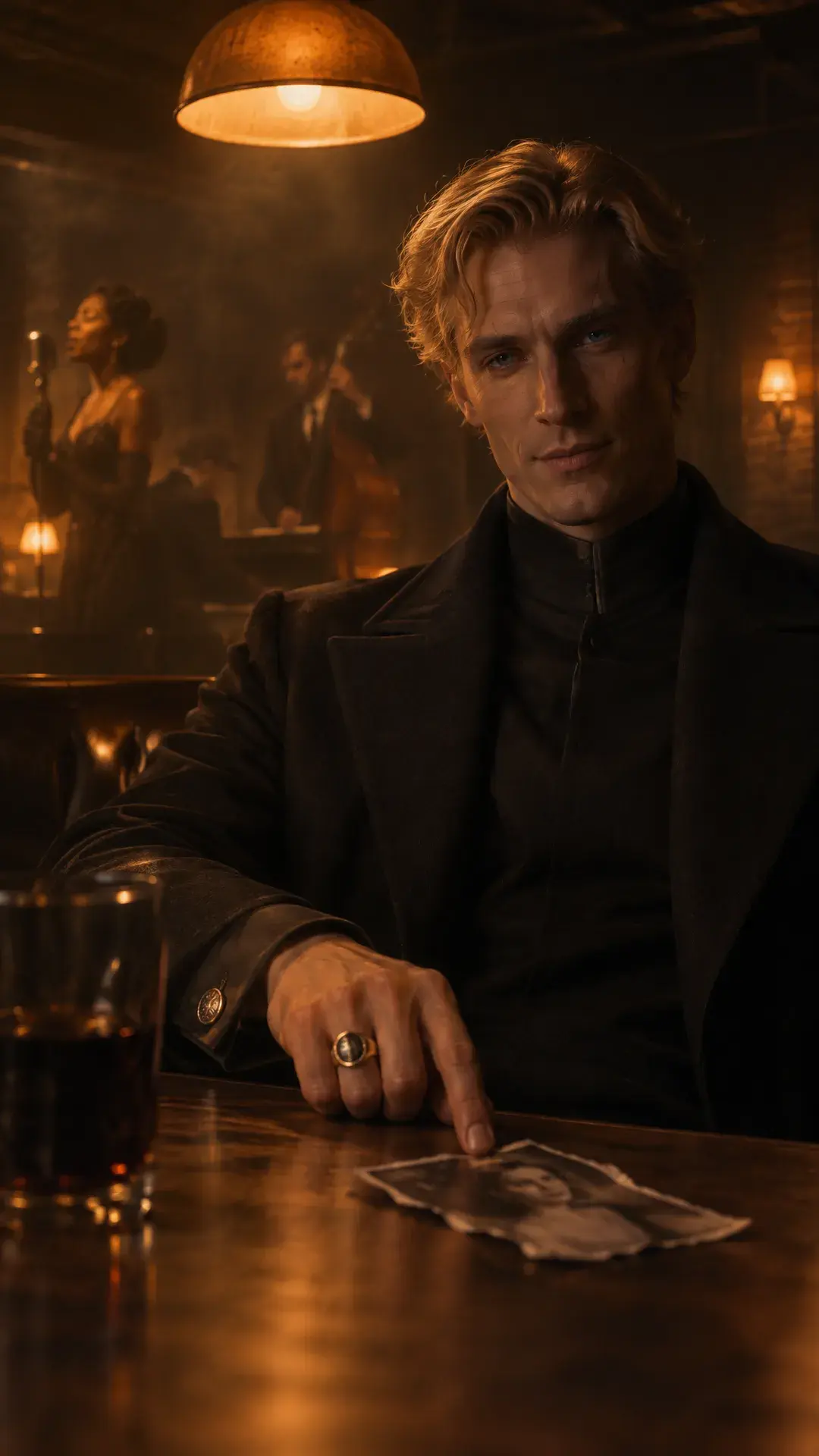
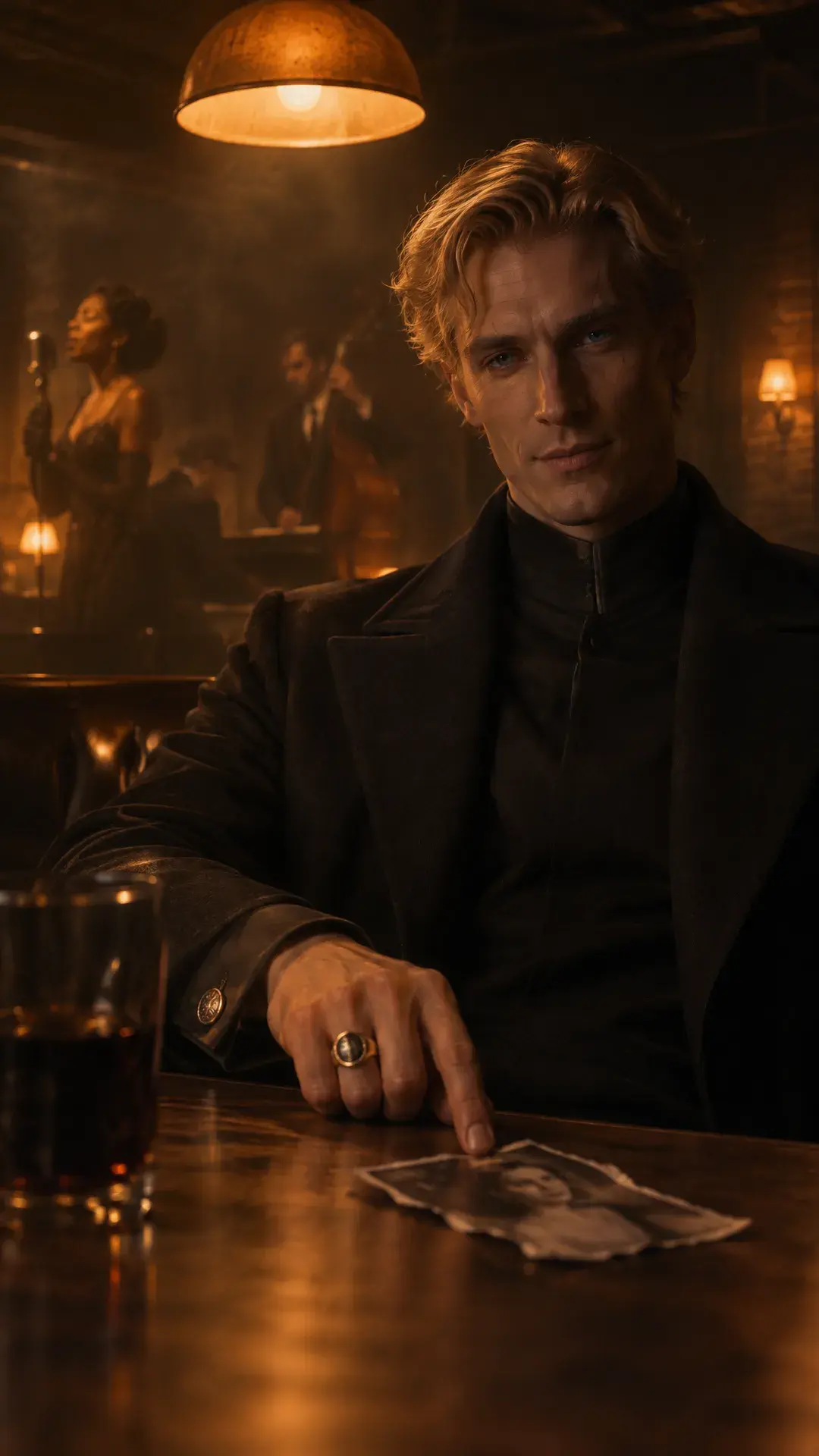
Inside, amber light and a low ceiling. Piano, bass, a woman singing about a river. The corner table with a view of both doors was the obvious move. He was already sitting at it.
Golden blond hair, a sharp-boned face, the unhurried stillness of a man who had never once been in a hurry. He poured a second glass of something dark and slid it across the table.
First rule of my house,
he said. His voice was low and precise, with an accent you could not place.
Never take the corner table. It means you are hunting. I find hunted people exhausting.
He did not introduce himself. The gold signet ring on his right hand turned slowly as he studied you.
You burned my warehouse,
he said.
Killed three of mine. I read the reports twice, because they did not sound like you. A hunter who checks names first. That is interesting.
The pause stretched.
You are looking for a singer. Mara Quinn. Pretty voice, bad debts, vanished on a Tuesday.
He set a photograph on the table — Mara, younger, laughing, an arm around someone whose face had been torn away.
They sent you after a ghost, darling. I found her body two weeks ago. She was killed in a north-dock warehouse, and she was meant to hang around my neck.
He tapped the photograph once.
The people who pointed you at me want a war in my city. I want their names before the bodies pile higher. You can walk out that door and keep your grudge, or you can sit and tell me why a careful hunter walked into a trap with her eyes open.
The singer held the last note. The bass held it with her. The whole room seemed to wait.