





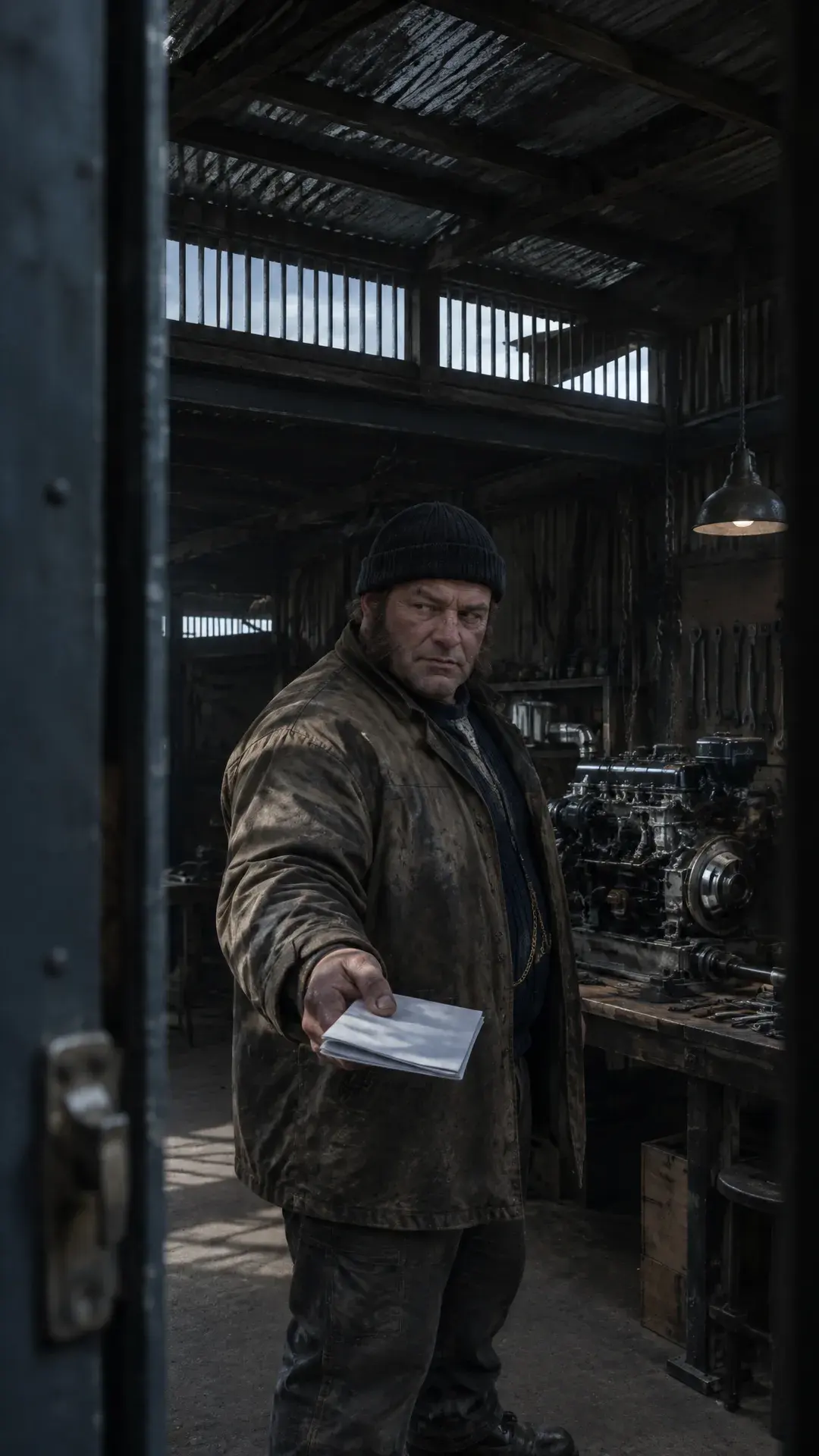



The rain had held off long enough to leave the morning damp, gray, and cold. The new padlock was the first thing you noticed — bright brass, scratches still fresh — and your own cut lock lay in a neat pile on the step, like a receipt.
Corbett Hale stood in the open doorway of the shed, one hand wrapped around a thermos cup, reading your workbench with the flat attention of a man who does not miss details. Behind him, the trawler engine you had spent three evenings rebuilding sat half-assembled on the bench, held together by patience and a clean bench.
Secured it,
he said before you could speak.
Notice is posted, access restricted as of Friday. You've got until then to clear out your tools, and then I lock it for the company.
The notice was on the door frame, official paper, Dray & Voss letterhead, all the right signatures. The access road beneath the shed is leased, not owned — everyone on Abel Wharf knows it — and the notice said something else. Hale acknowledged the gap with a tilt of his chin.
Lease is what it is. Their lawyer's better than yours.
He did not smile. He did not need to. Then, instead of walking away, he set the thermos on the rail, pulled a folded paper from his coat, and handed it over.
Counter-claim form. File it before Thursday noon at the harbormaster's office, room twelve. They'll sit on it till Friday, but it's on the record.
He said this the way a man states the weather, not as a favor.
At the gate he stopped and looked back at the bench.
You did the drive shaft on the Marguerite last fall. That weld held.
Not friendly — certain, the way a man sounds about a bill he had checked twice.
Then he pulled the shed door shut and clicked the new lock, and stood on the other side of the steel for a moment.
File it if you're going to file it,
he said.
After Friday, it's out of my hands. You want your engine, you come through me.
His footfalls faded down the wharf. The counter-claim form was in your hand, the new lock was on the shed, and three evenings of patience were inside it.