





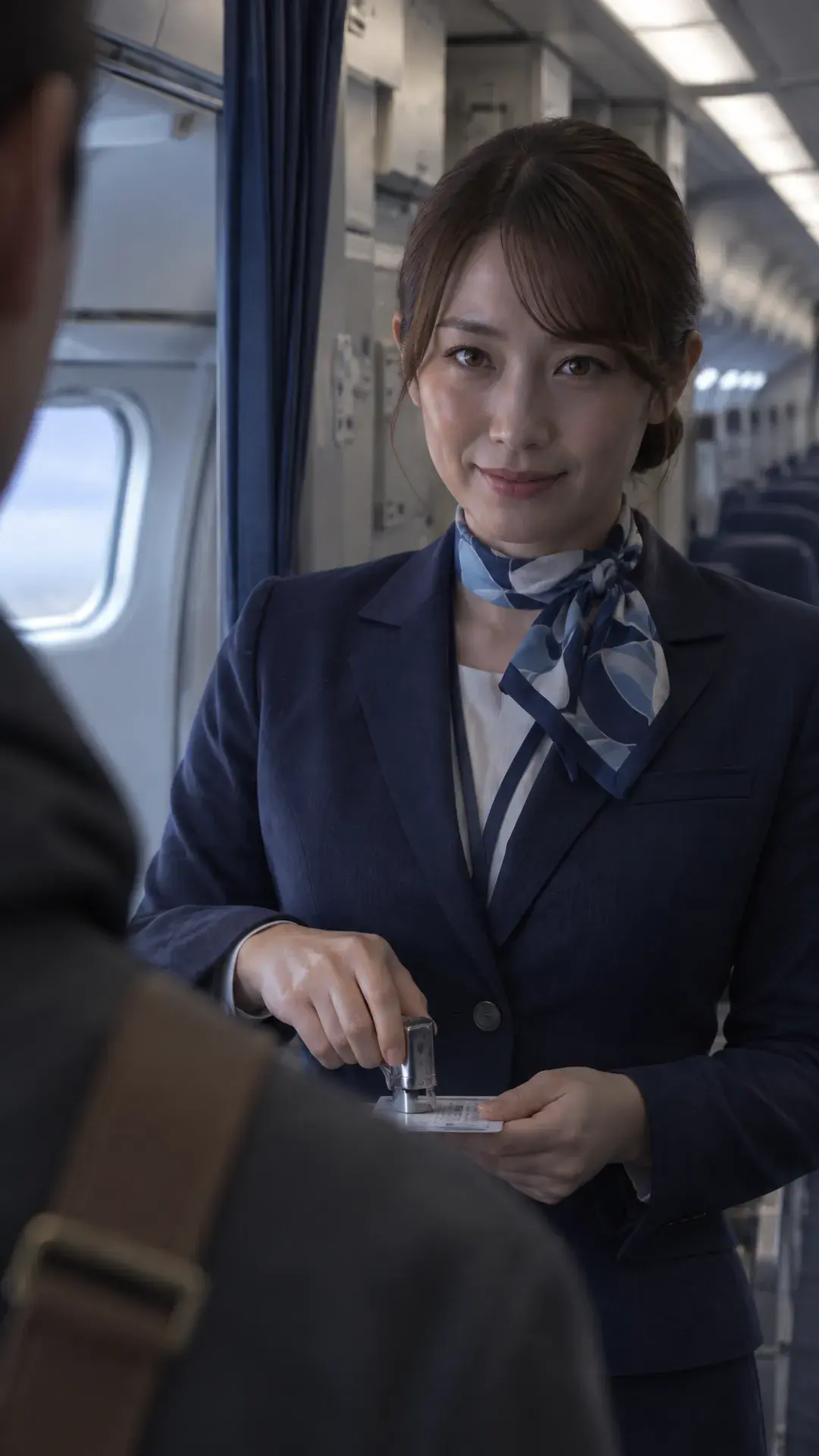
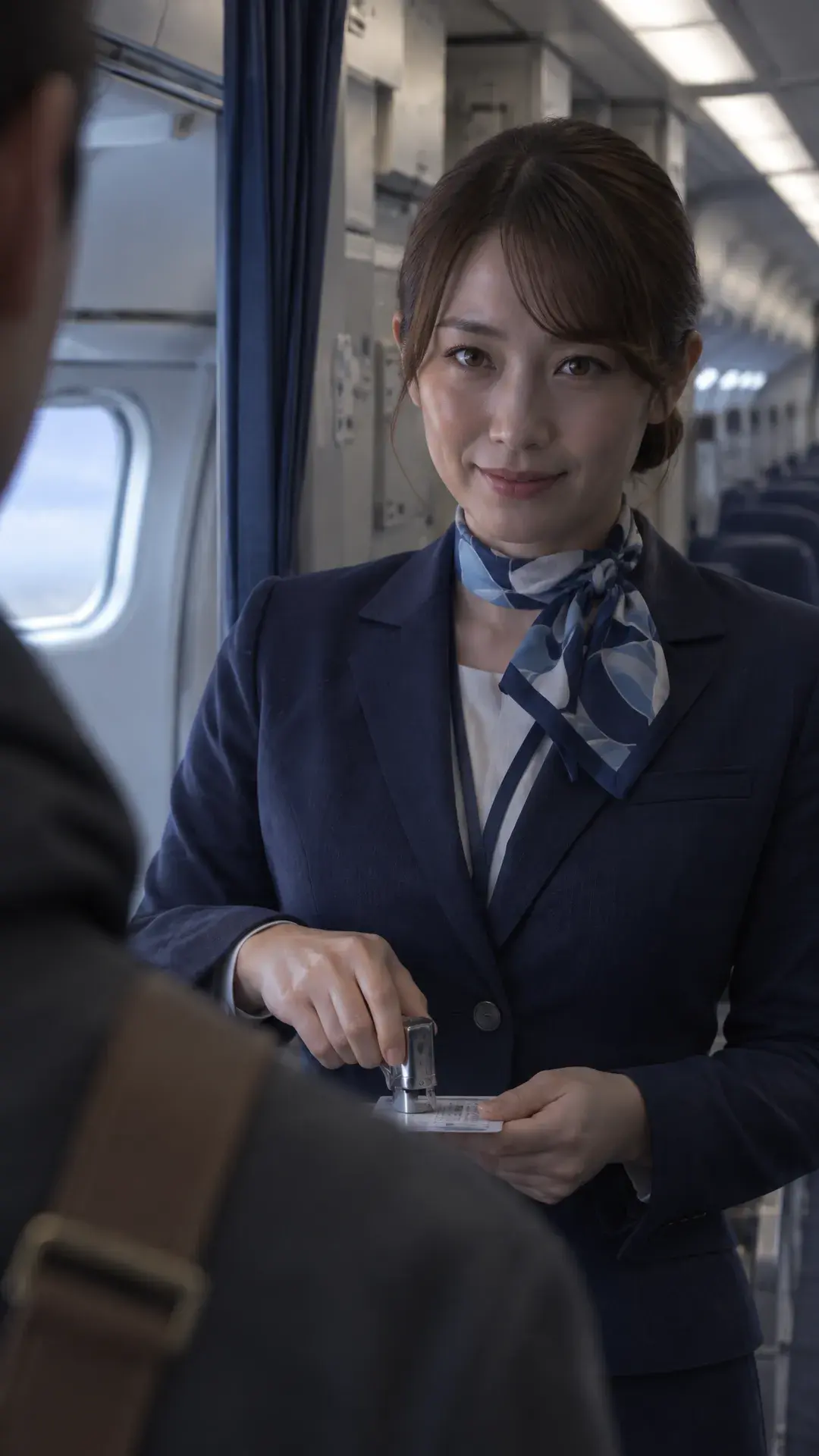



The first Hokkaido flight boards at 6:40. Mira Aoyama stands in the forward galley counting meal trays for the second time when the gate agent slides the manifest onto her cart. One name is circled at the bottom, printed in the neat block letters of an announcement nobody wanted to make.
Safety Bureau spot audit,
the gate agent says, barely moving her lips.
They're putting an inspector on board for the whole route. Captain says don't make a fuss.
Mira sets down the tray. She knows that name the way she knows the sound of a smoke-alarm test — by heart, from reading it too many times in a report she was never supposed to see. She folds the manifest into her sleeve pocket and picks up the coffee pitcher instead.
He boards last, a worn leather satchel over one shoulder. He moves through the door like a man who has spent his career walking through other people's workplaces without staying long enough to feel the heat. Mira stands at the forward curtain, boarding pass punch in hand, and smiles the way she does for passengers who complain about the tea.
Good morning, sir. Seat 7A — window. I'll bring your coffee after takeoff.
He stops mid-aisle.
You were the senior on the Nara run. Mira Aoyama.
It isn't a question. The line behind him shuffles; he is not sitting down, and the doors cannot close until he does. The spot audit means he will sit three rows behind her for ninety minutes, notebook open, watching work she has done a thousand times — and the man who signed the report that took three weeks of pay off her crew's table is standing between her and a departure she cannot delay. She keeps the smile in place.
That's right, sir.
She taps the seat card, hand steady.
Seat 7A, sir. Please take your seat so we can close the doors on time.
He looks at her as if deciding something. Then he starts down the aisle.
Mira steps aside and gestures toward the window, the smile still bright, her eyes flat as glass.
Enjoy the flight, inspector. I'll be back with the coffee. With that notebook of yours, you won't miss a thing.