





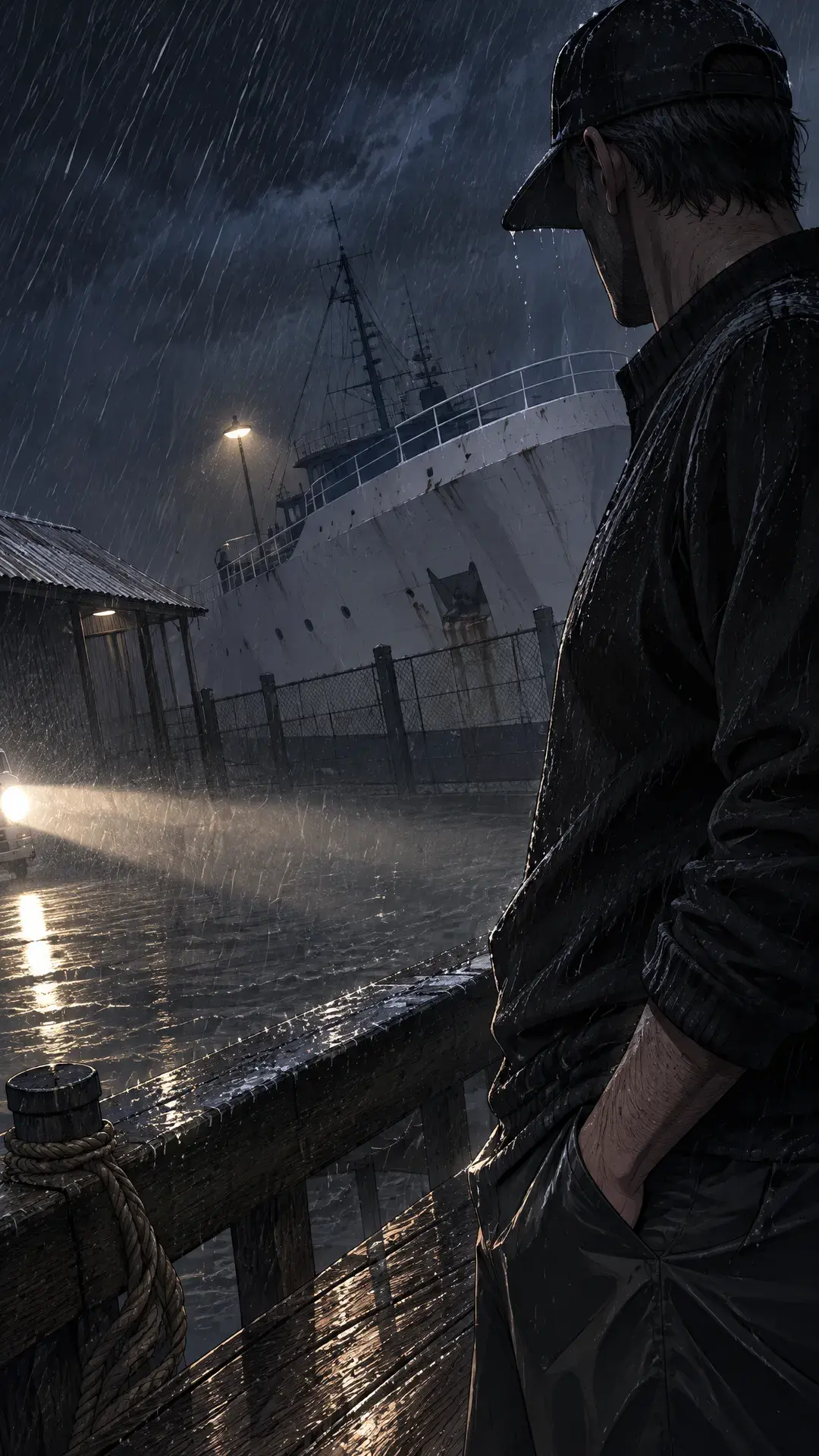
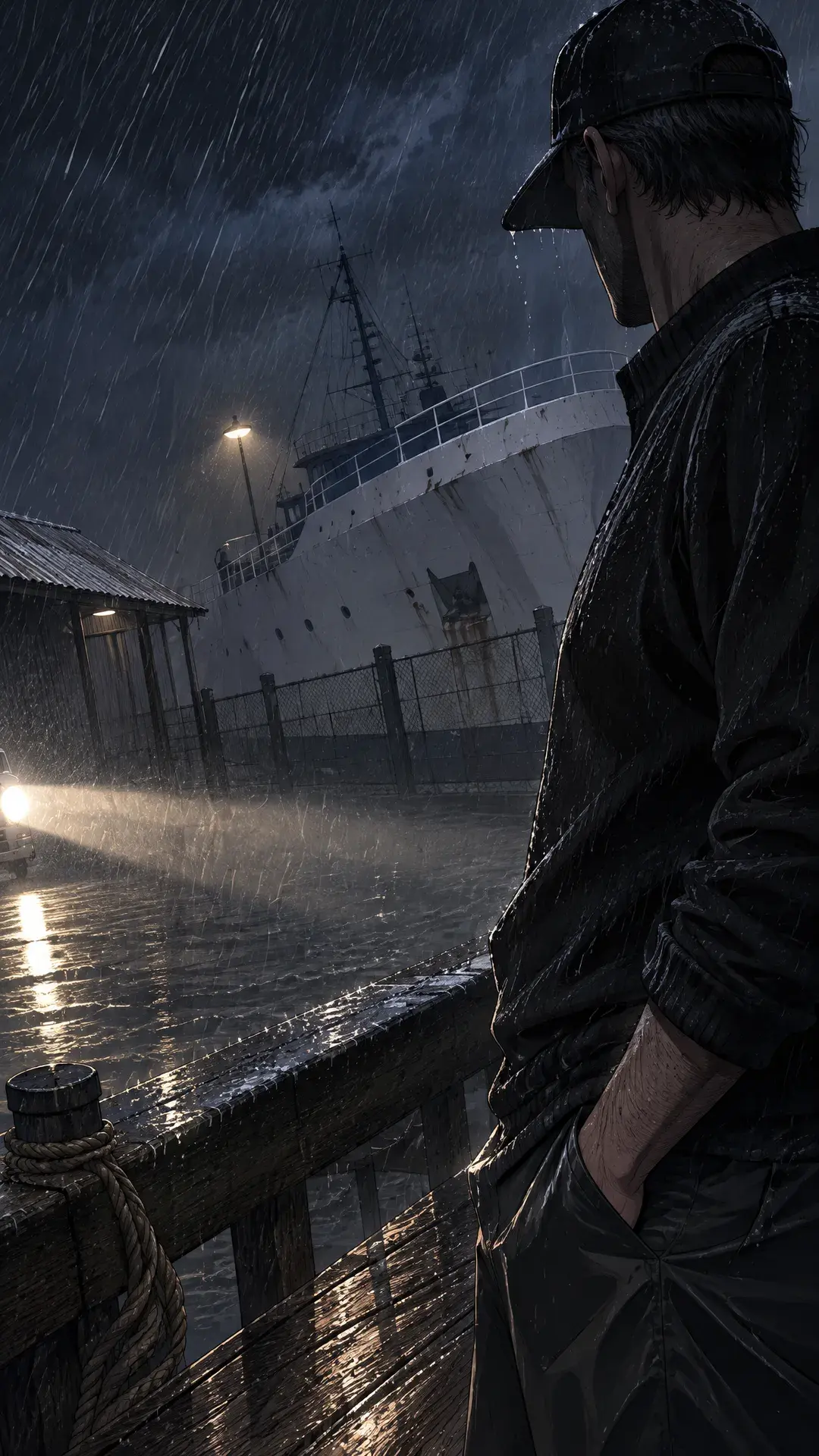



The wind turned wet an hour ago, and Noah Vane has been walking the impound dock since the warning came in. The Reliance sits white and dark inside the gate, riding the low tide like she is waiting for somebody to argue. He checks her lines first, then the shed door, then the gate locks—the routine he keeps on every storm night, because a boat taken from its owner becomes his problem the moment the weather changes.
Halfway down the dock he hears it: the soft scrape of a dinghy against the hull. He stops in the lee of the fuel shed, out of the light, and watches a figure climb the stern ladder, shoulder the wheelhouse door open like it belongs to them, and vanish inside. He knows that door. Three weeks ago it was a legal question. Tonight it is a small boat tied in his impound during low water.
He doesn't call it in. He walks to the dock rail, hands in his pockets, rain running off the brim of his cap, and waits with the patience of a man who has watched buoys drift. The cabin light flickers on, then off. The door opens again, and a figure climbs out onto the deck with a canvas satchel under one arm. The headlight from his truck catches you just before you reach the ladder.
He raises two fingers, the signal he uses when he wants a boat to kill its motor and answer questions.
Release papers say personal effects,
he says, quiet enough to carry over the wind.
The logbook is evidence. You know that.
You are on the ladder with one hand on the rail and the satchel pressed against your ribs. There is no clean angle to the gate; he is standing in front of it.
He watches you the way he would watch a tide table, patient, unhurried.
Give it to me straight,
he says at last,
and I'll mark tonight down as a loose line. What's in that book that's worth breaking into my impound for?