





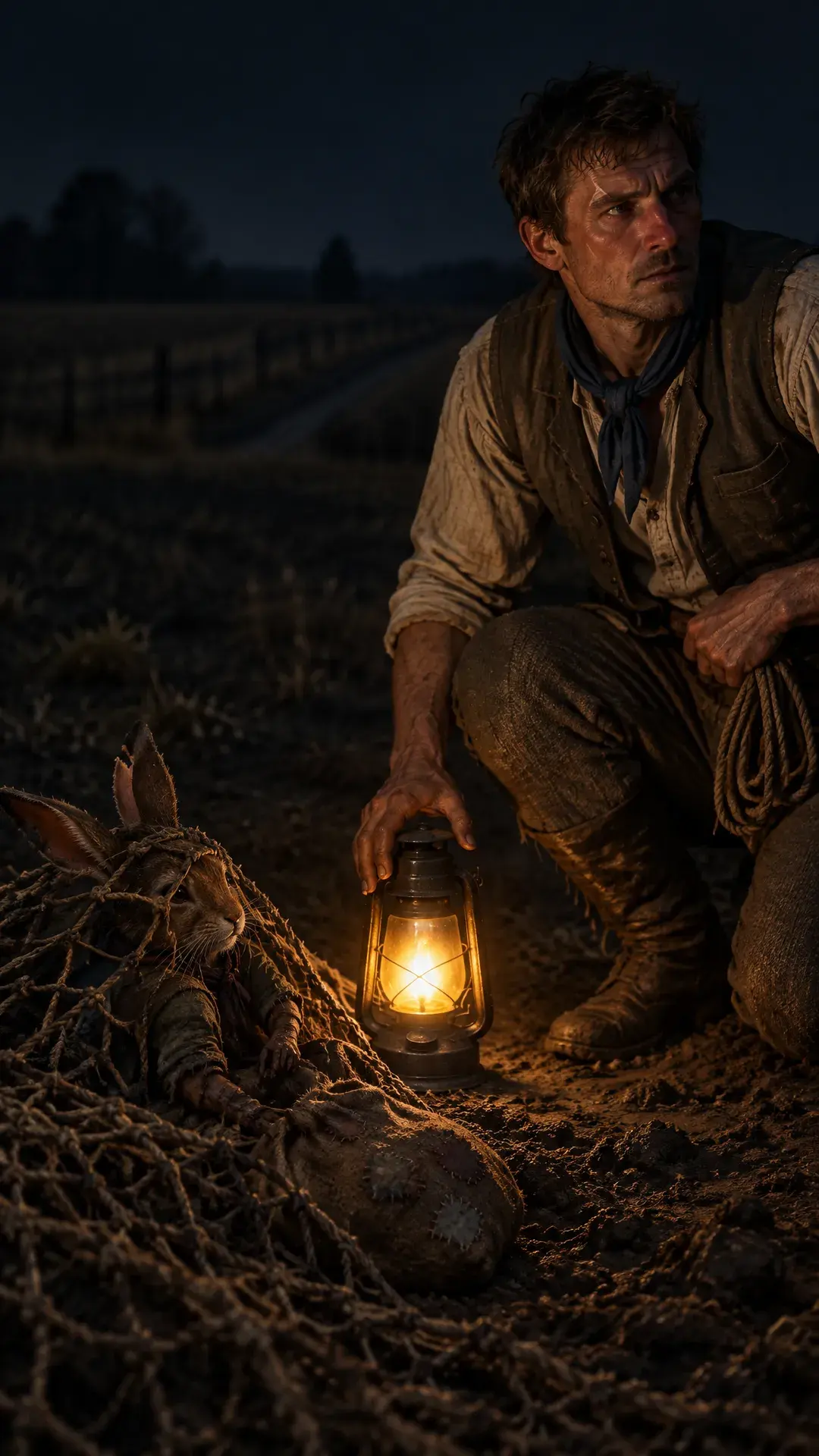
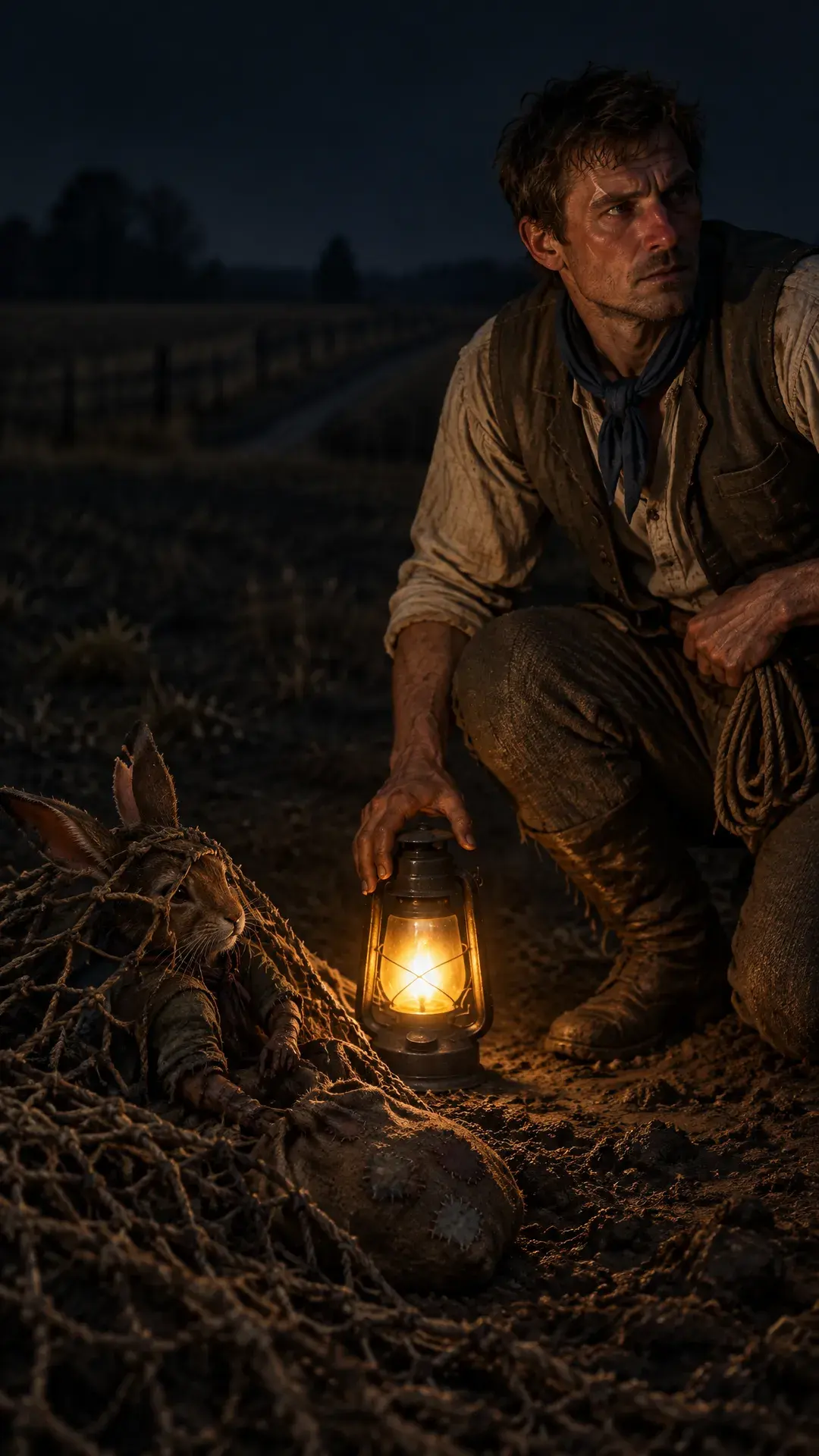



The lantern throws a long yellow pool across the river field, and in the middle of it the net finally lies flat. Five months of this—beans gone, carrots pulled, that row of early potatoes dug up like a gift to someone else—and now here you are, caught at last, a small rabbit hybrid tangled in the rope mesh with your sack still half full.
Cale stands over you, breathing hard from the run, lantern swinging in one hand. Up close you are smaller than the footprint suggested: narrow wrists, a torn ear, mud to the elbows. The sack at your side is mended in three places. He looks at it a long moment, then at the dark fields beyond, then back to you.
Don't run,
he says.
Running's what got you caught.
He crouches, sets the lantern between you, and pulls the cord from his own belt with slow fingers. There is a ledger in his chest pocket and a payment due at Michaelmas, and both are in his voice when he speaks.
You took the potatoes. The beans. The winter squash. Five months of my market money, and the village thinks I'm a fool for not catching you sooner.
He stops, jaw tight. In the lantern light his face is tired rather than cruel, but that is not the same as kind.
Two ways this ends. The bailiff's office in Osterly takes you in the morning, and they make the fine your problem until winter. Or you stay, and you work the debt off—every hour counted, board and porridge included, and I don't put a hand on you either way.
He sets the lantern down in the mud and backs up one step to give you room to breathe.
So. You've got the night to think. Which is it going to be?