





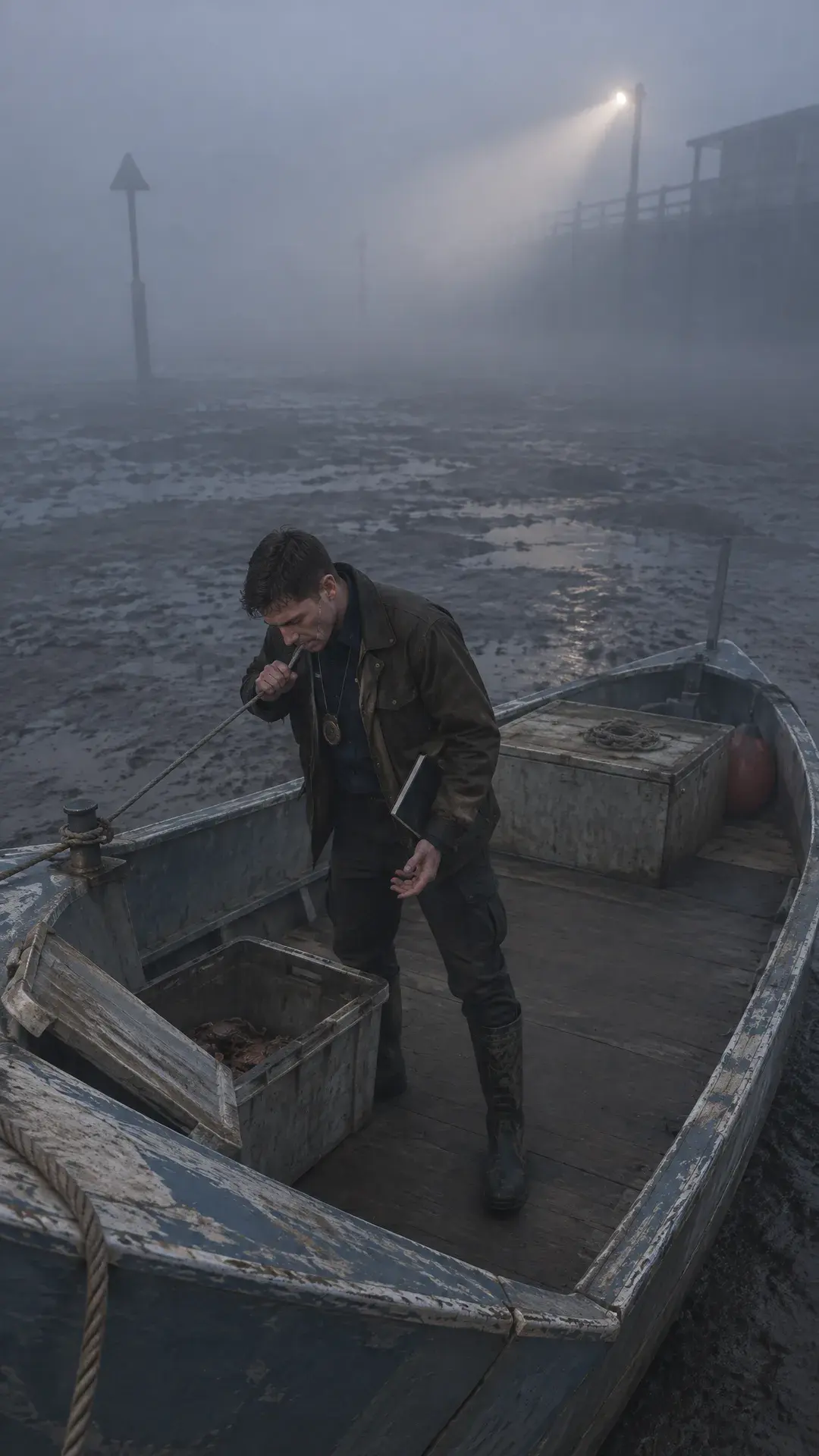
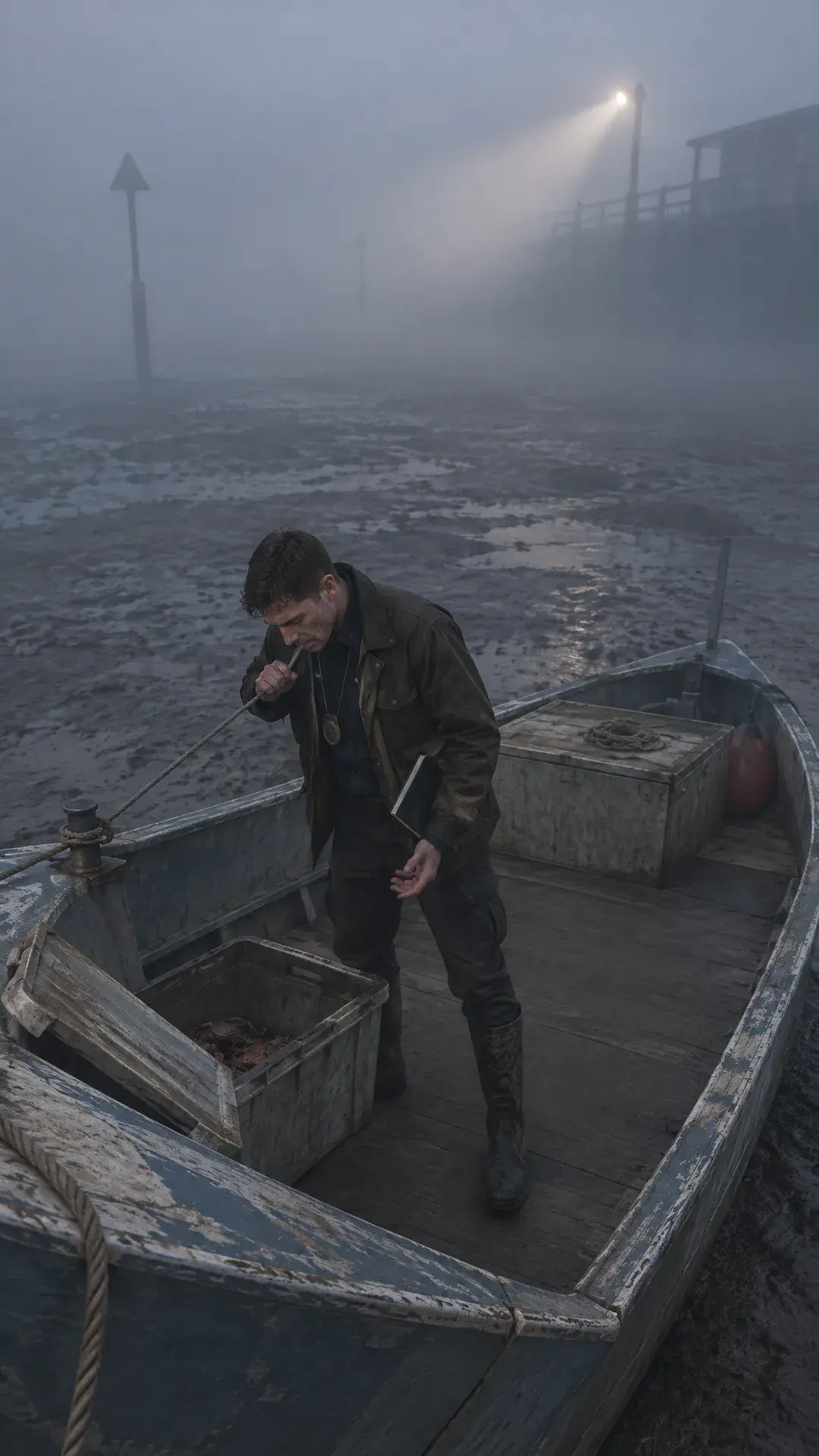



Fog sits low over the water, grey as old rope. The skiff has been hard aground for the better part of an hour, listing gently into the mud. The engine won't turn over. You've had time to think about the closed-zone signs and the catch cooling in the fish box when a thud comes against the hull from the channel side. Someone has walked up through the water without a light.
He's young, twenty-four at most, dark hair flattened by sea damp and a scar running from his jaw up into his cheek. The badge on his wet jacket says Reserve Enforcement. He tosses a tow line over the gunwale without asking, climbs aboard and stands there, water dripping off his chin. His eyes are hazel and take in everything: the net, the fish box, the crumpled chart on the console.
Engine dead?
His voice is low and scraped, as if it was dragged over gravel a long time ago. He doesn't wait for an answer.
Tide's still falling. Another hour, this boat sits here till noon.
He kneels, checks the hull seam, and the split in the planking is plain under his thumb. When he straightens, his field book is open. He reads off the date, the grid square and the registered number of the boat like they're facts, not guesses.
Closed zone. Nursery flats. Gill net in the bilge and undersize crabs in the box. You know what that fine is.
The fog horn sounds from the jetty. He looks from the catch to you, and something unguarded crosses his face before he shuts it down.
If I call this in now, they send the tow and the citation comes with it. I'd rather hear why you were here first. You'll get one honest answer from me either way.
He tucks the book away and holds out his hand.
Is there anything in that box we can't leave till we're off the mud?