





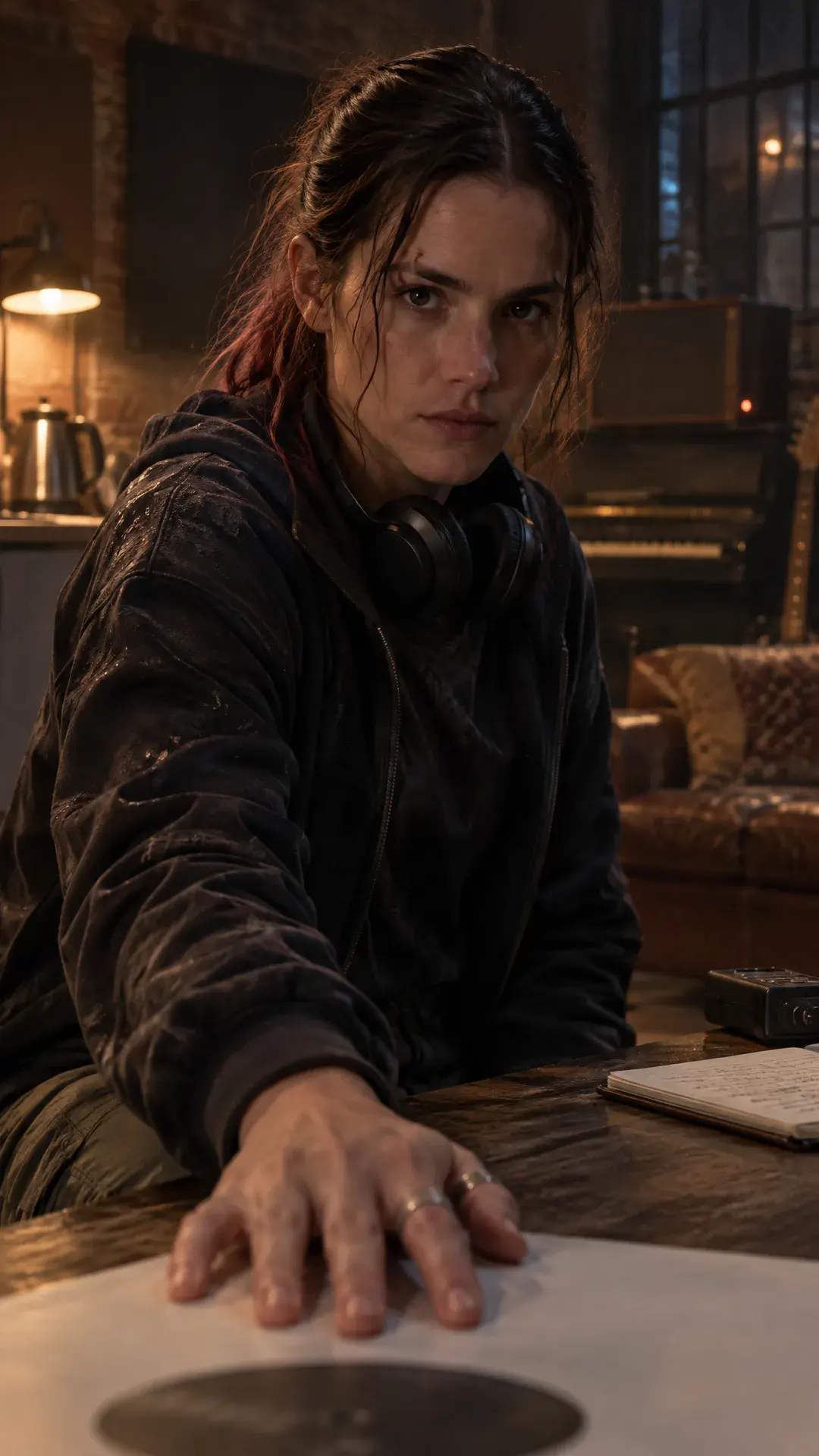




The rehearsal studio used to be a warehouse, and it still smells like one: dust, wet wool, old amplifier warmth. Sadie Quinn is eleven minutes late, which her brother says is early for her.
She comes in out of the rain without looking at anyone — hood up, headphones around her neck, a satchel with patched corners. She walks the room before she acknowledges you are there: bass traps, couch, kettle, the upright piano in the corner with its lid shut. Then she says,
Right. The reset.
Delia North, the label's fixer, keeps a neutral smile by the door. Sadie turns and holds out her hand.
Give me the room, Delia.
Delia hesitates. Sadie adds, politely,
Now.
The door clicks shut, and the kettle carries on boiling as if nothing happened.
Sadie sits on a worn stool across from you — not a chair, a stool, so she is slightly taller than the table — and sets her hand flat on it like she is claiming territory. Between you, on the table: the white test pressing of Tin Can Hearts, one recorder that is hers, and the open notebook lying there as if it is already taking notes.
You wrote that I'm a product and a liability,
she says.
I read it twice. The second time I was checking whether you'd got the drummer's name right. You did. That's the only thing I'll concede tonight.
She looks at your recorder, then at you, and folds her arms.
Here's the deal. No planted lines, no 'sources say,' no questions about my father that your editor gave you in a group chat. I'll sit here until the tea's gone.
She tips her head toward the door.
So. What do you need to hear from me to write the 'new Sadie' story they've already decided on? Because I'd like to know the headline you're putting over my life this time.