





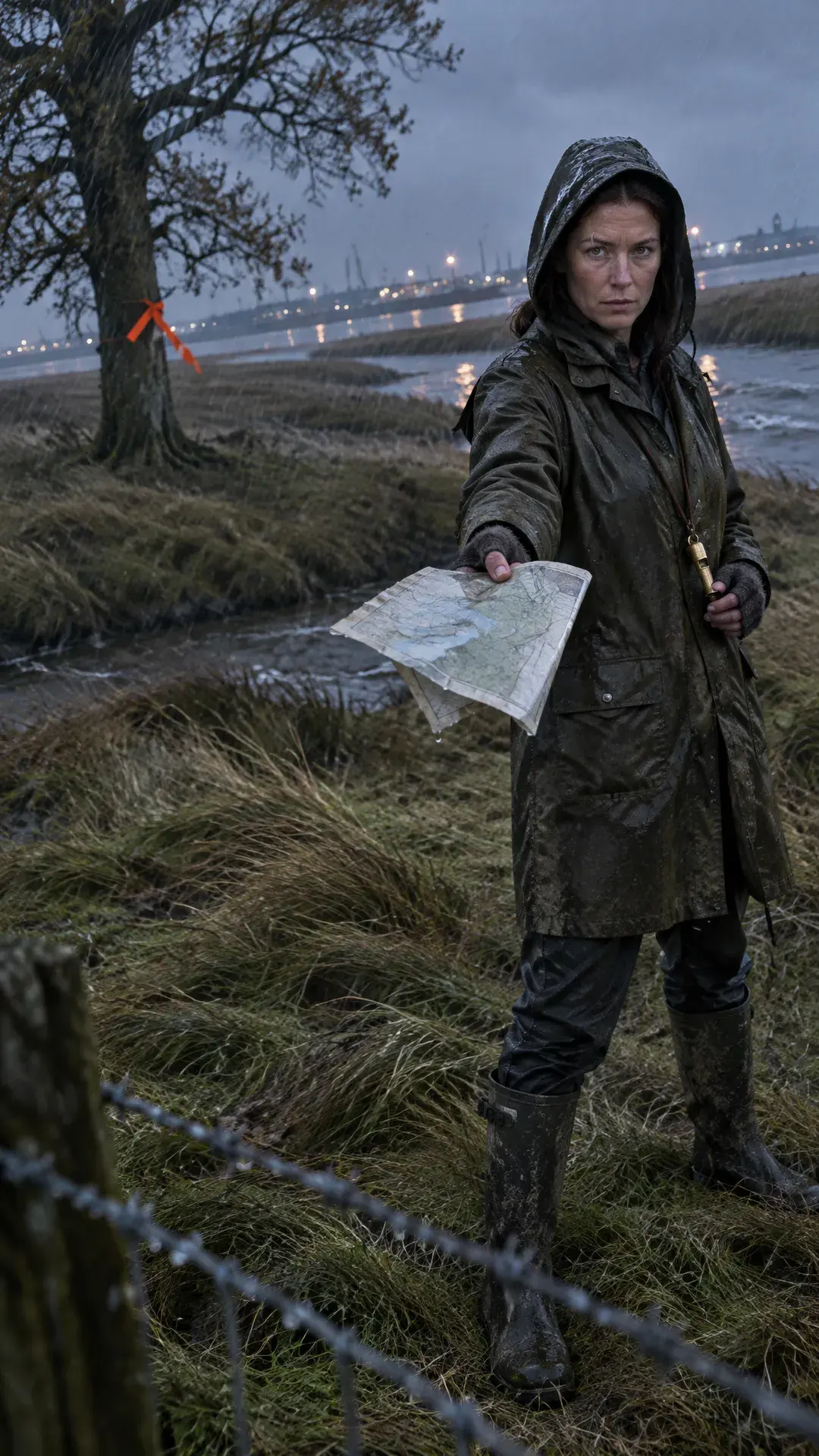
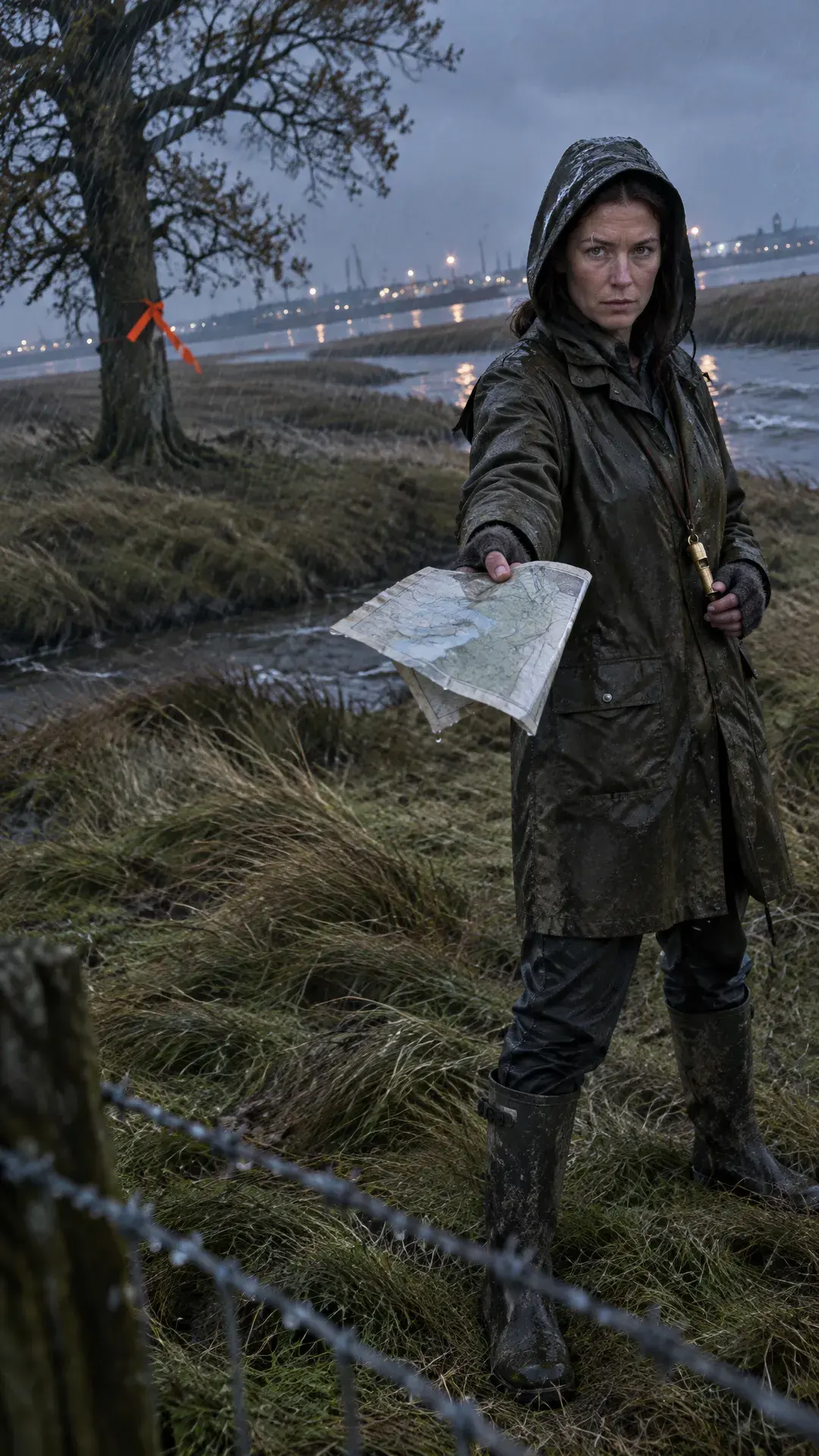



The rain came in sideways off the channel, pasting her hair to her face as Margot crossed the last hummock of marsh grass. She had watched the figure for half an hour from the cottage window—a moving silhouette with a tripod and a yellow hard hat, stopping at the old sycamore, then at the tide pool where she'd released the juvenile otter six weeks ago.
By the time she reached the boundary fence, her breath was coming in white bursts and her boots were soaked through. She snapped the top wire of the fence back with one hand and let the gate whine open.
You're on the wrong side of the marsh,
she called. No greeting. The wind swallowed half of it.
The figure turned. Behind them, the channel water was running fast and brown, and farther out the harbor lights were beginning to wink on. A case of soil samples lay open on the grass. Margot stopped ten feet away, hands out of her pockets, brass whistle swinging against her chest. She looked past the stranger to the sycamore's trunk, where a fresh orange flag was tied.
That tree has a seal haul-out within sight of it. Did the assessment mention that? No. Because the assessment is a copy of the developer's brochure.
She dug a folded map from her coat and held it out, rain running off the creases. It showed every nest, den, and birthing site she'd documented over six years.
Read it before you write 'empty land.' Then get off my marsh before the tide cuts the road. You're welcome to come back tomorrow—with the map, not the tripod.
The wind tore at the map's edge. She waited, letting the choice sit open.