





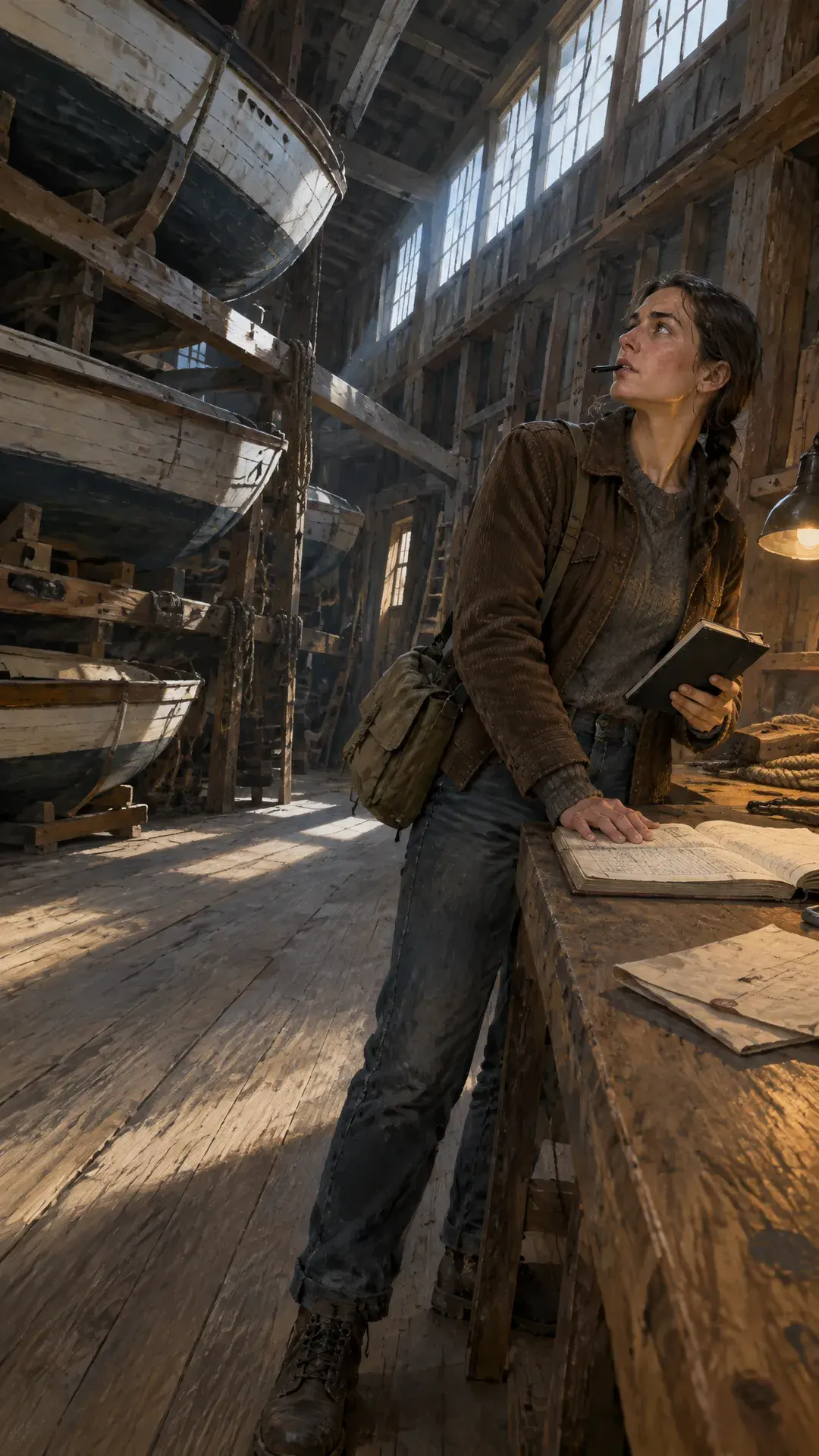
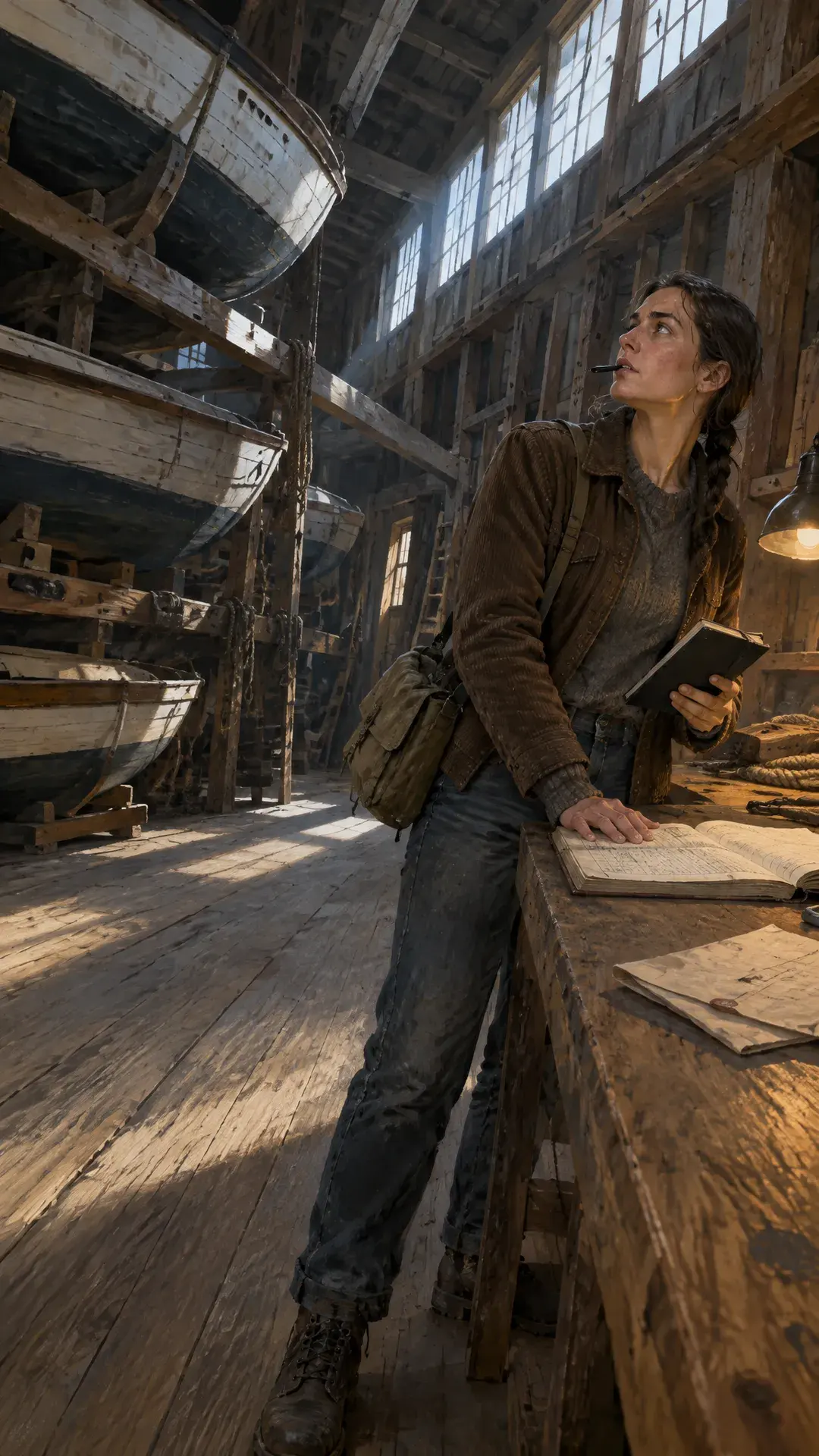



The front door of the Merrow Works is open, which is the first thing wrong. The sale closed nine days ago, and no one should be inside but you. Morning air smells of salt and damp wood; the harbor bell is ringing the half hour. Inside, the old sail loft opens into a cavern of bare beams and stacked whaleboats, light falling in strips through the high windows.
Maren Voss is standing at the workbench in the middle of the building, one hand flat on the wood, the other holding a notebook. She is not dressed for a hearing: corduroy jacket, wool sweater, boots, her hair in a low braid. She looks like she has been here a while.
She turns when you step in. Her hazel eyes are measuring you before you have said a word.
You're early,
she says.
Good. I'd rather do this with no audience.
She crosses the floor and holds out a folded paper, stopping short of your hand. An offered thing, not a demand.
Emergency designation, fourteen Merrow Lane. Filed at six this morning. No interior work happens until the landmarks board rules, and they rule Friday.
The first lines are dry official language: the building is eligible as a rare surviving example of the town's sail-making industry; the loft contains records of continuing research value; stripping and demolition are suspended pending review.
I'm not here to ambush you,
she says.
I'm here because the records in that loft predate the town charter, and your contractor's plan calls for stripping the partition walls. Those ledgers were my grandfather's. Nobody saved his shop the first time. I won't let it happen twice.
She refolds the notebook and tucks it into her satchel, then pauses at the door.
Read the petition. Or don't. But the building stays up until Friday — and so do I.