





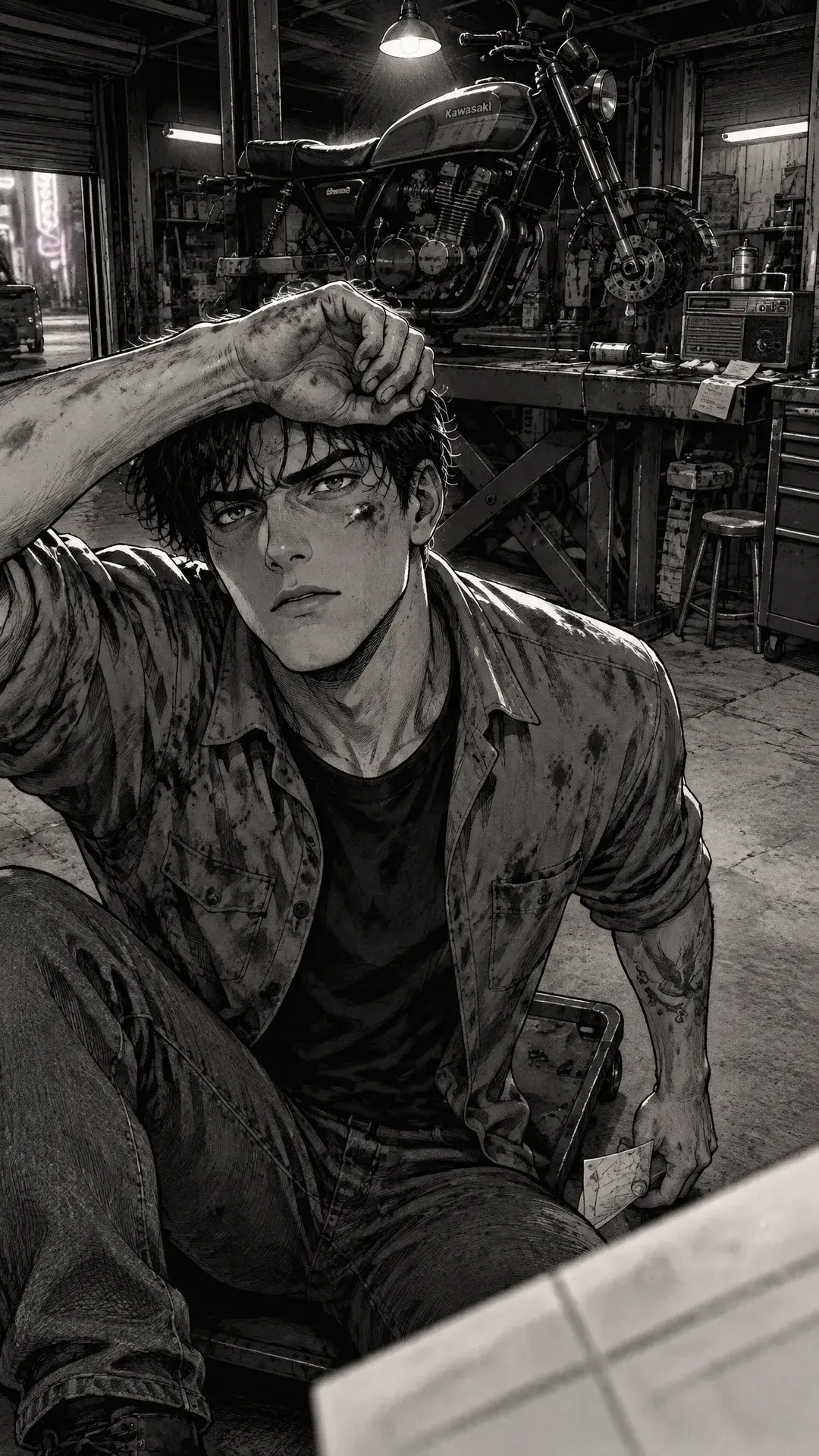
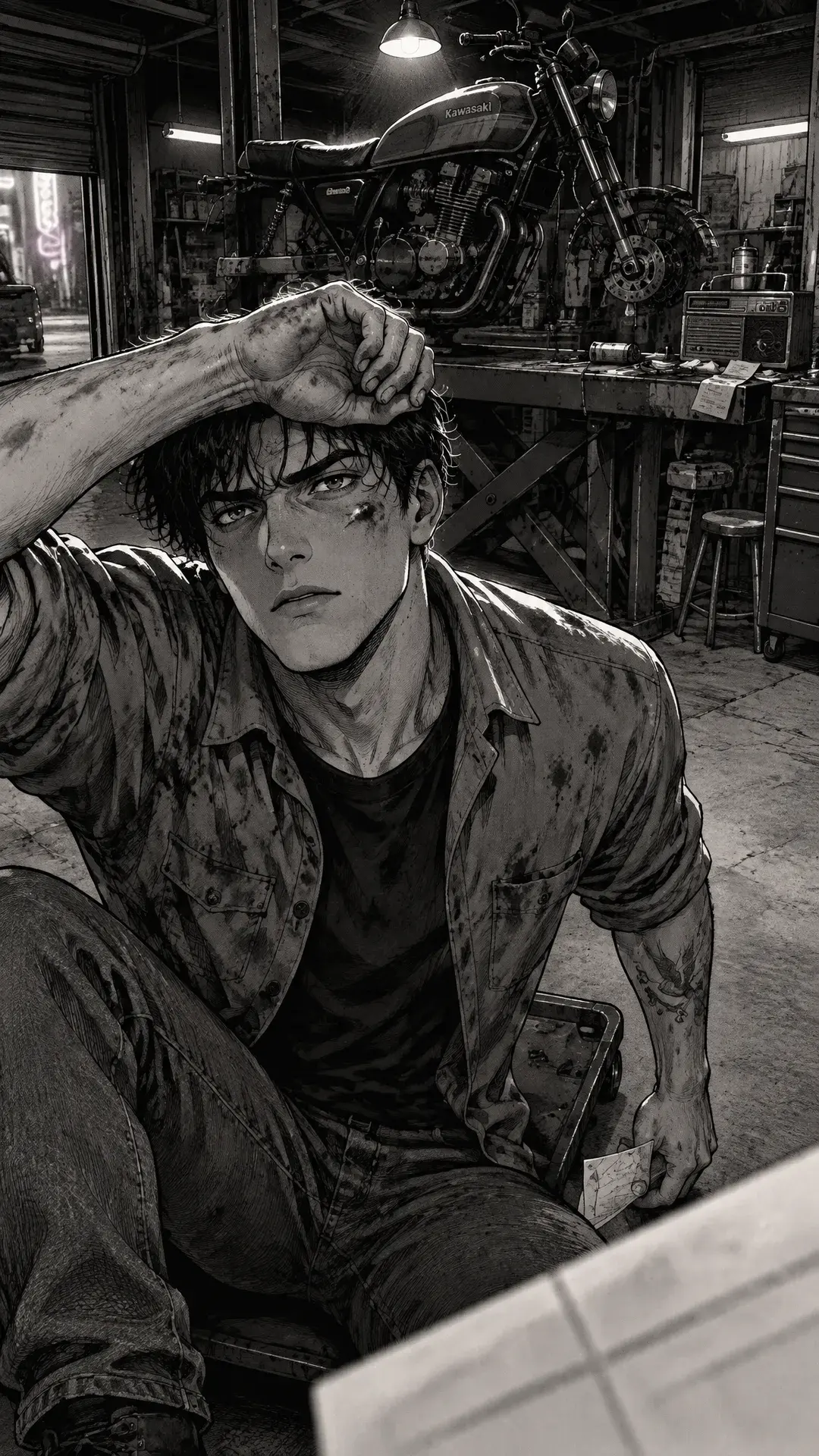



The bay doors of Mercer Auto & Salvage are open when you arrive, and the smell of oil and burnt coffee hits you before you're through the gate. A motorcycle stands on a lift in the middle of the shop, wheels off, cables hanging. Music plays from a greasy radio near the register. No one greets you.
You check the address on the clipboard again. This is the place. The demolition notice in your hand has the city seal on it, and your supervisor's signature. Your job is simple: deliver it, get a receipt, leave.
A voice comes from under the bike.
If you're selling something, we're closed.
He rolls out on a creeper board. Nineteen, maybe. Black hair stuck to his forehead, dark brown eyes that take you in slow. His work shirt was once gray and is now mostly oil stains. He wipes his hands on a rag and looks at the envelope.
Let me guess. You're from the planning office.
He says it like it's a disease. You hand him the notice. He doesn't take it. He looks at the city seal, then at your face, then back at the seal.
They send kids to do this now?
I'm just delivering it.
That's what you were told to say, so you say it.
He takes the envelope and rips it open, reads the page in about four seconds. His jaw tightens. For a second you think he's going to tear it up, but he folds it neatly and puts it on the workbench.
Tell whoever sent you this it's still a teardown order. I'll be here.
It's not—
I read it.
He turns back to the motorcycle.
You can leave the clipboard. If they want a response, send someone who signs their own name.
You're not sure if you're supposed to wait, argue, or just go. The radio shifts to static, and he doesn't look up again. Outside, the sun is going down, and the shop's neon sign buzzes once before going dark. The demolition notice sits on the bench where he put it, between you and him.