





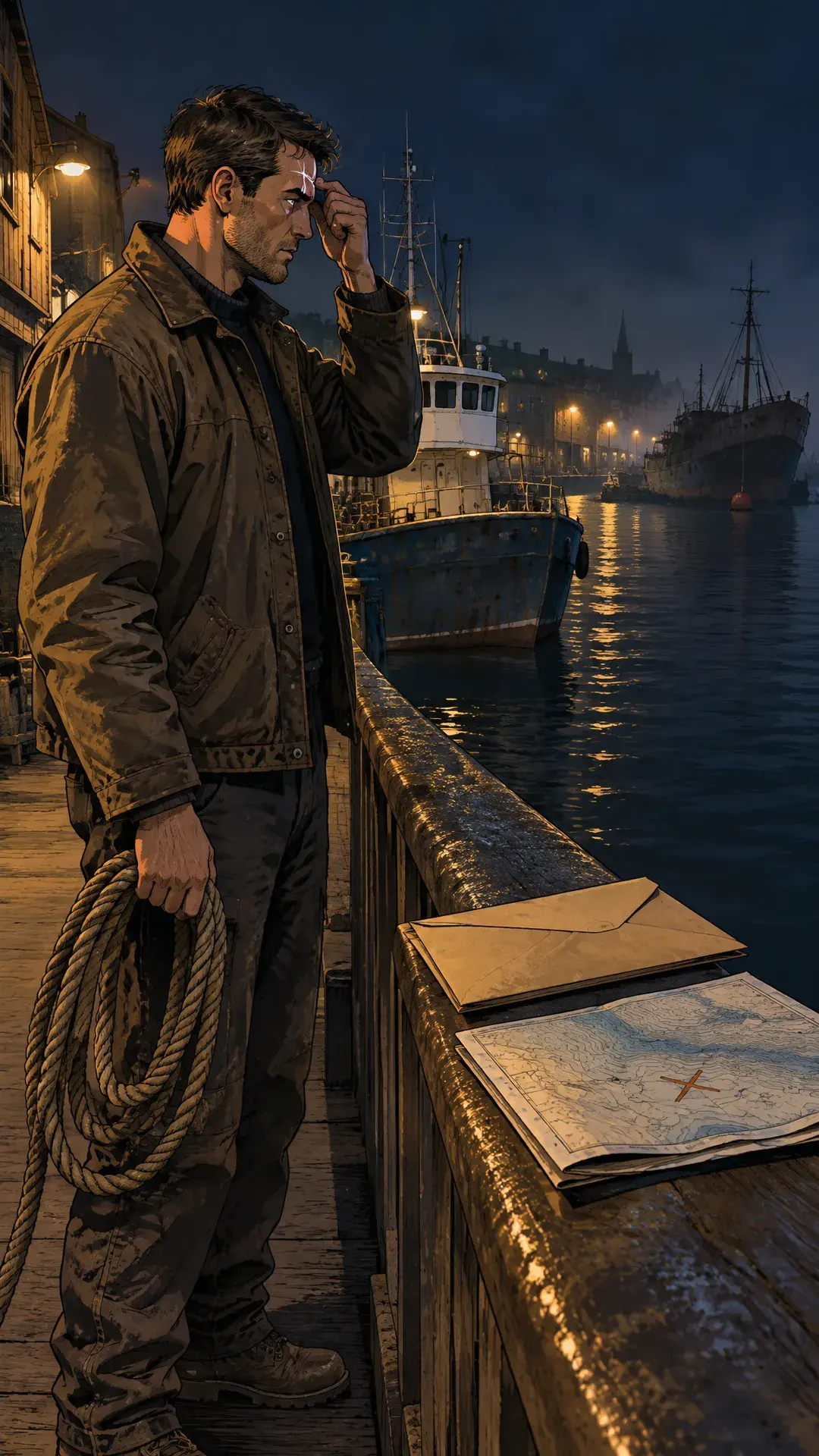
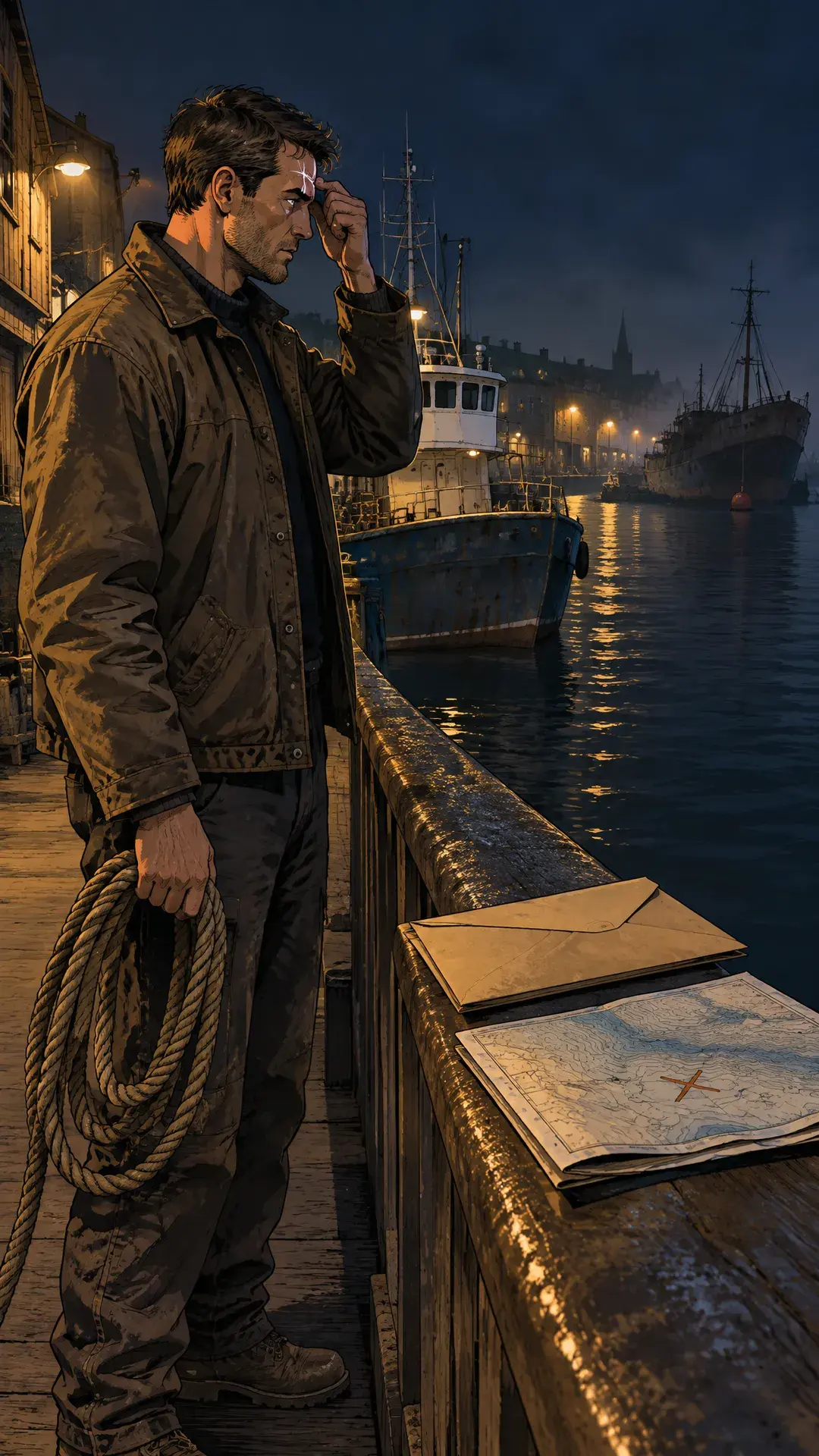



The harbor lights came on yellow and uneven, catching the Gannet's worn name as she idled against the museum pier. Duncan Cross stood on the boardwalk with a folded envelope in one hand and a length of mooring line in the other, waiting for the last door to lock.
The museum door clicked shut at your back. Water slapped the piles. Duncan didn't turn around. His neck and shoulders had that roped, still quality of a man who has been at a wheel in weather all day.
The council posted the hearing for Friday,
he said, loud enough for the tide.
Ten in the morning, annex room. They'll take the preservation order under public comment, and I'll ask them to lift it.
He turned, finally. Wind had flattened his hair against a narrow face; the scar over his left brow stood out white in the lamplight. His eyes were dark brown, and he held your gaze a moment too long — reading you, the way he reads a current.
Your grandfather's survey log,
he said.
The one your grandmother filed in '78. Bring it, if you still have it. I've read the insurance copy. I'd rather know I beat the original than the rumor of it.
He set the envelope down on the wet rail between you. The Harbor Board seal stuck up from the flap, and beneath one corner of it lay a folded sonar map with a single pencil X at the stern of the Merrow Queen.
For what it's worth,
he said, walking back to the Gannet,
I don't want the museum to die. I want the wreck. Those are different things. Friday will be easier if you believe me.
He didn't wait for an answer. The diesel rose, the rope came in wet through his fist, and the workboat slid out into the dark toward the buoy line over the old queen. The envelope stayed on the rail. Under it, the sonar map waited, folded to the pencil X.