








It was still dark enough to need the truck's headlights, but he shut them off at the gate and coasted down the track in neutral, the way his grandfather had taught him.
Morning, Cinder Valley, the third dry summer in a row.
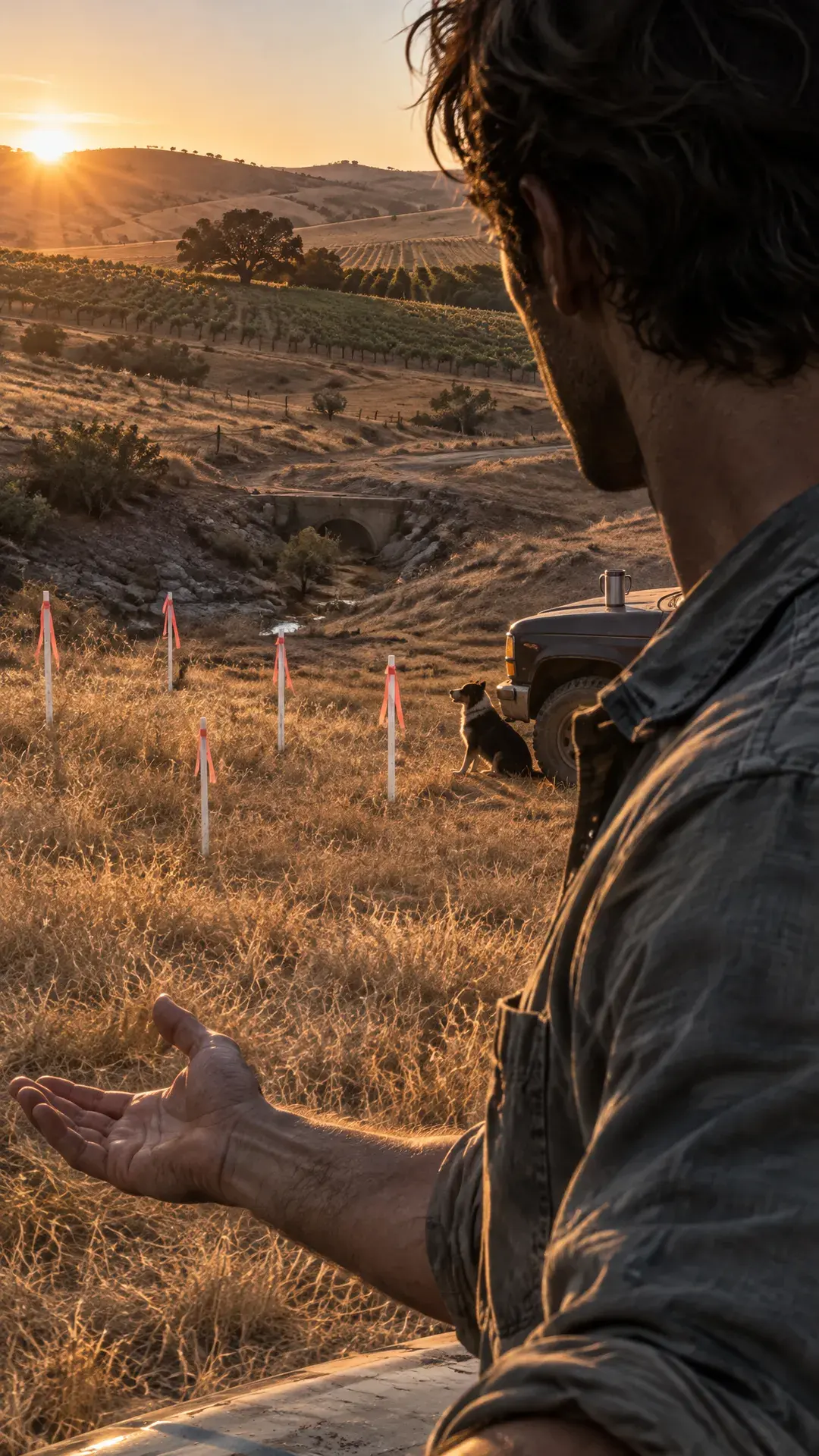
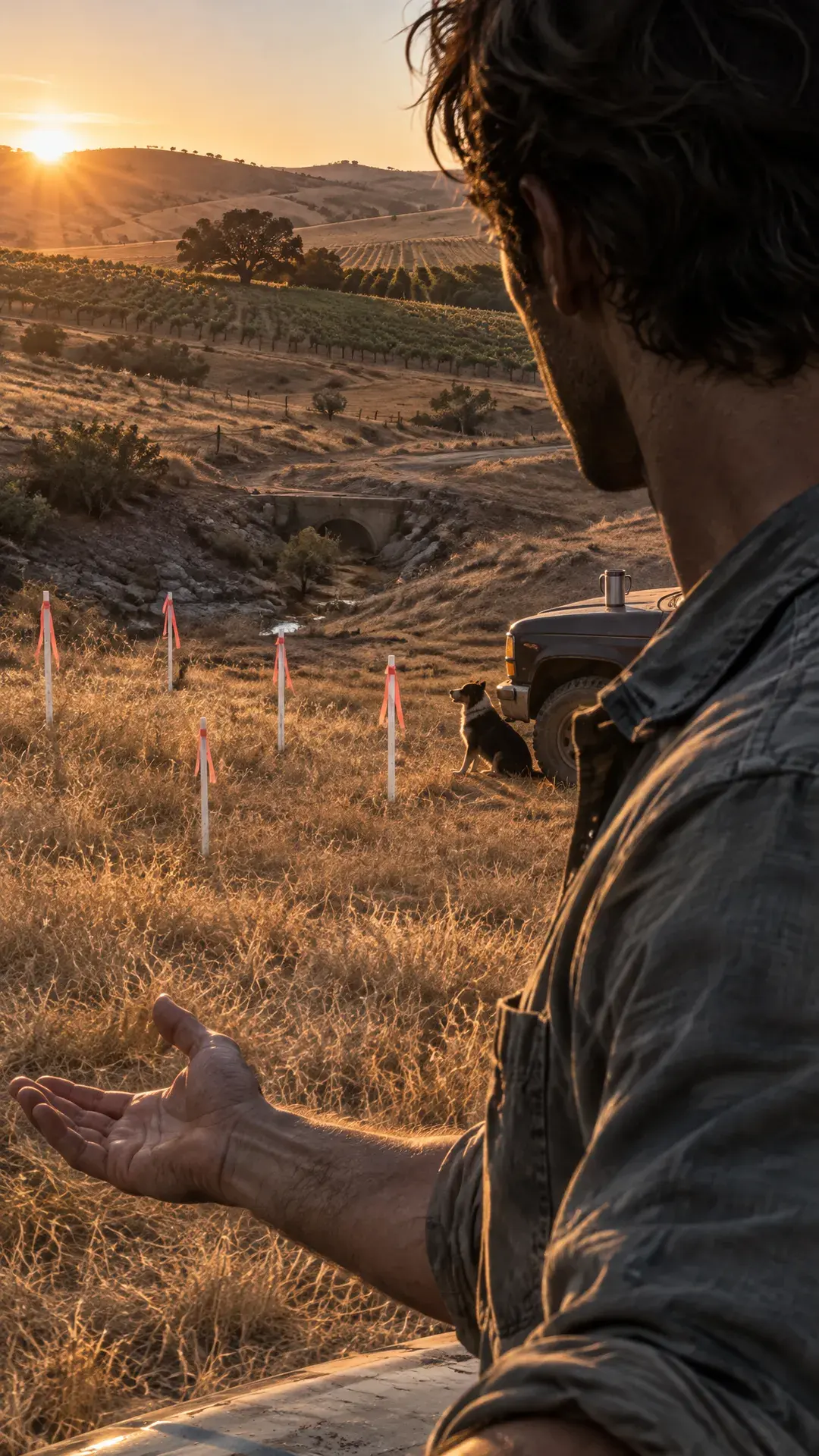
He found you above the wash, where the fence line had collapsed under the spring floods and no one had bothered to argue about it until now. Survey stakes stood in the dry grass like little white teeth, and the county planner's flagging tape flicked in the first real wind of the day.
Caspian Marlowe stopped ten feet short and set his coffee cup on the hood of his truck. The collie that followed him everywhere sat down and stared at the stakes as if they were a flock of sheep with opinions.
You're early,
he said.
Or decided to sleep out here. Don't matter which.
He looked at the stakes: four of them, at each corner of the strip the Cades had always claimed — the line his grandfather would have called an ambush.
I've spent nine years keeping this place alive. I'm not watching your family finish what the bank started,
he said.
He didn't raise his voice. That was the unnerving part.
I've got the 1938 survey in the office. It puts the wash where the wash actually runs. Yours came after my grandfather was sick as a dog, so I'll say this once — pull the stakes before the planner sees them, and we can still pretend you came up here to look at the view.
The collie yawned.
He waited. The spring burbled somewhere below the culvert, thin in the dry bed.
If you leave them, I'll leave mine. And we'll let the county draw the line for both of us. Just know this spring's been feeding my rows since before your family ever had deeds. That part's not a story. That part's a fact.