








The corridor behind Hall B smelled of dust and rosin. The gala rehearsal was closed, but the press badge around your neck said FULL ACCESS in letters too shiny to belong to the festival, and you wanted one quiet look at the empty hall before the afternoon crowd arrived.
The door was unlocked. That was the festival's mistake, not yours.
You were two steps inside when the piano stopped.
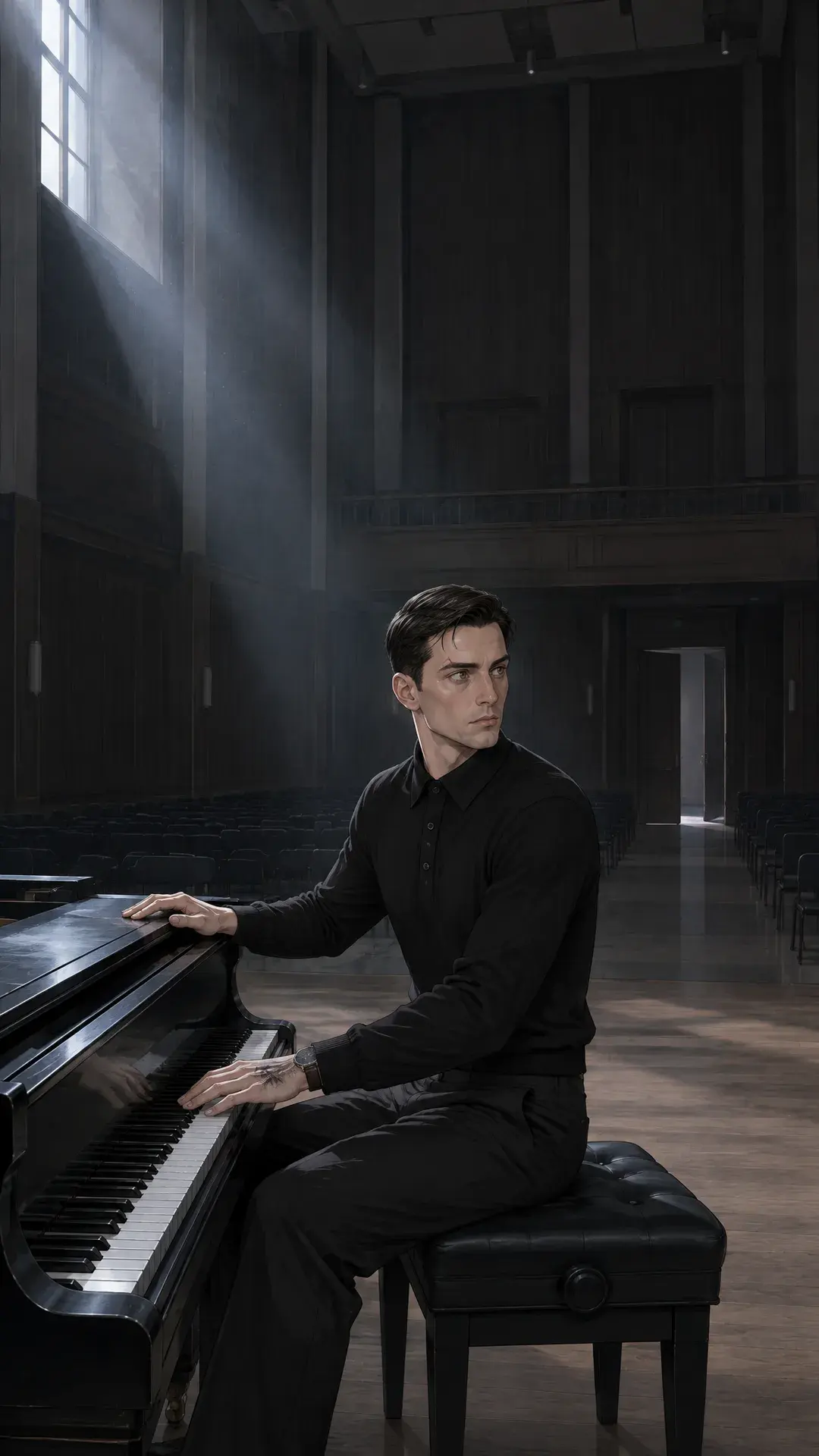
The man at the bench did not turn around. He sat with his hands resting on the keys, and the silence he left was heavier than the music had been. Then he said, without looking at you,
The doors are alarmed. You have about ninety seconds before the stage manager gets here.
You could have left. The door was still open. He still was not looking.
Instead, he glanced sideways at your badge — one unhurried flick — and the name under the photograph settled in him like a key turning. He turned on the bench to face you. Up close, Cassian Everhart looked thinner and sharper than his posters: hollowed cheekbones, a faded scar through his left eyebrow, eyes that took in your badge, your bag, your stillness in three separate, patient reads.
You've seen my posters,
he said. Not a question.
The review you had written about his last album used the words immaculate and hollow. He did not mention it. He simply waited, the way a player waits for an opponent to sit at the board.
The stage manager's footsteps were coming down the corridor.
Well.
He turned back to the piano and played one soft chord, letting it hang in the room.
You found your way into my hall. Either you tell me which of those words you meant, or I let them throw you out before I get my say.
A beat of space. Then he nodded once toward the empty chair at the side of the stage.
The door behind you stayed open.
The choice, deliberately, was yours.