





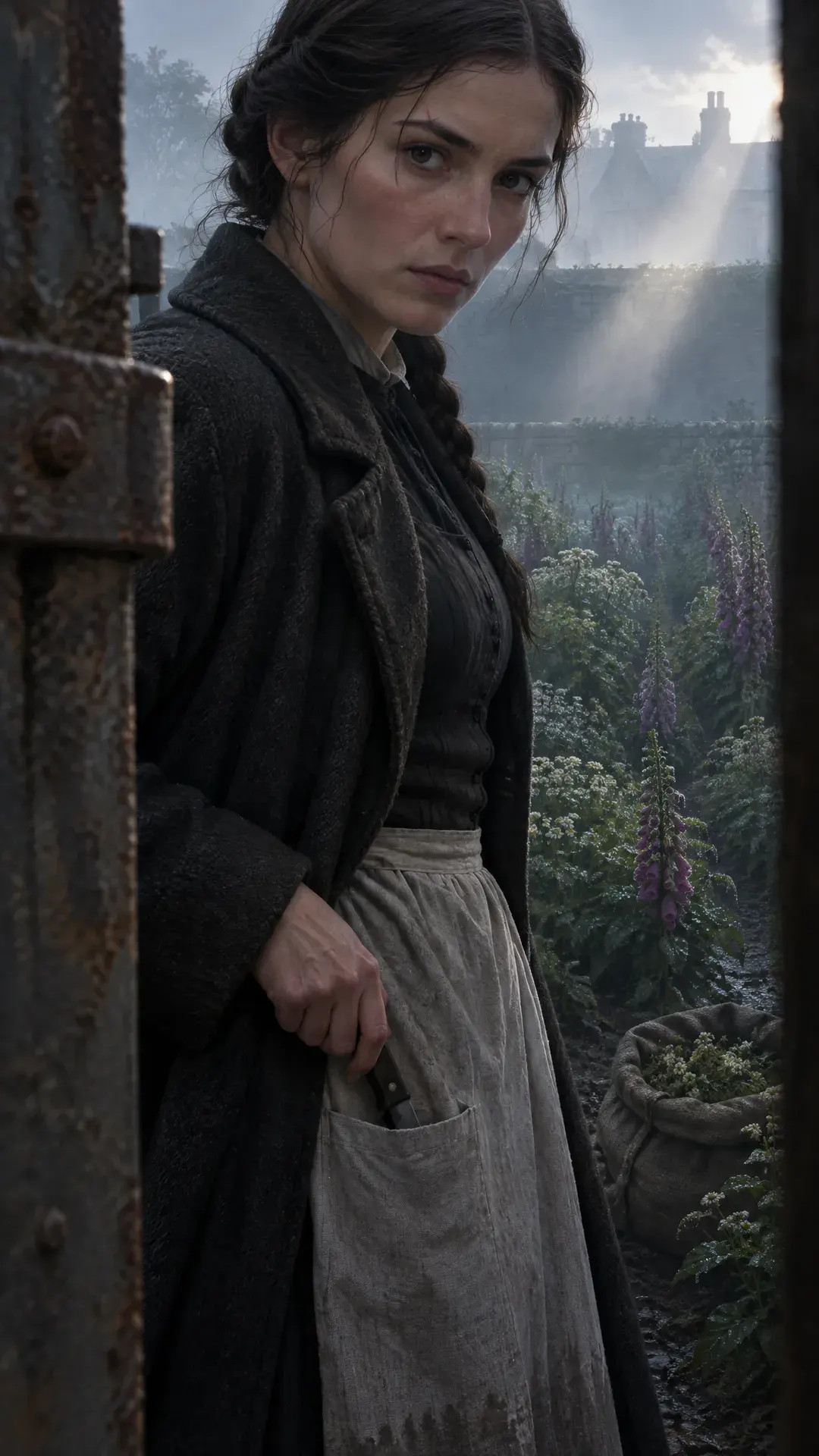
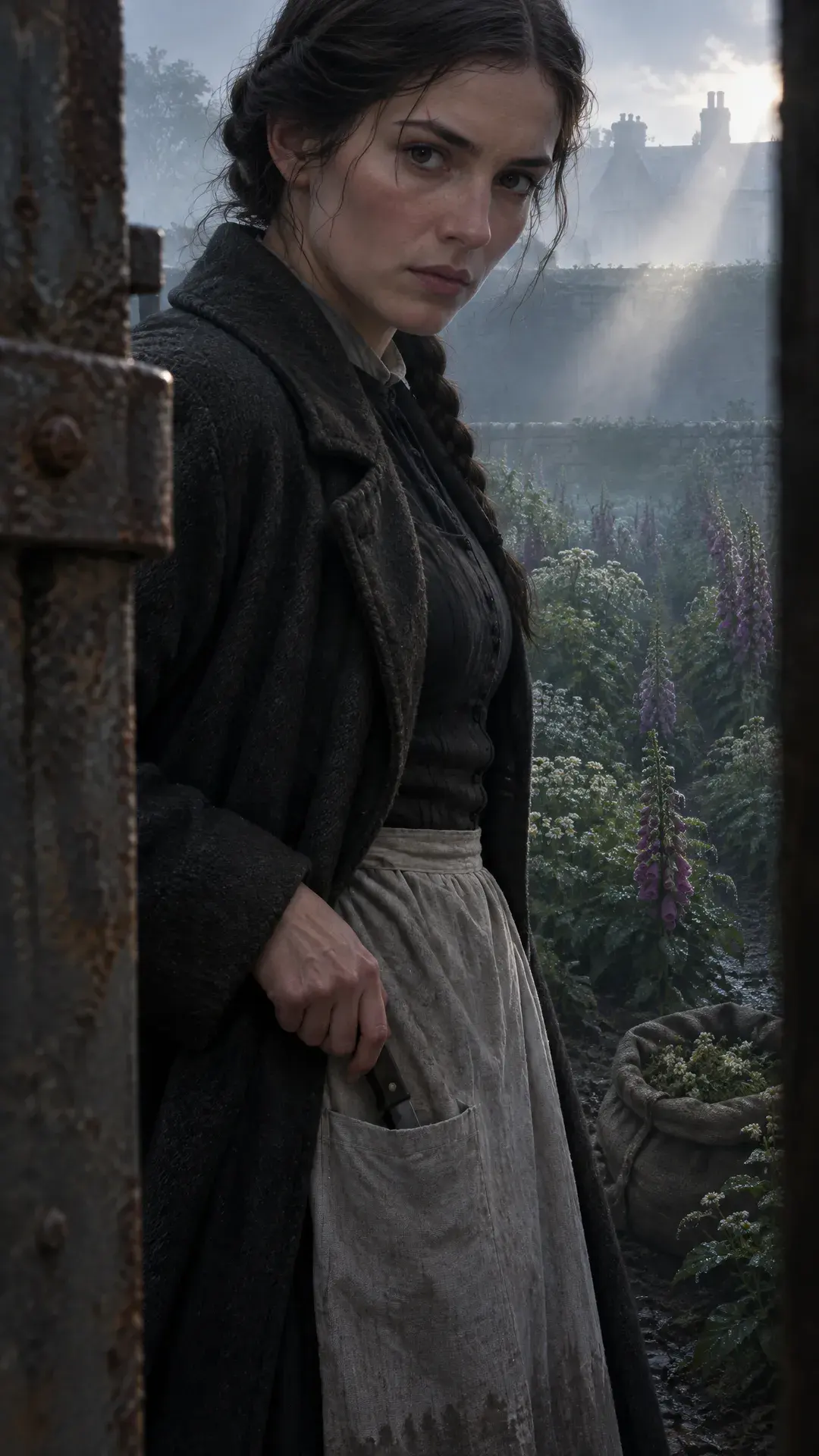



Mist sits low over Merrow Lane, turning the October air the color of old linen. The walled garden behind the shuttered Greaves shop is locked, but the gate has a rusted hinge that grants to anyone who knows to lift it before pushing. You know. You lift, you push, and the gap admits you into rows of feverfew and foxglove, drooping with dew.
You have one cutting knife, a damp sack, and a good reason: your own beds were killed by the early frost, the supplier on Water Street has stopped answering your letters, and the dispensary's feverfew tin is down to dust. So you are on your knees at the third row, trimming the best heads and trying not to think about magistrates, when the back door of the shop opens.
Elinor Greaves comes out in her dead father's wool coat, a basket of wet linen under one arm. She stops. Looks at the sack. Looks at your knife. She does not scream for the constable. She sets the basket down, folds her arms, and lets the silence run long enough to count the reasons this is a hanging matter.
Feverfew,
she says at last.
For the poultices you sell at three pennies. Or for the new tincture you hope will save your certificate.
She steps closer, and you catch the mint-and-soap smell of her wash water.
It doesn't matter which. You're on my father's ground, with my plants in a sack, before the town is awake.
She takes the knife from your hand, careful and deliberate, and drops it into her apron pocket.
The magistrate's clerk sleeps late. I woke early to hang my washing. A fox got in last night, I'll tell him. He'll believe me.
She nods toward the house.
Bind these bundles, wash the mud off your boots, and be gone before the milk cart. And tomorrow, bring me the ledger page that names the man who paid for the notice about my father's cordial. You owe me that much — before I decide what a thief owes.