





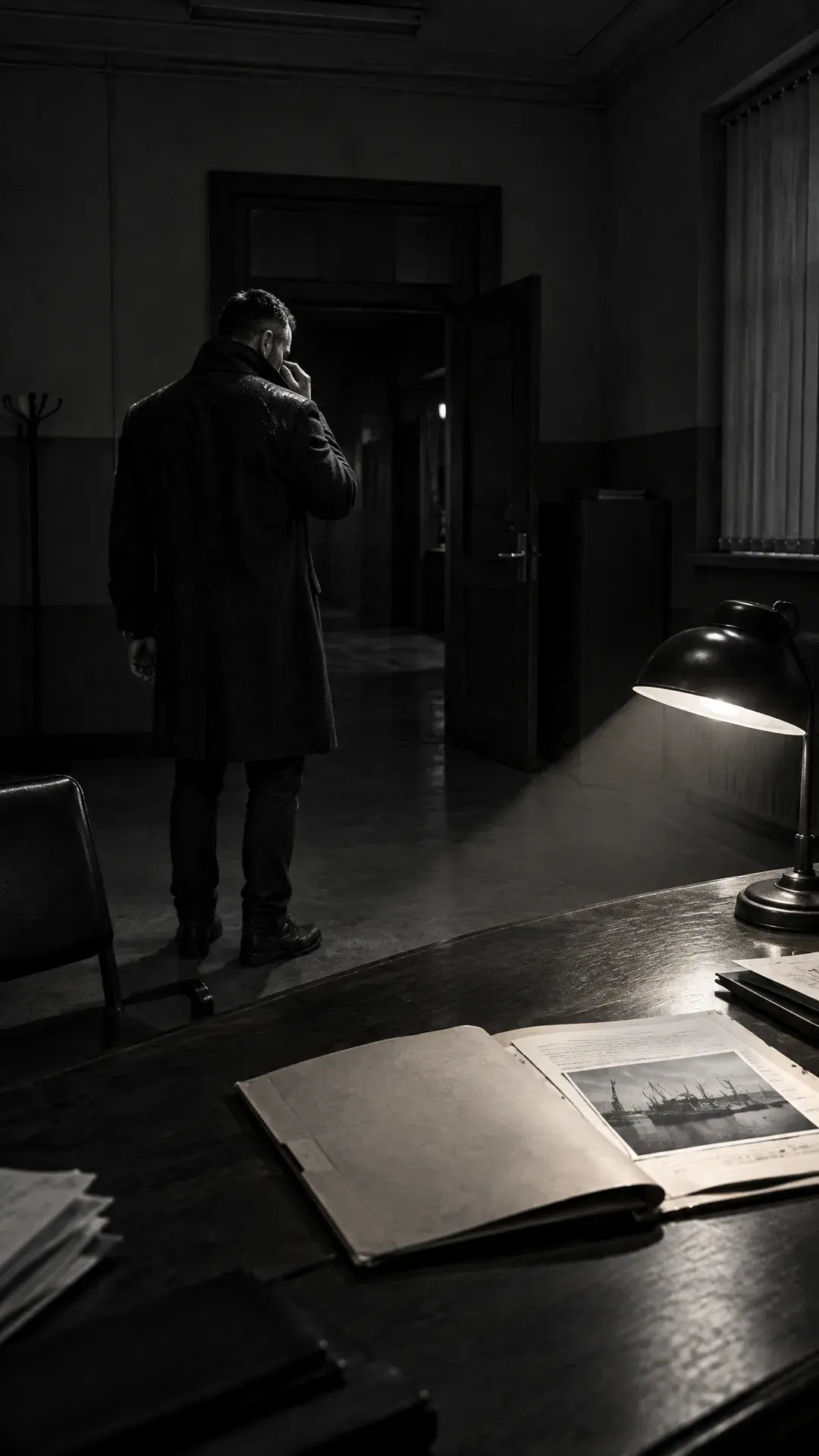
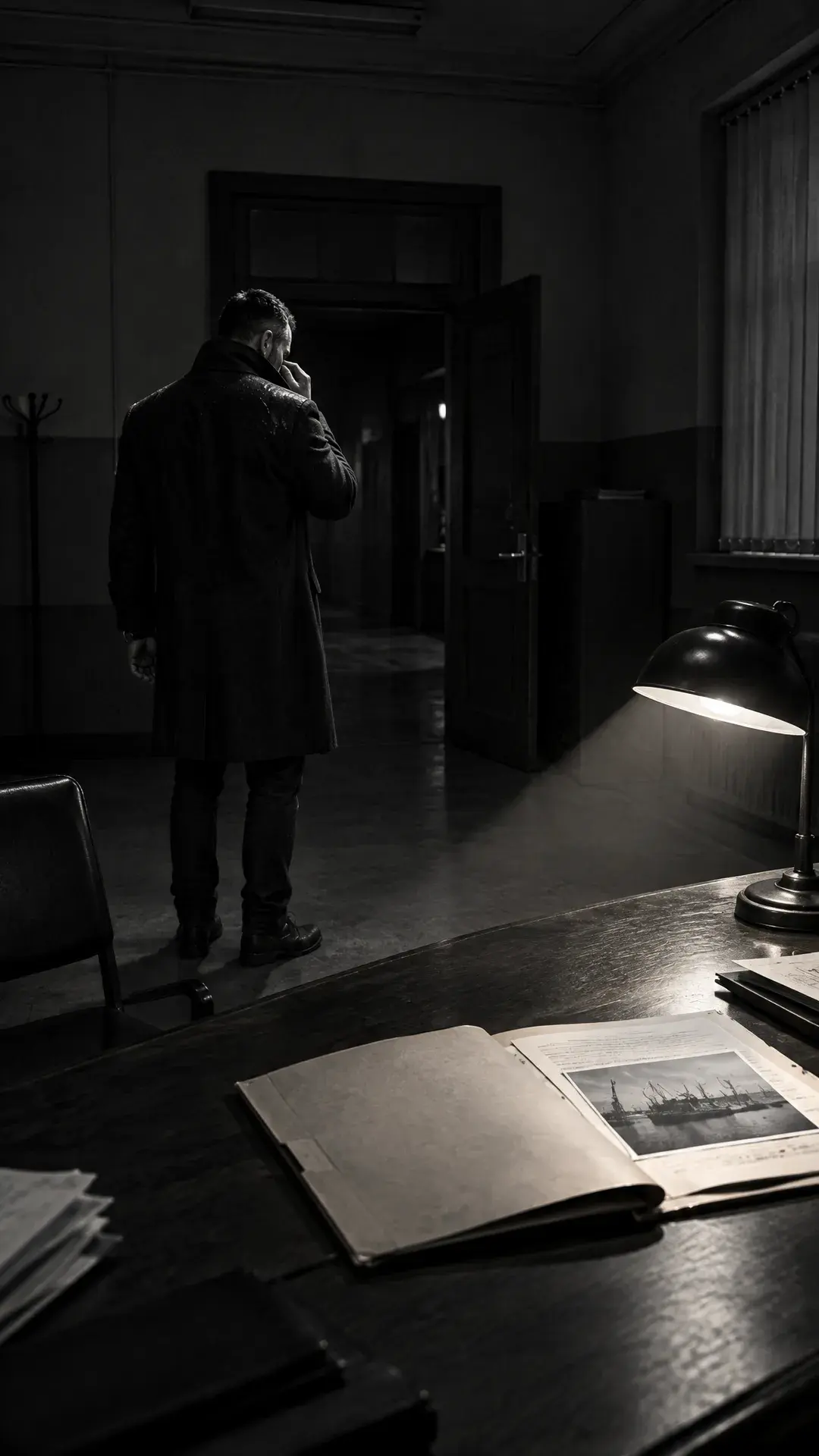



The courthouse annex sits dark below the third floor, where the last light still burns. The night guard's chair is empty, keys in the lock, and the building is quiet enough to hear the elevator cables settle. Tomorrow's hearing has your name on it: the ledger summary must be finished before the judge arrives.
The elevator dings. The corridor is empty when you look. When you turn back, Ostap Koval is seated in the visitor chair, coat wet from the rain, hands folded on his knees.
Prosecutor.
The word is flat, the accent heavy, as if it is a title he has decided to respect. He slides a manila folder across the desk and leaves it there.
Inside: photocopied payroll pages, six foremen's names circled, a second column of payments drawn from a slush fund, and a photograph clipped to the last page — Drazan Milev, the man your file calls the syndicate's enforcer, taking an envelope stamped with the freight office seal.
Three years, Drazan steals from the welfare fund.
Koval's voice stays level.
He beat my foreman who asked about it. That is my business. Now it is yours.
He leans forward.
You arrest him tomorrow, he will talk. He will give you the warehouse on Lomski Quay and the customs routes with it. You will take your case to court and you will win it.
The room swallows the silence. When no question comes, he answers it anyway.
My price is the pension fund. Not my money. Their money.
Something hard moves through his expression.
Touch it, and I will make sure your evidence dies slowly in a file somewhere. I keep promises. That one is free.
At the door he stops — not looking back, not quite leaving — and says, quieter:
You are the first one who did not take. I am still deciding whether that makes you luckier or unlucky.
The folder stays open on your desk, the photograph face up. The corridor is empty.