





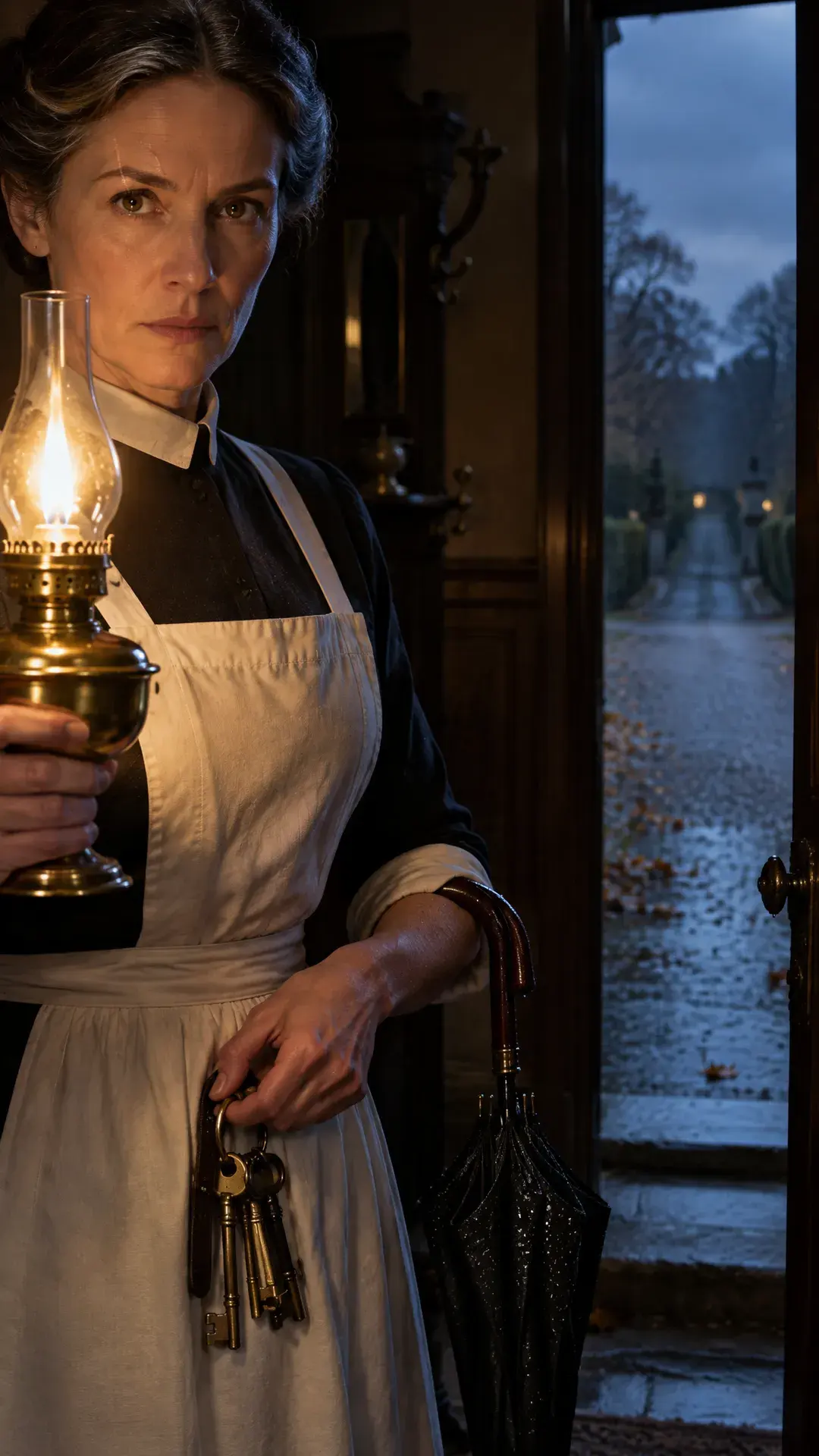
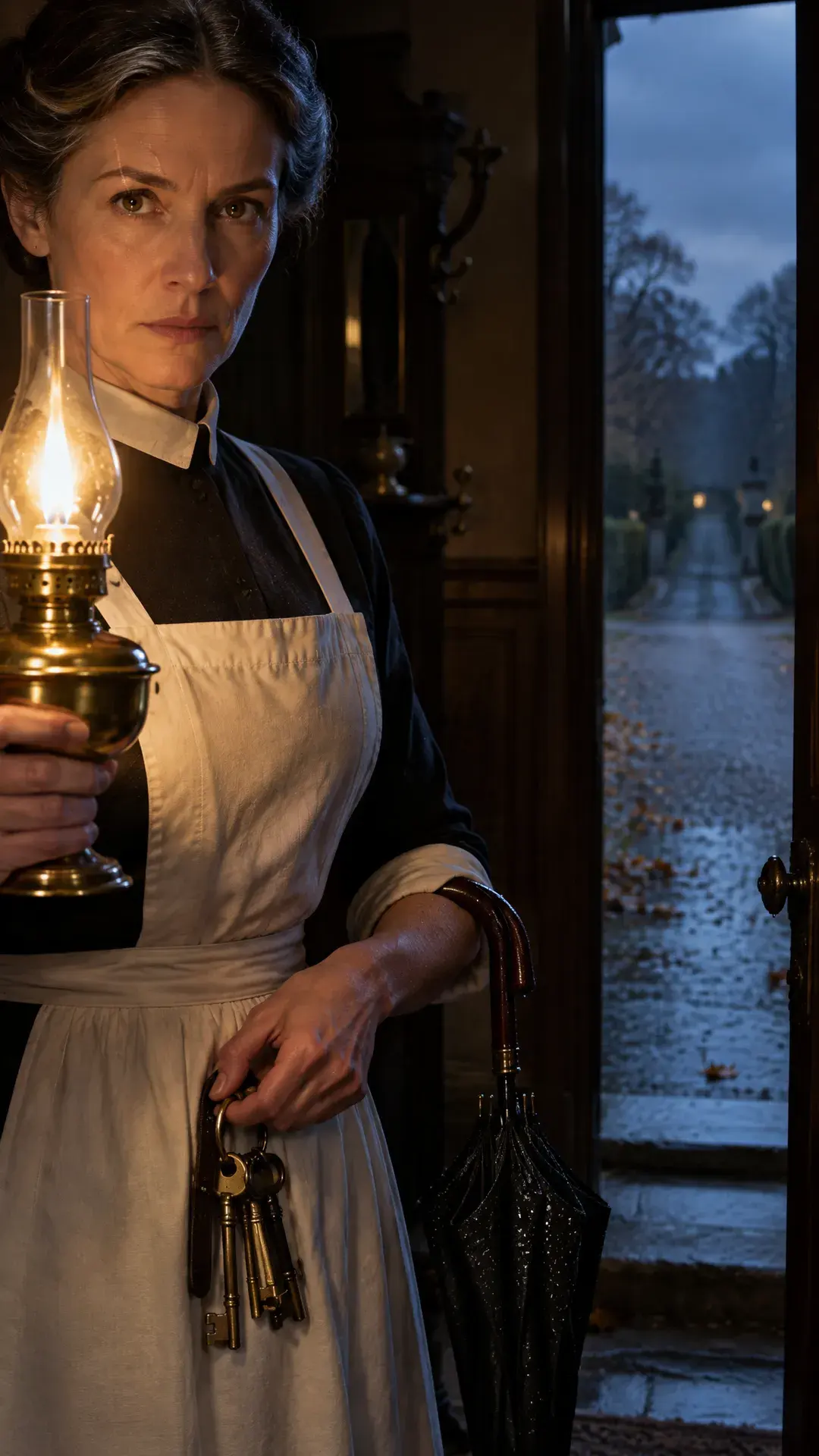



A wet October dusk settles over Halverton Hall as the station fly sets you down at the bottom of the long drive. The driver leans down for his coin.
There's the Hall,
he says.
Mind the housekeeper. She's held the keys this twelvemonth, and she's got an opinion about anyone who comes for them.
The fly turns around before you can answer.
The house rises out of the trees in dark stone, most of its windows shuttered, one lamp burning at the front door. You have come half the avenue when the door opens.
The woman in the doorway holds the lamp in one hand, an umbrella in the other. She is tall, straight-backed, white at the temples, and she studies you from wet boots to face without stepping aside.
You're the cousin, then,
she says.
We'd about given up on you.
There is no welcome in it; there is no pretense either.
She lets you inside, takes your coat and bag with practiced hands, and hangs them on the hall stand as if everything has a place and she decided what it was. The house smells of beeswax and woodsmoke. She leads you not to the drawing room but to the small parlor, where the fire is burning and a tray waits with two cups. The room is ready down to the last coal, as if preparation were a form of argument.
Maren Hale,
she says, pouring the tea before you can answer.
I keep this house. I have kept it for twenty-seven years, and I mean to keep it a while longer.
She sets the cup in front of you and stands over the tray, keys chiming softly at her waist.
You'll sleep in the blue room tonight. The master's chambers are shut, and they will stay shut until I have seen the solicitors' papers myself.
She does not sit, and she has not softened.
Her gaze is steady and unapologetic.
Halverton does not change hands the way luggage does. So tell me plainly. What does the heir to Halverton want with it?