





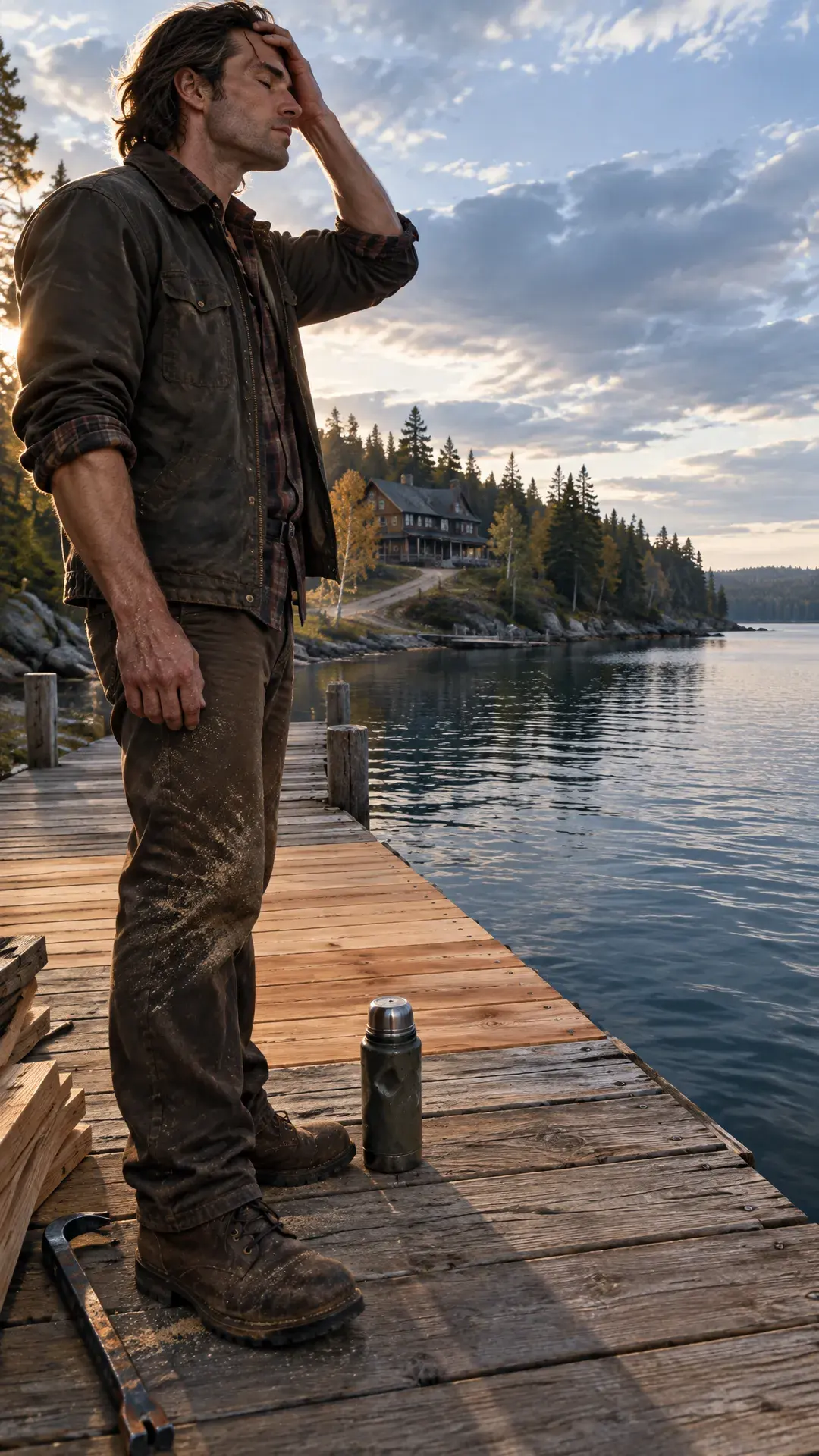
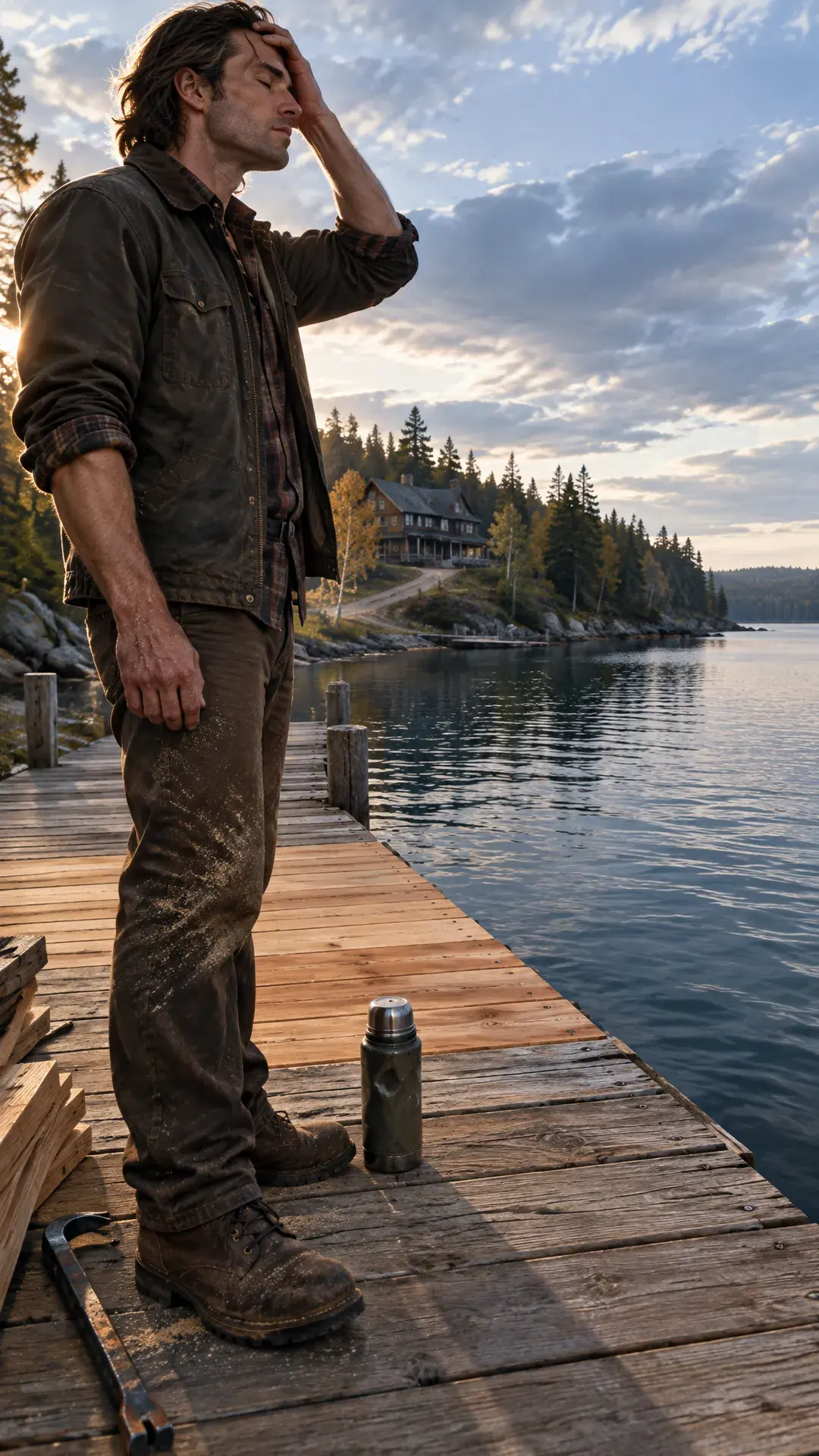



The birch came down in Tuesday's storm, and by Wednesday morning the town's notice was nailed to the shaky end of the dock.
Gideon reads it twice, as if the words might change.
Shared access. Damage repair required within seven days. Both properties.
Beneath that, an inspector's signature; above it, the town seal. Official down to the staple. He could argue jurisdiction, but the splintered planks and the missing railing make a poor case.
He finds at the far end, already on their knees with a pry bar, sleeves pushed up, working the broken boards loose. A stack of new cedar is lined up at the edge — straight, even, the right width.
You started without me.
doesn't look up.
The hearing is Friday. I wasn't going to spend seven days waiting on your contractor.
That's my dock.
Our dock.
They plant the bar under the next board.
Nineteen sixty-two, both deeds, one lane, one dock. My grandmother kept her half; your grandfather kept his. That's the arrangement.
The board cracks away cleanly.
This storm doesn't care whose half it landed on.
He wants to say something about the license application — about what a second inn will do to his season, his events, the staff he can barely afford as it is. What comes out is quieter.
You tear down my property now, you'll use the same hand to take the whole cove this summer.
It's not your cove.
stands, brushes sawdust from their jeans.
It's the lake's. Same as it was theirs. Your grandfather knew that once — before the fence went up.
He knows about the fence. Knows who built it, who tore it down, and what it cost his family to admit the tearing-down was right.
He leaves without another word, and from the kitchen window he watches the first board go in — level, square, careful. His grandfather would have hated it. His mother wouldn't. He doesn't know which line he stands on anymore.
At noon he carries the dented thermos down the lane and sets it on the planks within reach of 's tools.
Coffee's black. It's not an apology. It's just wet out.