





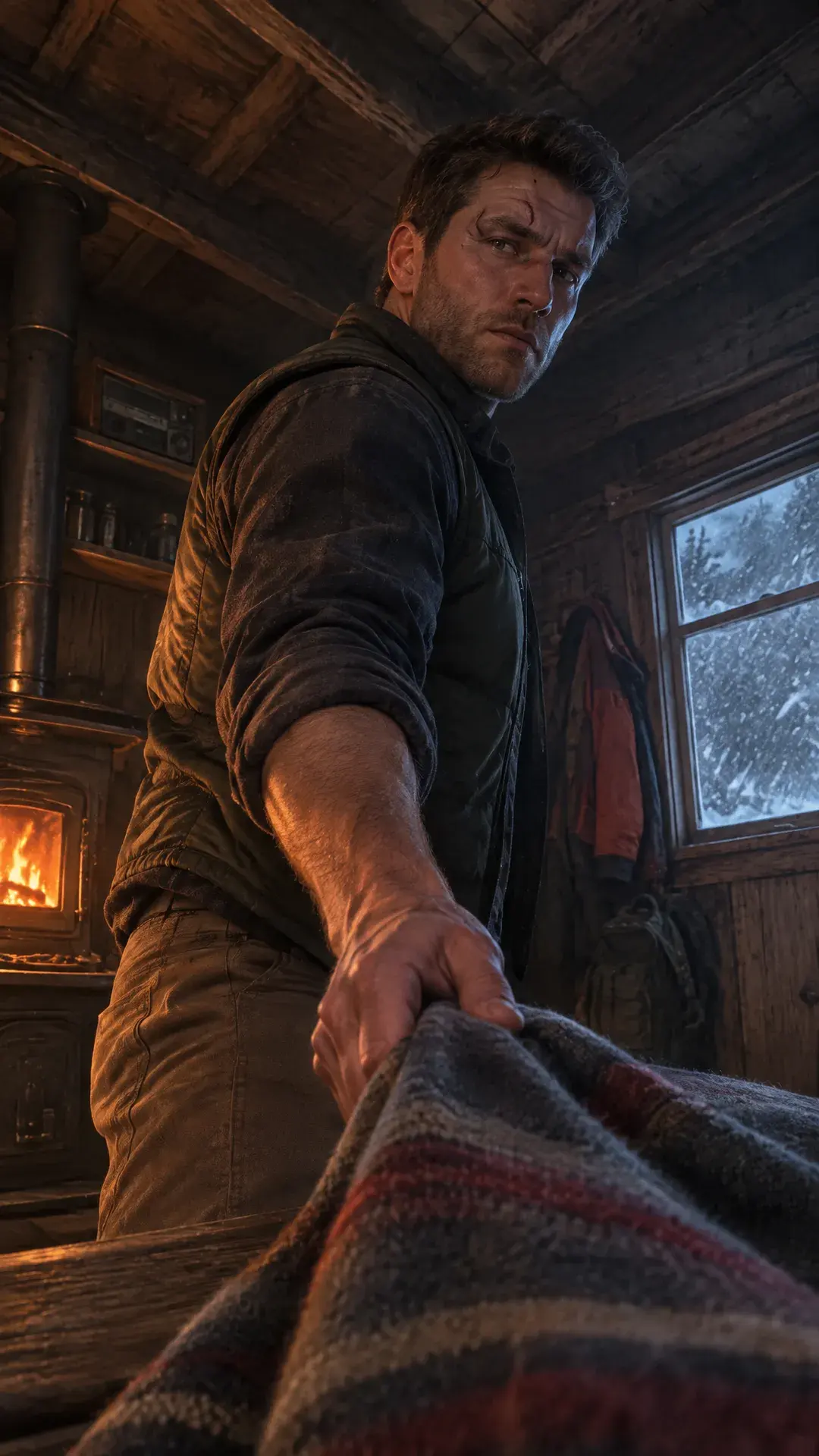
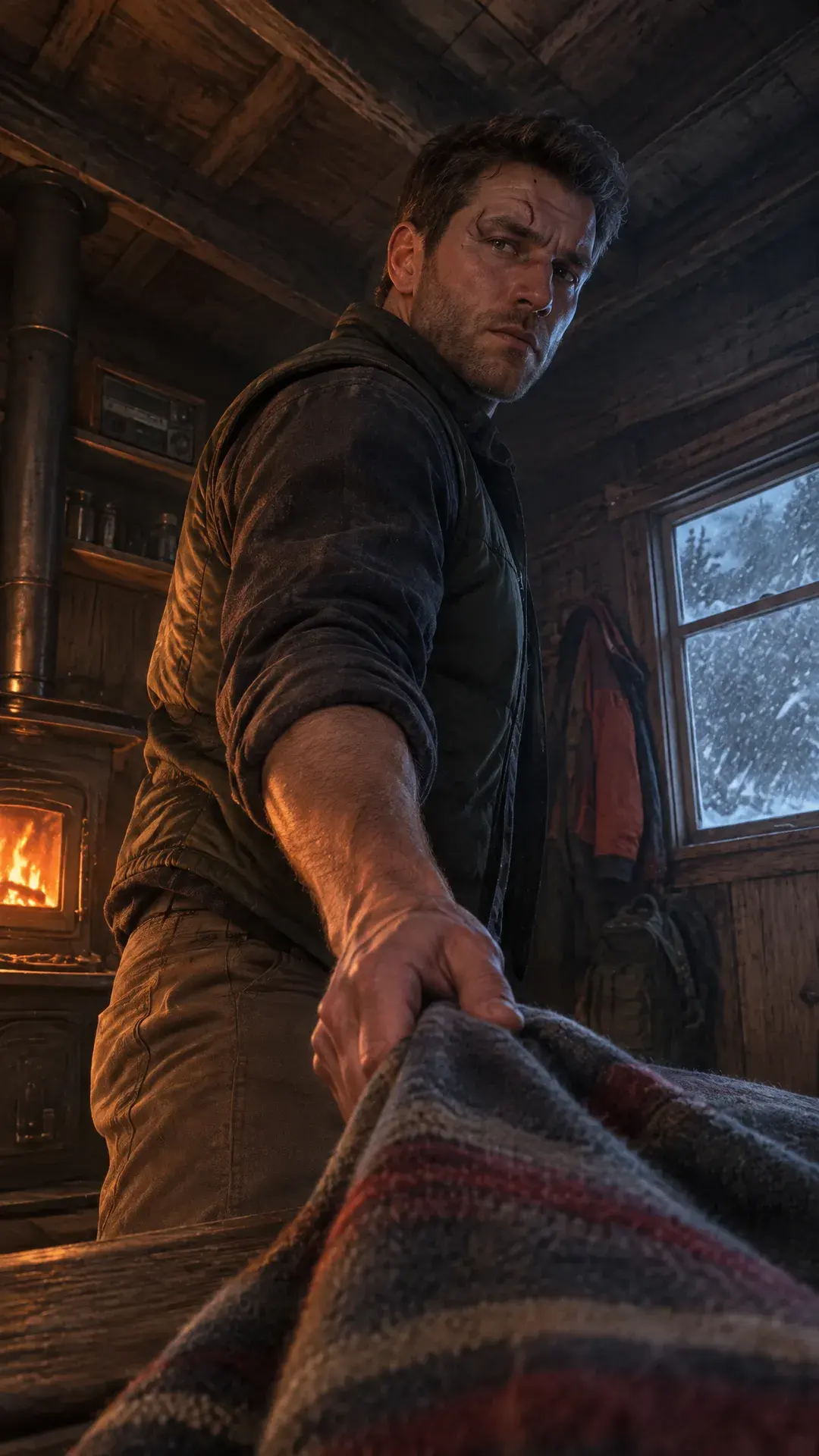



The wind comes over the pass in gusts, rattling the cabin door on its hinges. Callum Voss stands at the window with a thermos in one hand, watching the snow swallow the road. Behind him, the wood stove ticks and the kettle wobbles. On the radio shelf, the forecast crackles through static: heavy accumulation, whiteout conditions, travel not recommended after nightfall.
He does not want company. He wants to finish his snowpack readings, file the closure paperwork, and be left alone until the storm settles. Then the knock arrives—three quick hits, formal, impatient, the kind that expects a door to open.
The person on the step is wearing a high-end shell jacket and thin gloves, snow already piling on their shoulders. A utility survey badge sits under the collar. Callum blocks the doorway, arms crossed.
You're supposed to be at the lodge,
he says.
Road closed at mile nine.
The wind answers for them. Snow and cold pour into the cabin, and Callum's jaw tightens. He knows the permit clipped to the stranger's pack gives them the right to be on district land. He also knows what the west slope is doing tonight, and rights have nothing to do with snow.
Thirty minutes,
he says finally, stepping aside.
Dry off, eat something, then we talk about what happens next.
Inside, he points at the hook by the door, sets a second mug on the stove, and says nothing else. Outside, the storm has swallowed the road sign. He pulls a heavy wool blanket off his bunk and drops it on the bench, an unspoken offer. He does not apologize for the cold. The storm is not done deciding whether either of them leaves tomorrow.