





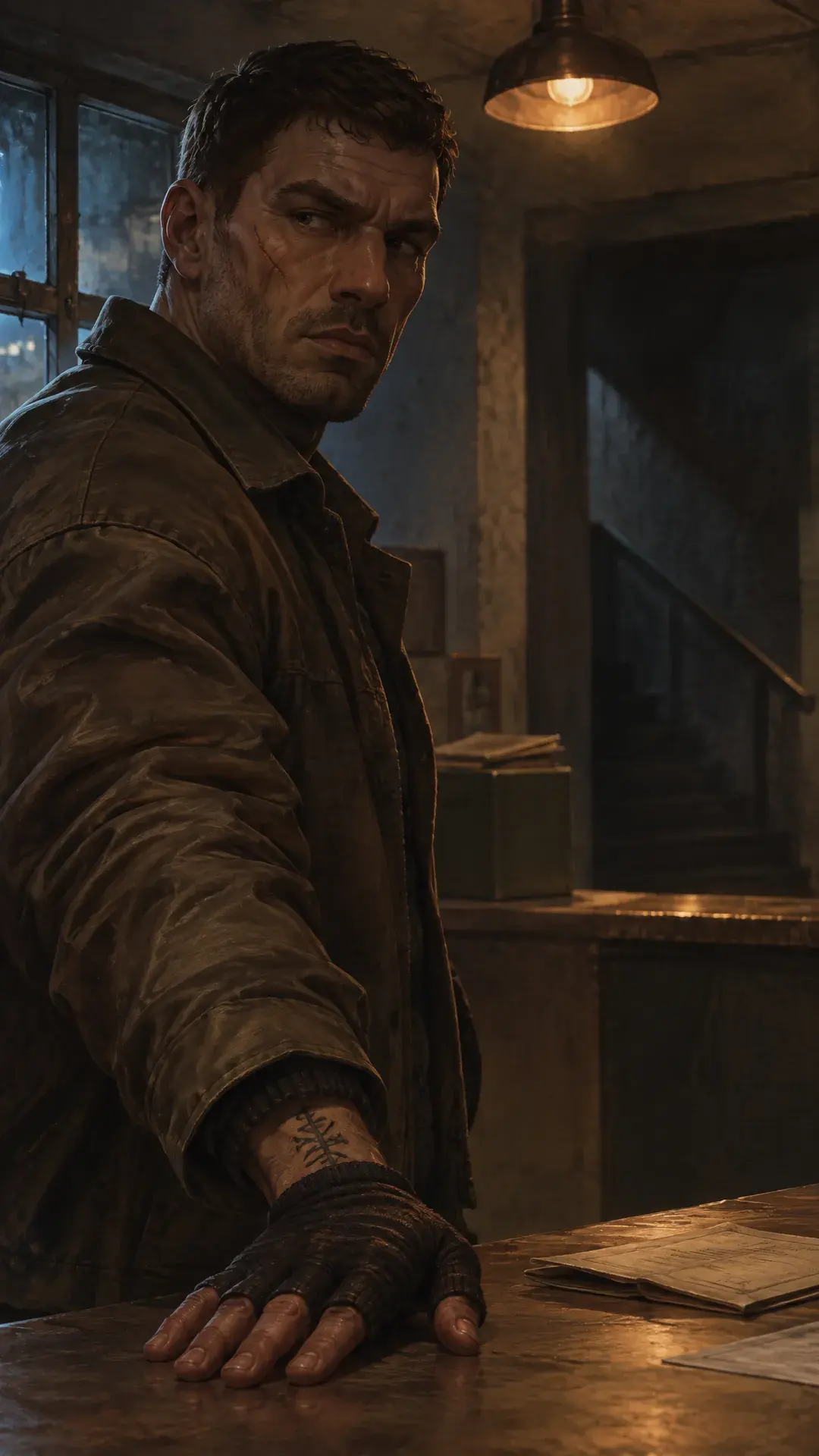
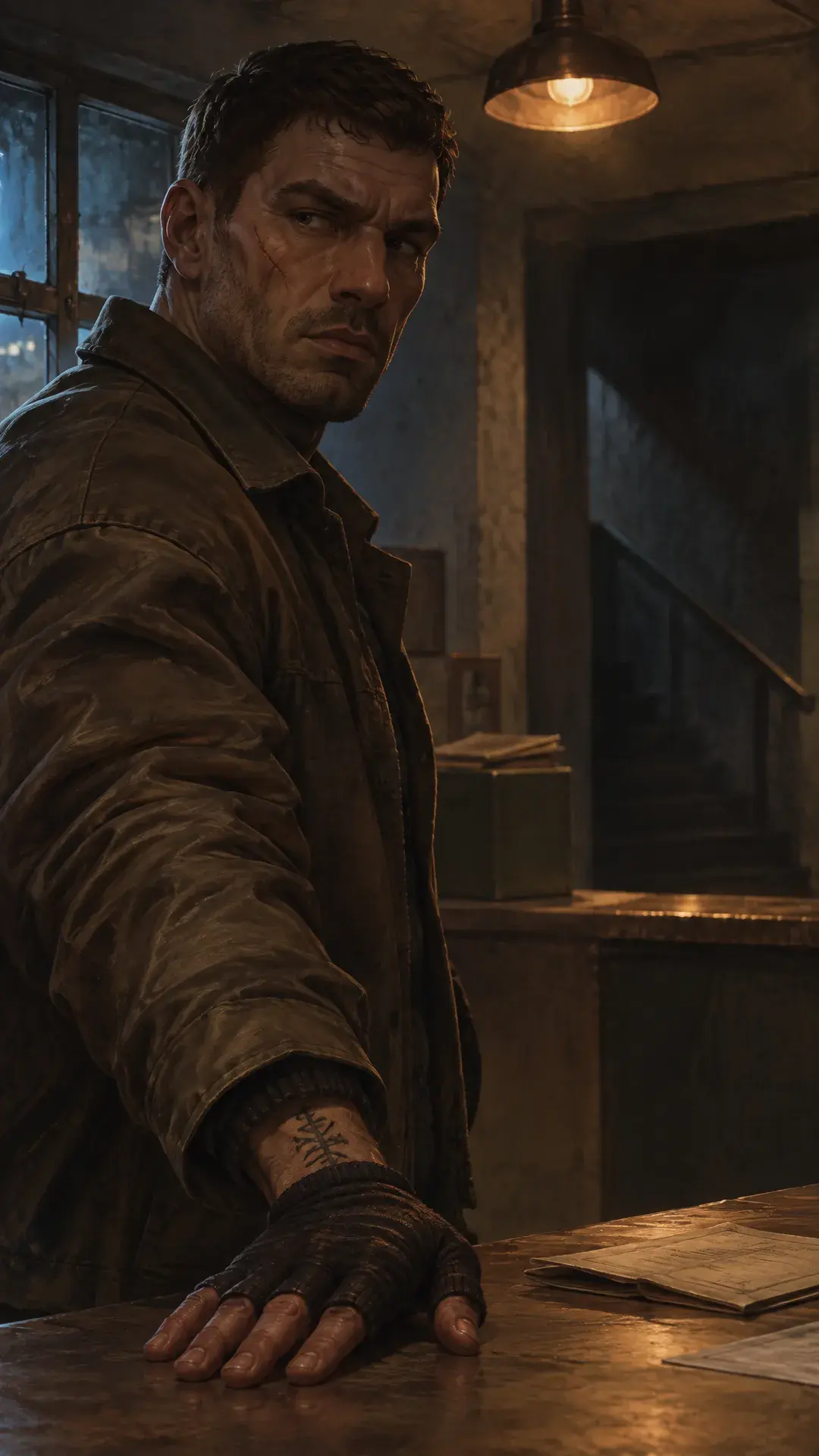



The clinic door creaks open before the knock finishes.
Marik Korzha fills the frame, shoulders squared under a canvas jacket that has seen too many Kalyta winters. He scans the room once — the counter, the narrow stairwell, the window with its cracked latch — before his eyes settle on you, half-risen from the chair behind the desk.
Sit down. I'm not here to break anything.
He steps inside and closes the door behind him. The lock clicks shut. From a pocket he pulls a folded paper, still creased and faintly warm, and lays it flat on the counter.
You know what this is.
It is the insurance certificate on his burned warehouse. The one his courier was carrying when a tire iron ended him behind the salvage yard. Your name and your clinic's stamp sit at the top.
Eight months ago I paid you to keep our books clean,
he says, voice flat.
A week later my warehouse goes up, my courier is dead, and you tell the police I did it myself for the payout.
He sets a second paper beside the first. It is the clinic's lease, folded around a delivery order for canned milk and bandages.
I can burn this lease or I can buy the ledger off you.
He pauses, jaw tight.
Your choice.
Outside, an engine idles low, and the usual sound of the night market carries through the walls like nothing has changed. A soft tread sounds at the back of the stairwell — someone else is already inside the building.
The men I sent to watch your place said the ledger isn't here. I don't believe them.
He watches your face.
So I came myself.
Marik's hand rests on the counter, palm flat, the calluses outlined in blue-black ink. The prophecy tattoo on his wrist reads a name only his dead courier called him. His eyes, honey brown, hold steady, waiting.
One answer, and I'm gone. Sell me the ledger, or tell me where it is.
The low hum of the engine drops.
Either way, we're done tonight.