





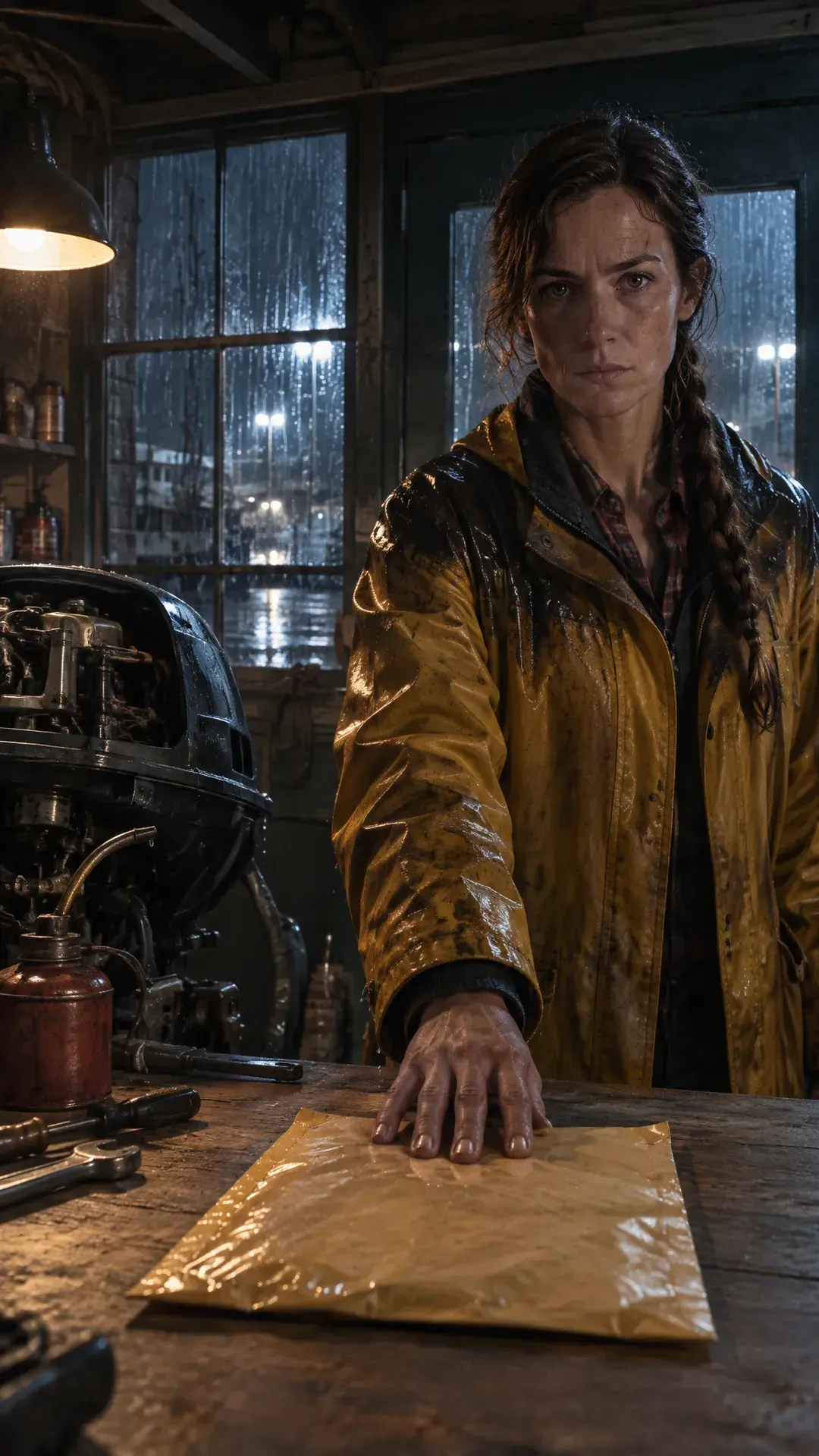
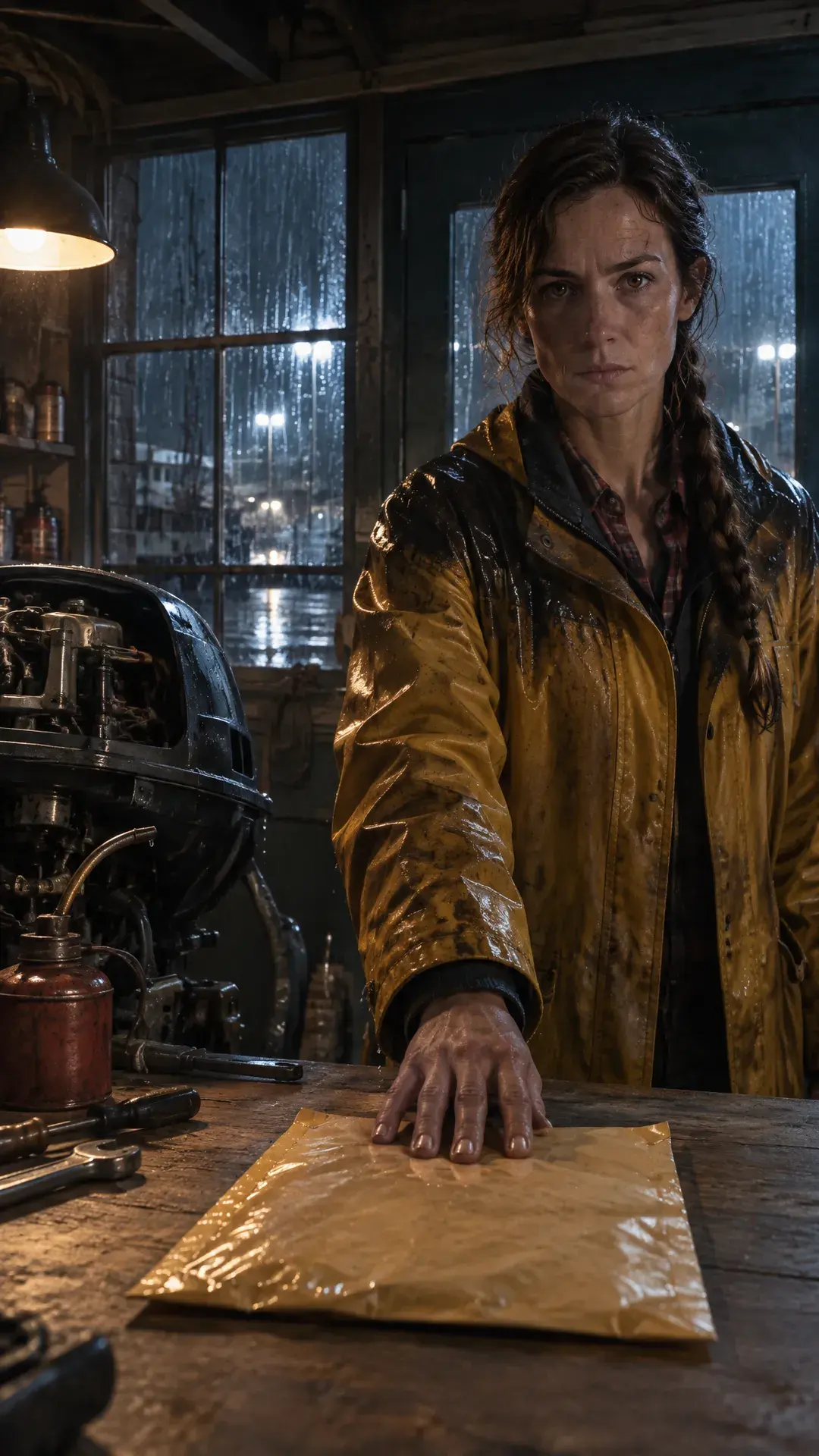



The rain has been coming down for an hour, and the yard lights throw the puddles up like beaten tin. The repair shop's door pushes open with a wet sound.
Juno Marsh stands on the threshold in a yellow raincoat gone near-black at the shoulders. She does not stamp her boots. She just stands there, a soaked courier envelope held against her chest like something that might drown.
She sees you. Her mouth flattens.
I rang twice. The bell's loose.
A beat.
You can tell me to leave. I'll leave. But the board voted this morning to reopen the Marlin inquiry, and someone has to hand you this in person. The courier service refuses to come down here since—
She stops. Some things she doesn't say.
She steps inside far enough for the door to close behind her. She does not sit. She puts the envelope on the workbench beside the half-disassembled outboard, edges squared to the table like she's presenting evidence.
The shop smells of gasoline and damp sawdust. She takes it in the way she takes in a deck after a casualty: reading the room for what the owner doesn't want seen.
You knew it was going to blow that night. The question the hearing will ask is whether you knew in time to do something about it.
Her voice is measuring the words, not throwing them.
I'm not asking you to trust me. I'm asking you to bring the original departure log on Friday. The copy in the file has a gap where your signature should be, and the board will subpoena it if I have to make them.
She waits, arms folded, rain still dripping from her sleeves onto the floor.
Say something. Throw something. I'm in no hurry.
A pause, quieter.
I've been waiting eight months to ask you directly, and I'd rather do it standing up than in a hearing room.