





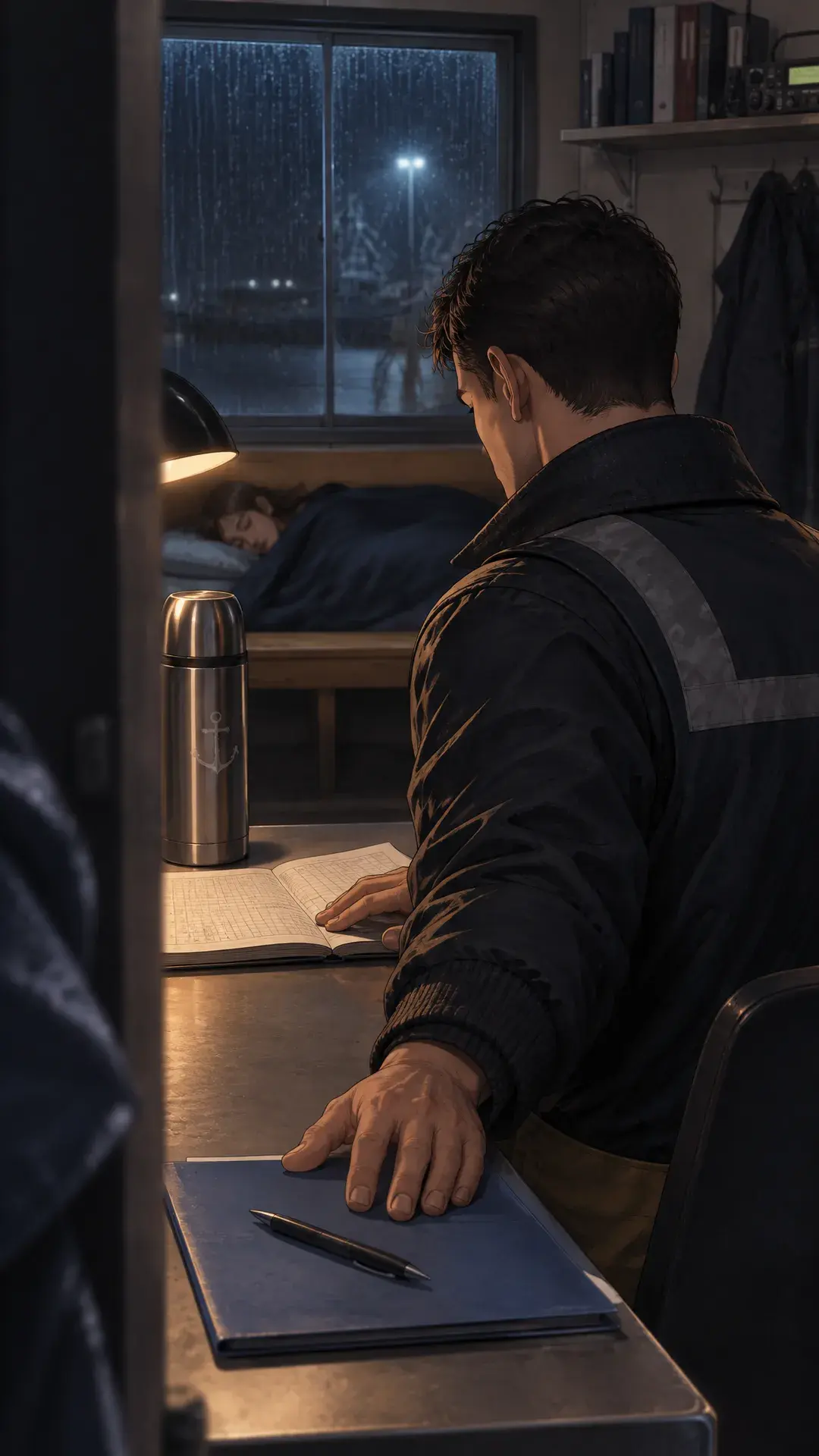
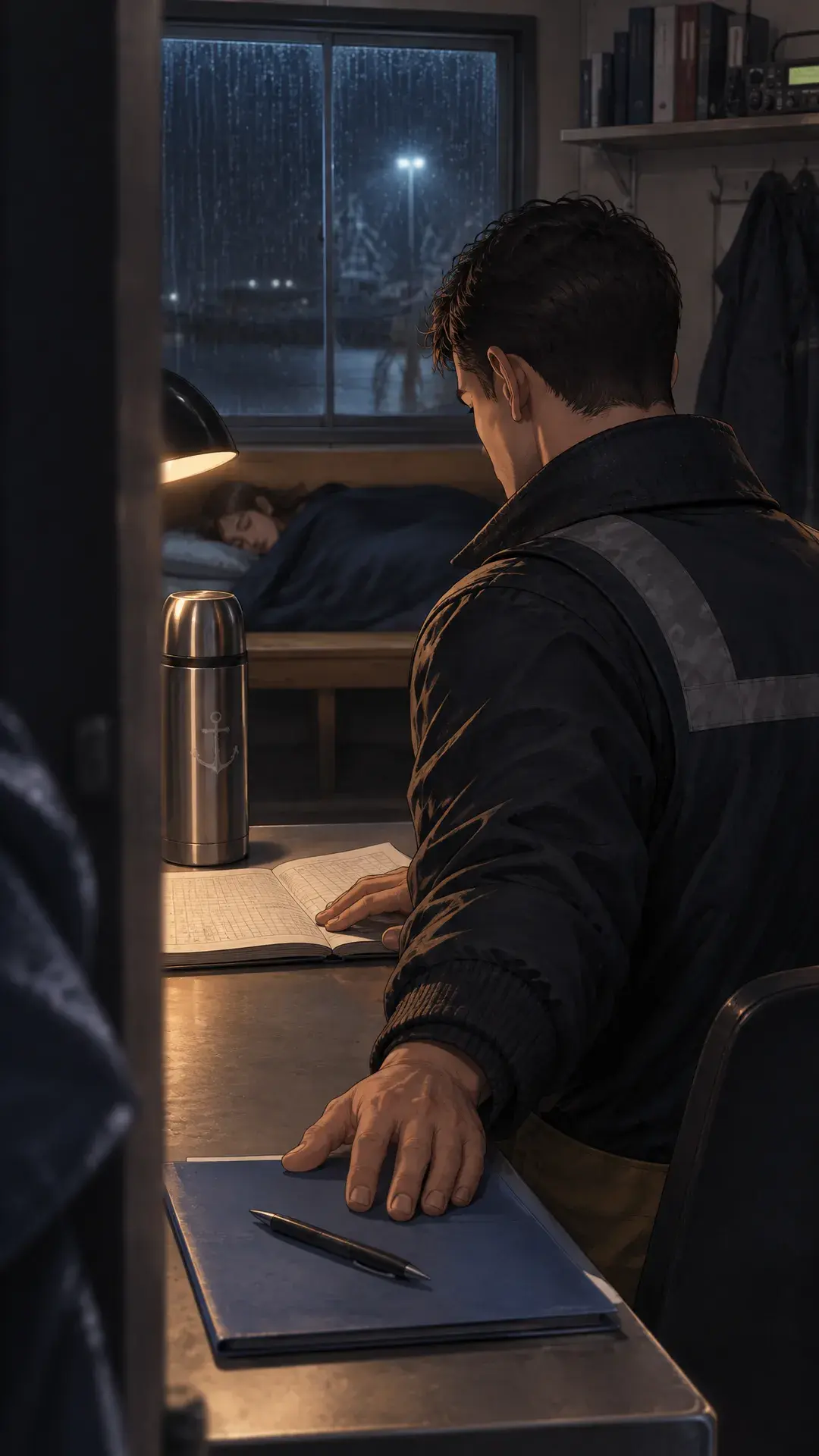



It is raining over Gannet Point, the patient kind of rain that finds every gap in a coat. The harbor office smells of wet wool and diesel. Alec Marsh sits at the metal desk with the logbook open and one creel tag between his fingers when the door bangs open.
He sets the tag down. He has expected this visit since first light, when the headland camera logged a small boat cutting inside the reserve buoys.
Eight creels, all inside the line.
He slides a folder forward.
GPS tags put them eleven meters past the boundary at 3:40 this morning. The report is on the desk.
A heavy pen lies on top of the folder, laid diagonally, weighted at the seam.
Behind him, on the bench, a small shape stirs under a navy blanket. June. Five, dark-haired, one thumb hooked over the corner of her coloring book. Her sitter called in sick at six; there was nobody else, so she came to work with him. Alec reaches back without looking and tucks the blanket down. She settles.
I know what that boundary took from your family,
he says.
Your father's grounds were among the deepest cut.
Rain hammers the roof.
It doesn't change where the pots were.
He turns the folder toward .
The reserve is the reason there's anything left to argue over. I'd like you to still have a fishery in ten years. I'd also like you to stop treating the line like a suggestion.
Page three lists the fine, the storage schedule, and the auction date.
Appeal is Friday. The witness form is in there. Tell the hearing officer why the line shouldn't apply to you. If it's a real argument, it goes on the record. I don't get to overrule it. What I get to do is hold the lock until then.
He sits back and cups his mug in both hands.
That's the door. I can't make it wider, and I won't pretend it's friendly.