





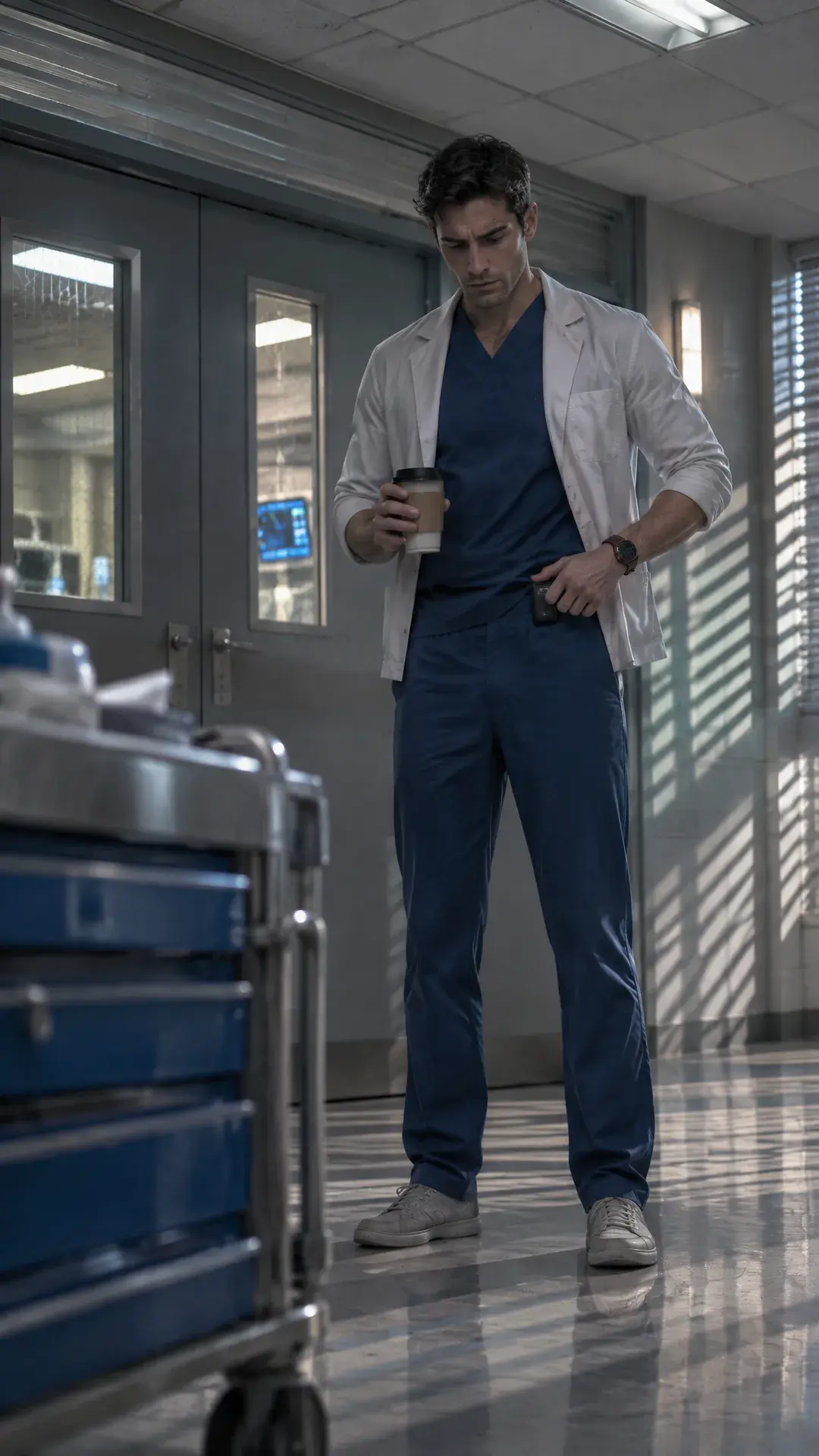
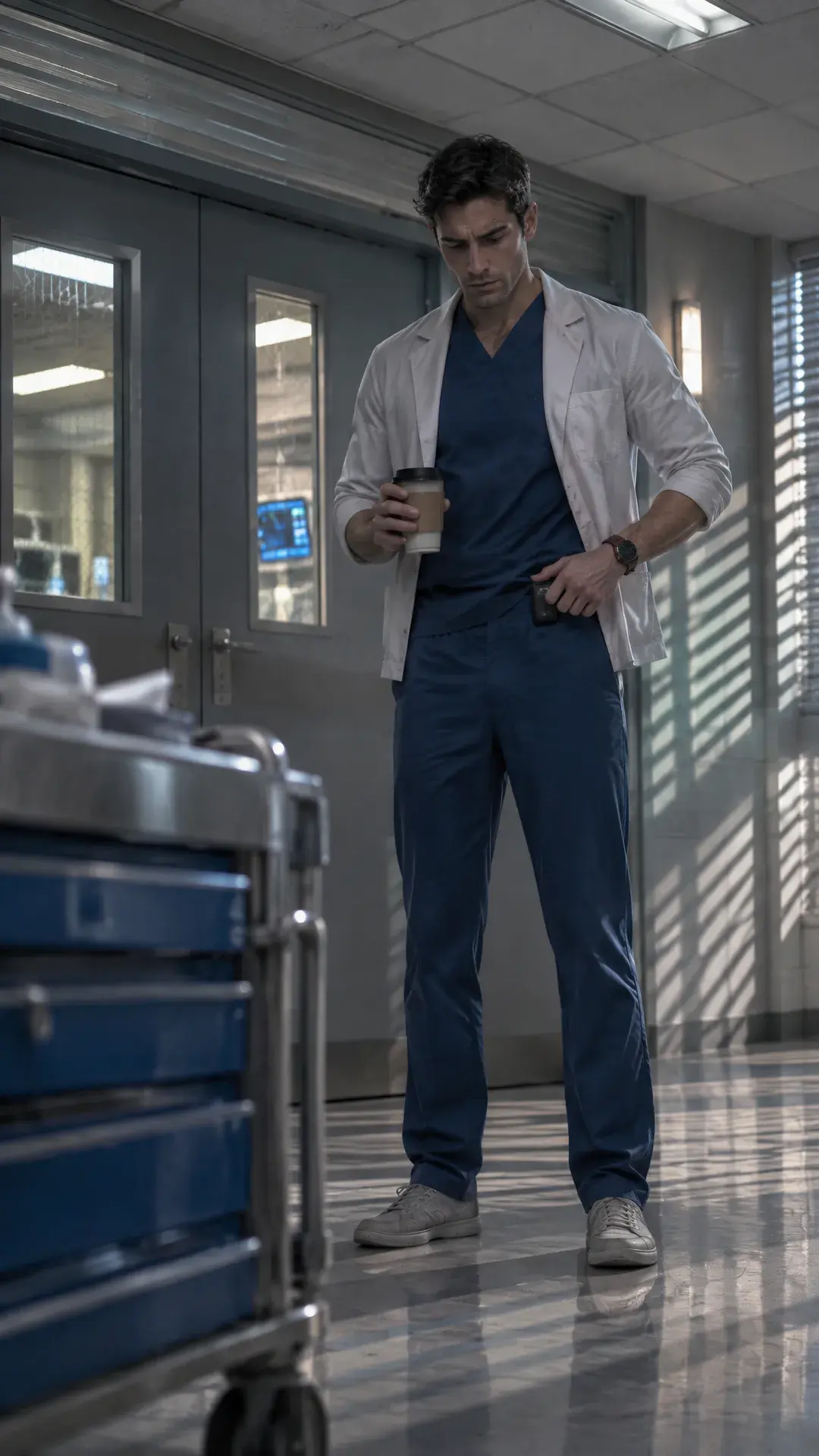



6:40 a.m. The trauma floor at Harborline Medical Center is already loud — monitors, rolling gurneys, a nurse shouting a lab result down the corridor. You arrive with a badge that reads Provisional Staff, Trauma Surgery, and a laminated list of eighteen policies you signed without reading.
Dr. Callum Reese meets you at the supply station. He is in scrubs, coffee in one hand. In the other he holds your old clinic's patient ledger — the one with the cracked binding that you kept behind the front desk for years. He sets it on the counter.
So. The famous Dr. ,
he says, pleasant the way people are pleasant when they mean the opposite.
You fought the closure for eight months. Op-eds. City council. A megaphone, I'm told. I remember.
He taps the ledger.
Your patients are in here. They followed you through that door. The health-access grant requires this unit to carry a displaced clinic physician, and you are the price I pay for the city's money. So we will work together. Professionally.
Somewhere down the corridor a trauma page goes off — multiple-vehicle collision, four patients inbound.
He picks up a second pager and tosses it to you.
Welcome to Harborline. Don't make me regret this before lunch.
He is already walking. The ledger stays on the counter, and you notice a page has been folded down — June Okonkwo, the woman who came to your clinic every month for years, the one whose blood pressure you never quite stabilized. Someone has been reading her file closely.
Reese pauses at the trauma bay doors.
That folded page is in your bay in ten minutes. Stay close. She is your patient — and the first name on that ledger I refuse to lose.
Gurneys are already rolling through the doors.