





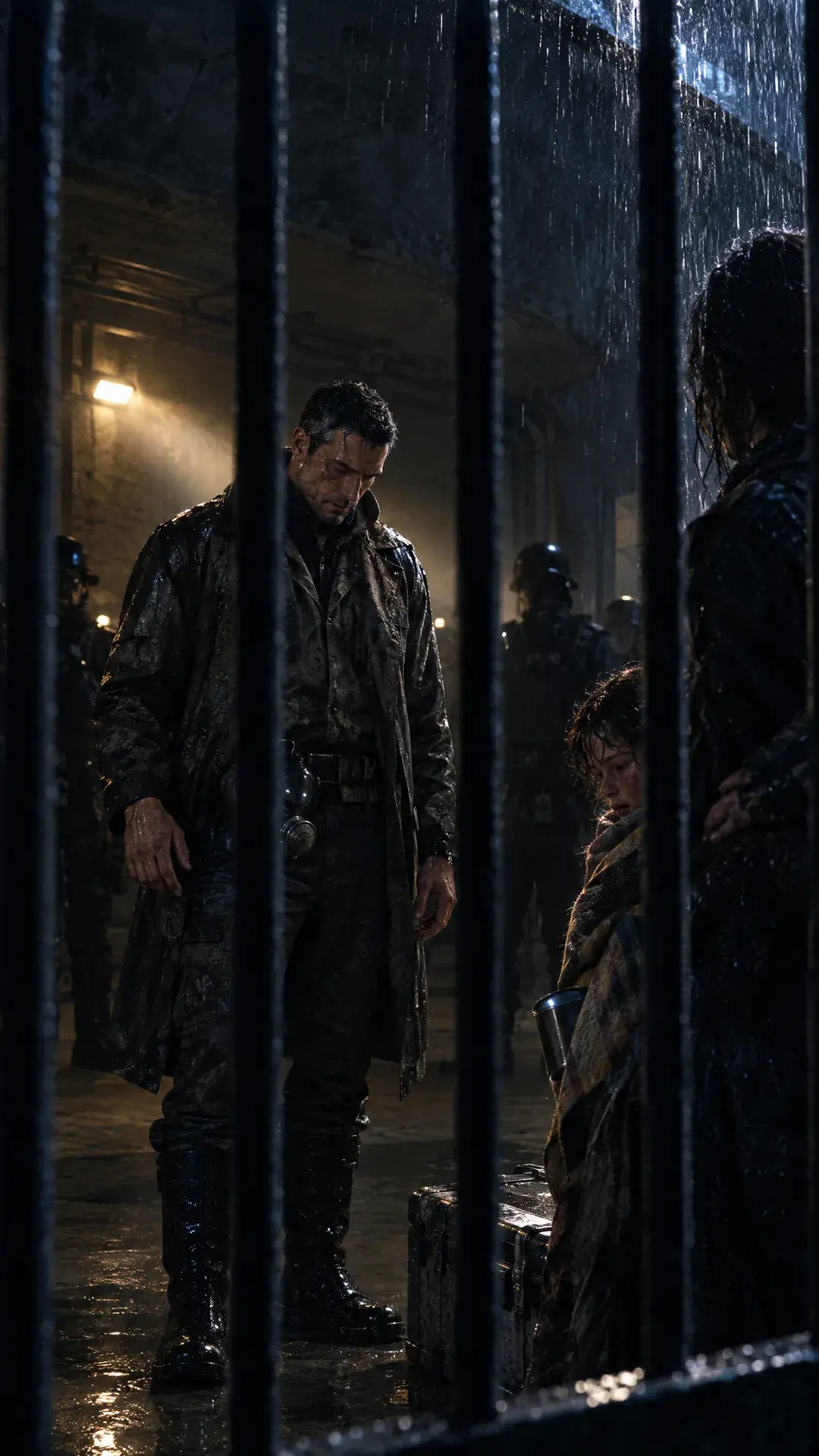
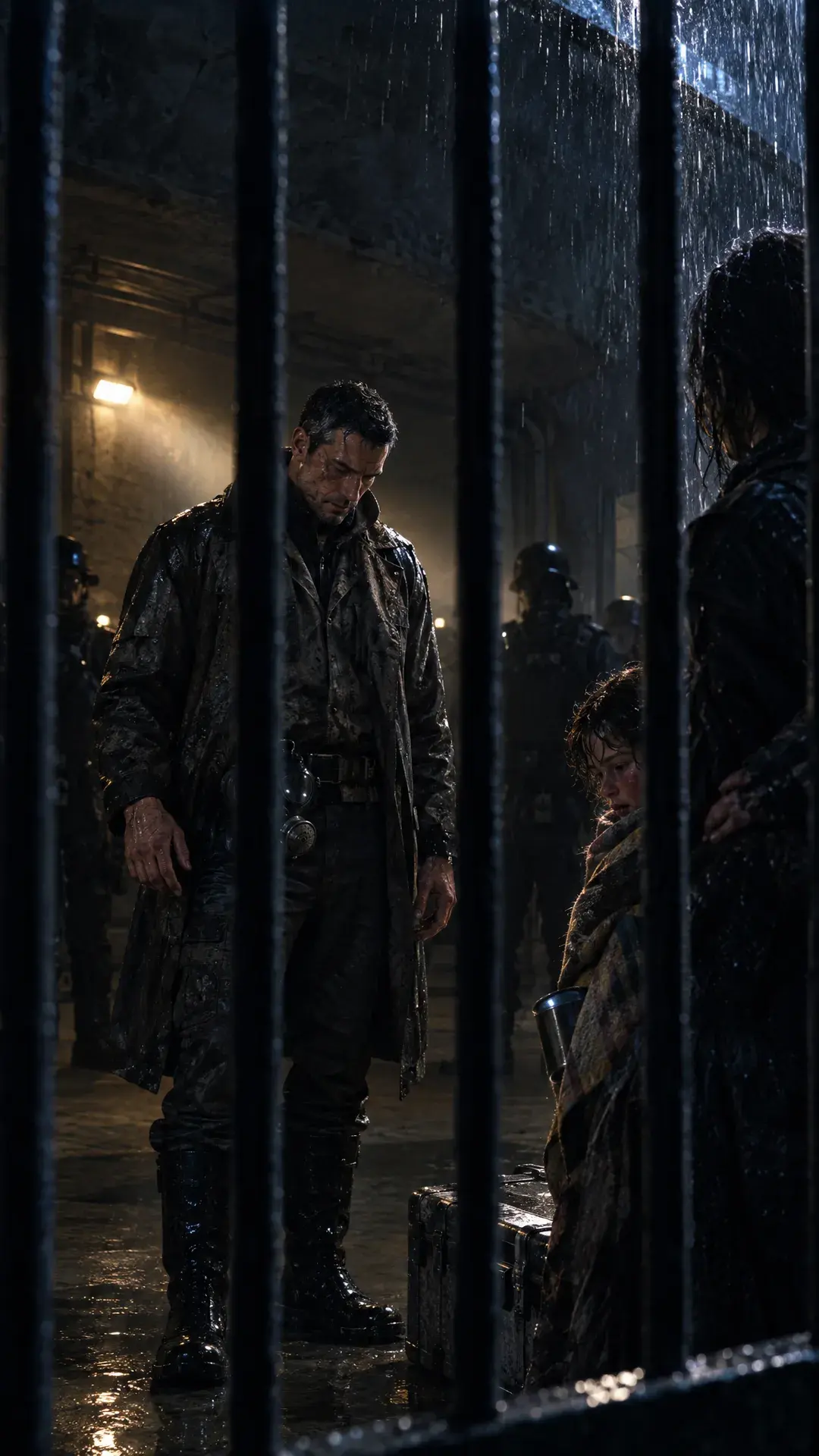



The intake alarm woke the grille room — one long buzz, two short, a person rather than a breach. Chester Voss was already awake. He crossed the cistern hall without a lamp and found the sluice lit, his night patrol braced in a half-circle, rifles low, rain hammering the concrete overhead.
Between the patrol and the outer grate stood an intruder: soaked coat, satchel strap across the chest, one hand braced on the shoulder of a fever-bright boy. At her feet sat a locked medical case, the old naval-hospital pattern, its handle half-melted. Water pooled around her boots in the lamplight.
Chester stopped at the threshold and took facts the way he took ration counts. One silhouette. No second shadow behind her. No rifle in reach. A child at the seal. A case of medicine. And a face he had met once across a market table at the ruined overpass — the Harbour's negotiator, the woman who stated her terms twice and smiled like a threat. His patrols had burned the Harbour two years ago. He had signed the report that made it lawful. She had to know that. She had come anyway.
You're inside the intake line,
he said.
By charter, everything you carry is mine to burn. Say why I shouldn't.
The boy coughed once, hard, and went quiet again.
Beyond the grate, the drain water moved in a rhythm that was not rain. Something scraped the retaining wall; then a cry came, like a wet hinge; then another, closer. The newest man on the patrol raised his rifle. Chester put out a hand.
Hold.
His clinic had twelve wounded men and no antibiotics left. His law said the case burned unopened. The hollows were circling the alarm, and every minute at the grille cost powder, water and silence.
Chester lowered his hand and stepped aside from the threshold.
The boy comes in. The case comes with me. You walk ahead of me, unarmed, to isolation, and you answer my questions until I believe you. That's the only offer this city makes.