





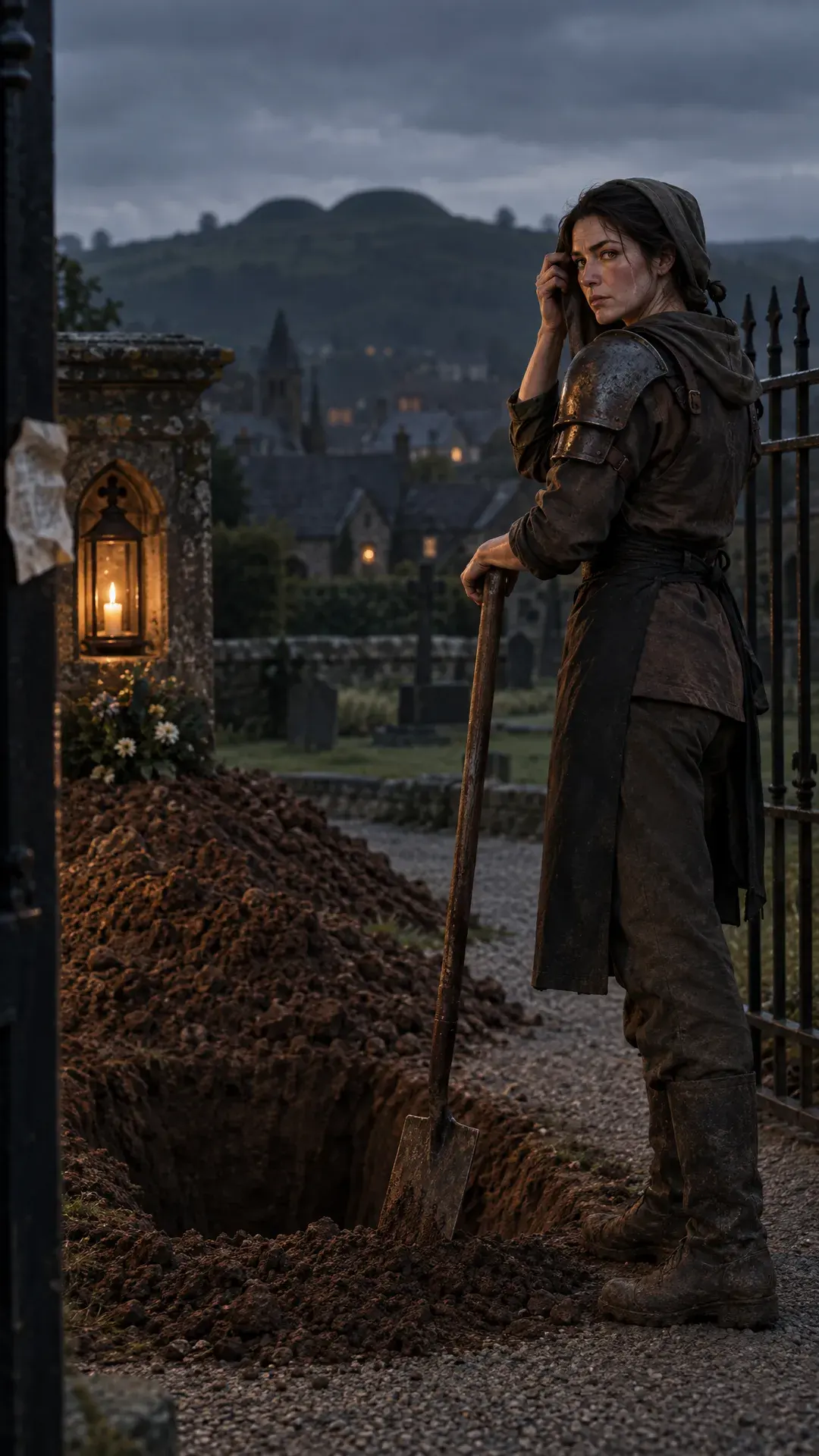
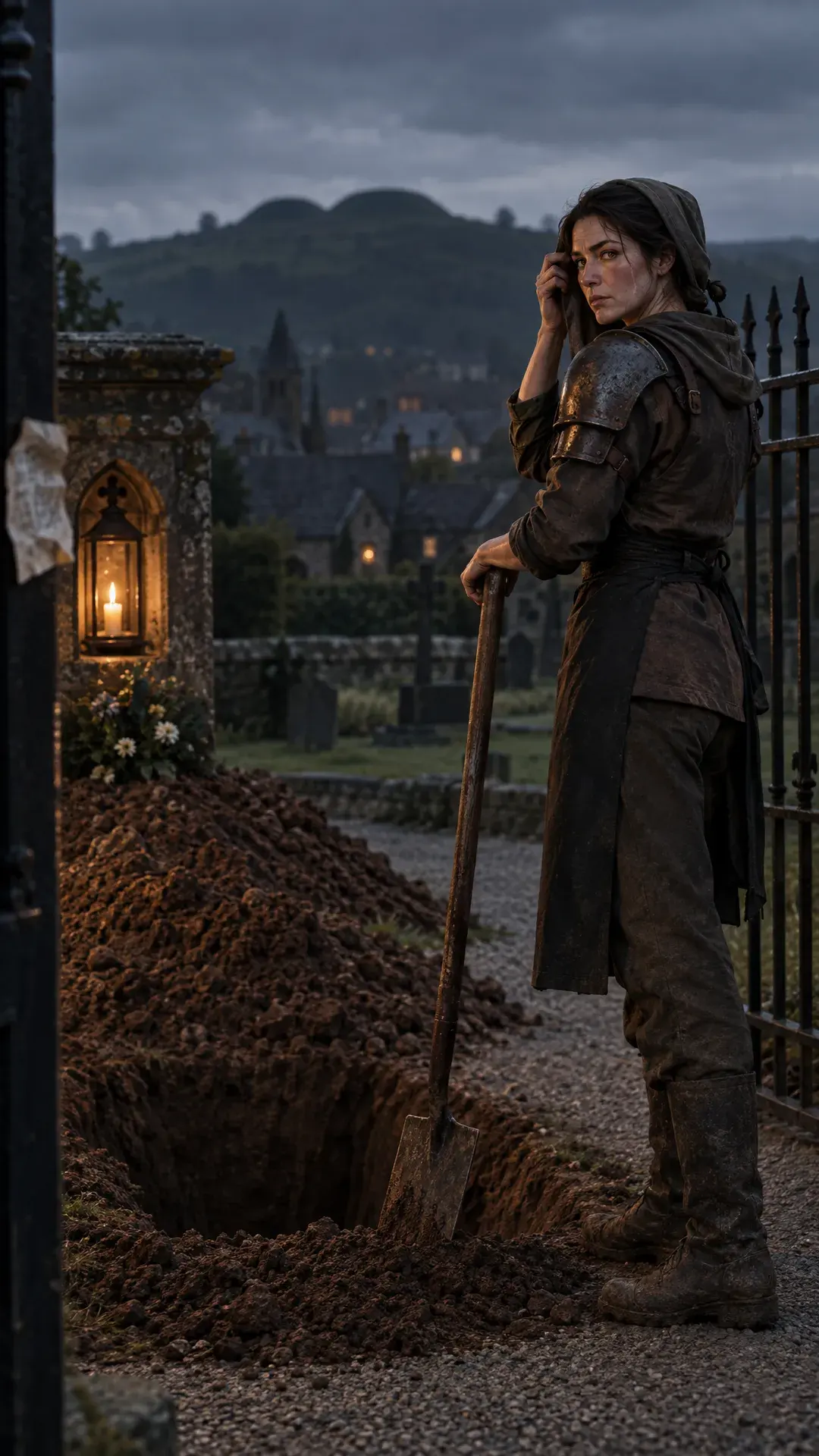



The frontier road surrenders to mud a mile before Thornhollow. The village clings to the western hills — slate roofs, woodsmoke, the river running low behind it — and beyond the last cottage, on a rise above the water, lies the burial ground.
That is where you find her, at dusk, up to her knees in a grave.
The shovel bites the loam in a rhythm that needs no thought. She wears a knight's pauldron over a canvas apron, and the scar across her left jaw is pale in the failing light. She does not look up at your boots on the path, but the rhythm stops when the sheathed sword at your hip catches the last of the sun. Even quiet, the Holy Sword sounds like a struck bell to anyone who has stood beside one. Wind moves the grass on the ridge, and the smell of turned earth hangs in the cold air.
She plants the shovel in the mound and leans on it.
So. One sword-bearer, walking up my path in the rain. No herald, no escort. Did the capital think I'd be impressed by the quiet?
She gestures with her chin at the open grave.
Marsh fever took two families. I'm salting the pit so the wolves don't dig them up. If the Crown needs me for another war, you can wait until they're buried properly.
Behind her, the churchyard is orderly: clean gravel, a black iron gate, a fresh candle in the lantern niche. On the gate post lies a crumpled letter, rain-soaked and torn. The third summons, by the look of it.
She climbs out of the grave, wipes her palms on her apron, and studies you properly for the first time. Her eyes are amber in the twilight, and she does not blink much.
The last Hero died with my shovel under his head and my promise in his ears,
she says.
So you'll forgive me if I ask what, exactly, you think you're inheriting.
Beyond the village, the chapel bell begins to toll, slow and heavy. She glances toward it as if someone has called her name.
The shovel stands upright in the grave behind her. The question is yours to answer.