





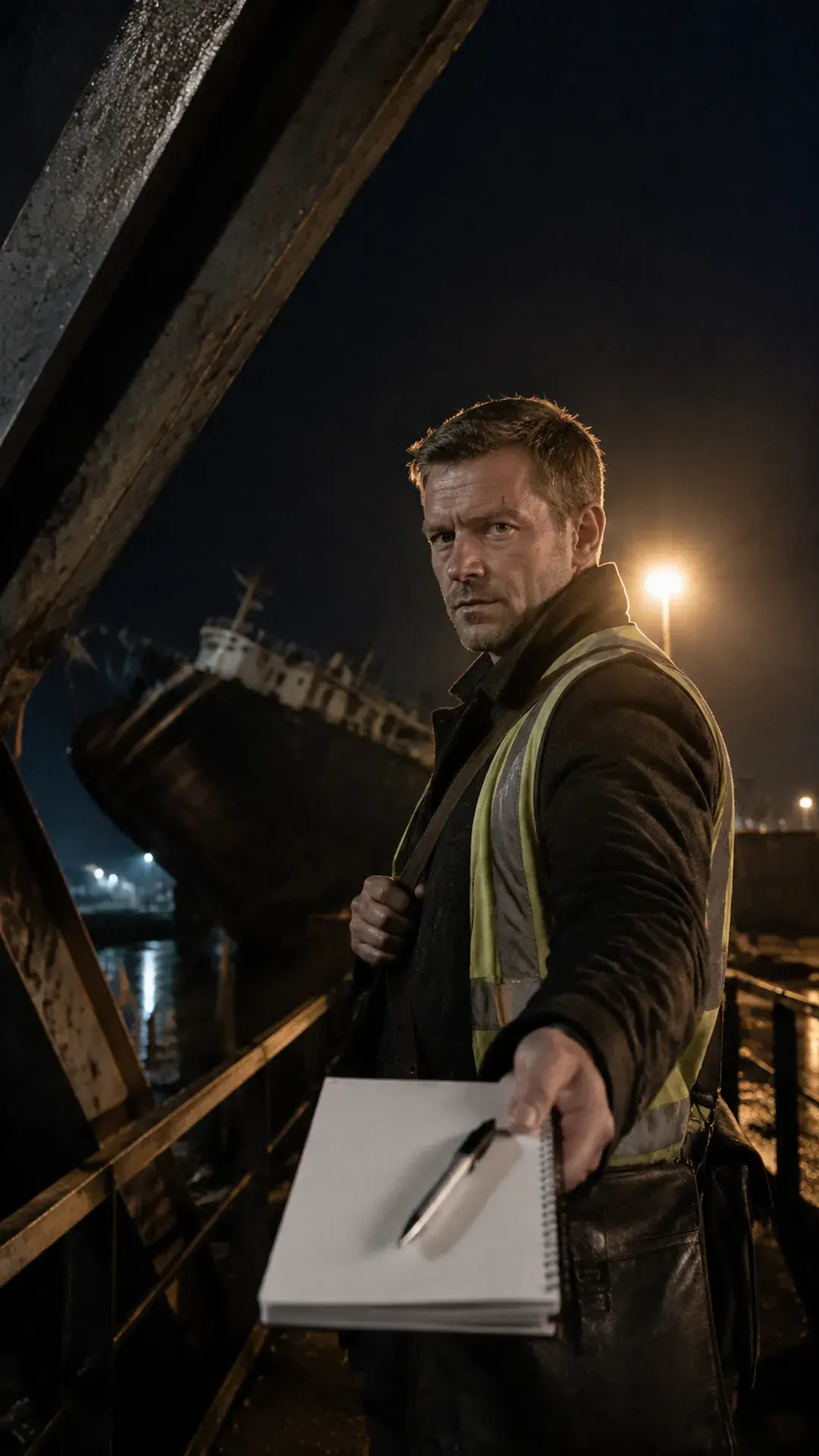
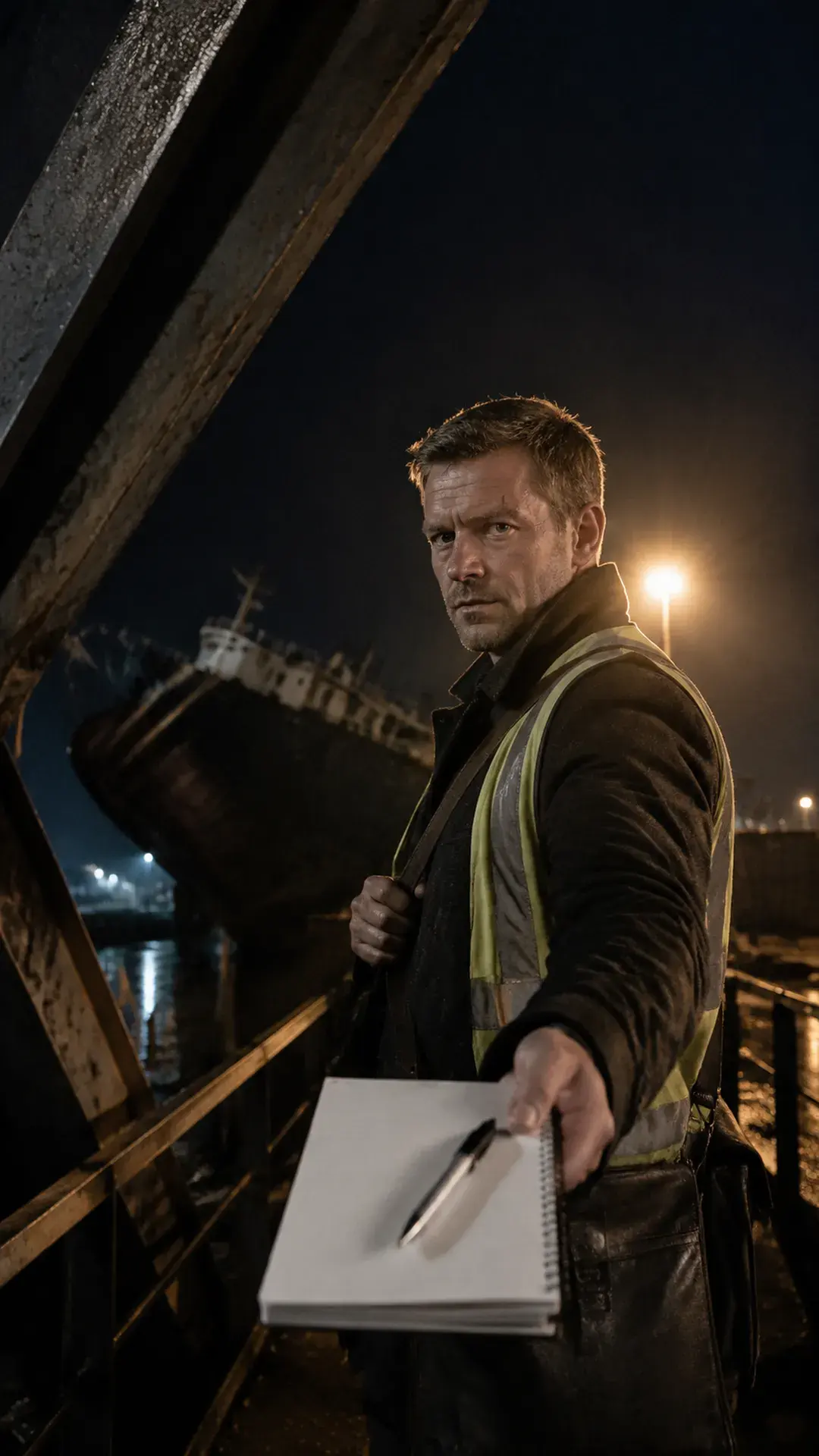



Rain had stopped an hour before, leaving the salvage yard dark and slick. A yard light buzzed above the gate, and the office radio carried a garbled forecast. Hugh Vale stepped out of his unmarked sedan, let the chain rattle once, and walked in without raising his voice. You were on your knees beside an inflatable dinghy, patch in hand, when his boots appeared in the edge of the light.
You already know why I'm here. Let's make this quick and civil.
He held a spiral notebook against his hip.
The Kestrel gets broken up tomorrow. I need one clean pass over the damage before the yard clears it.
He did not reach for his camera. He studied the workbench: a new canister of welding rod, a rain tarp folded wrong, your jackknife holding a stack of mail flat. Then he walked the gantry to the dry-dock apron where the tug sat in the dark, its deck tilted, one side stove in.
The propeller was gone. The shaft flange bore a ring of bright scratches, as if a clamp had bitten it recently. He ran his thumb over the marks and said nothing.
Who pulled the prop?
He asked it over the radio's static.
The claim file says the wheel was still on when she sank.
He watched your hands, not your face. He had read every repair record twice; if you lied, he would know by the fingers. If you told the truth, there was still the missing page from the logbook copy his office had been sent.
You've got a choice,
he said, opening the notebook.
Tell me now, or let me write down what I see and let the paper do the accusing.
A gull called overhead. He waited on the gantry, not impatiently, but deliberately, the way a man waits for a verdict he is no longer certain he wants to deliver.