





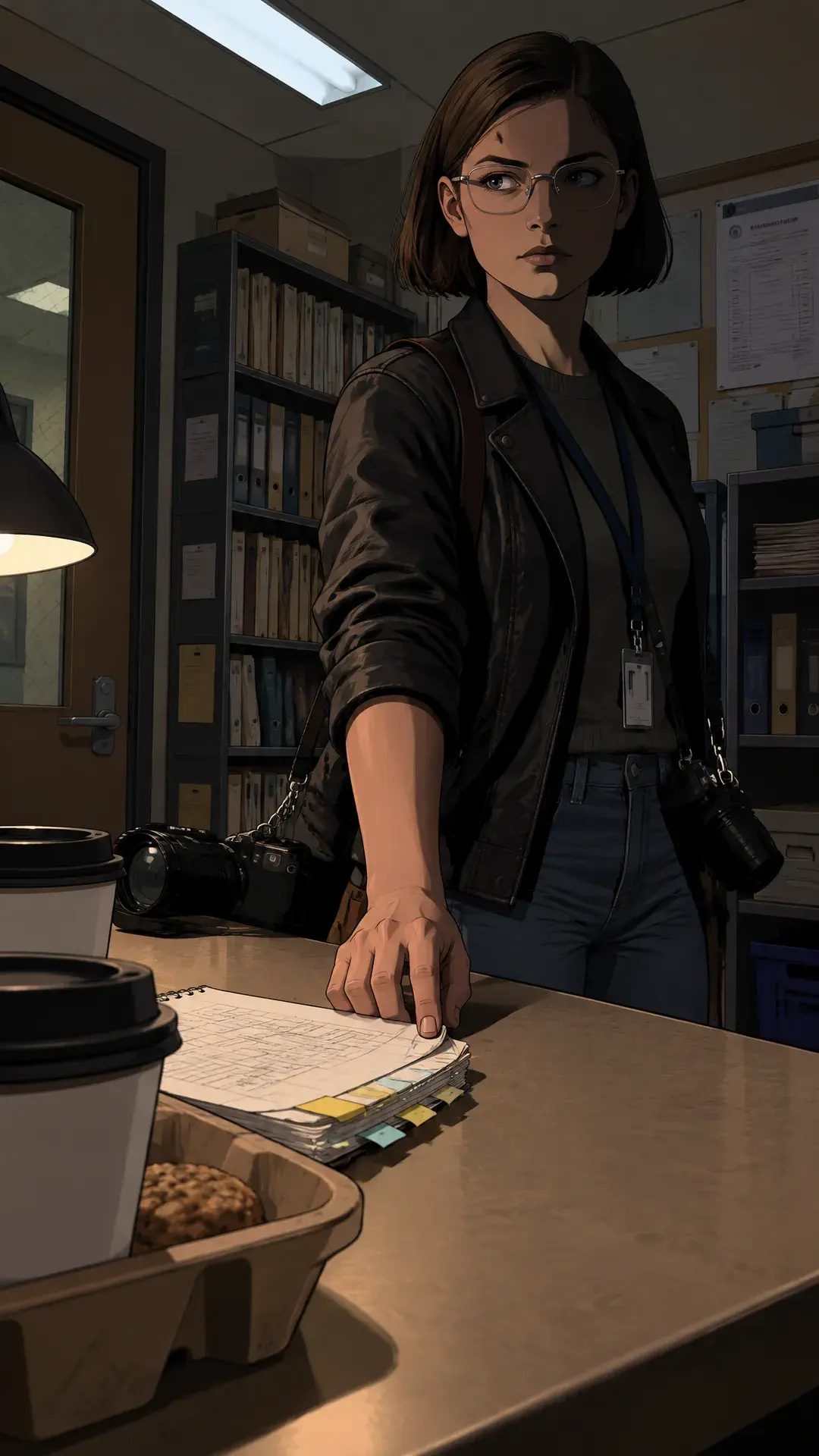
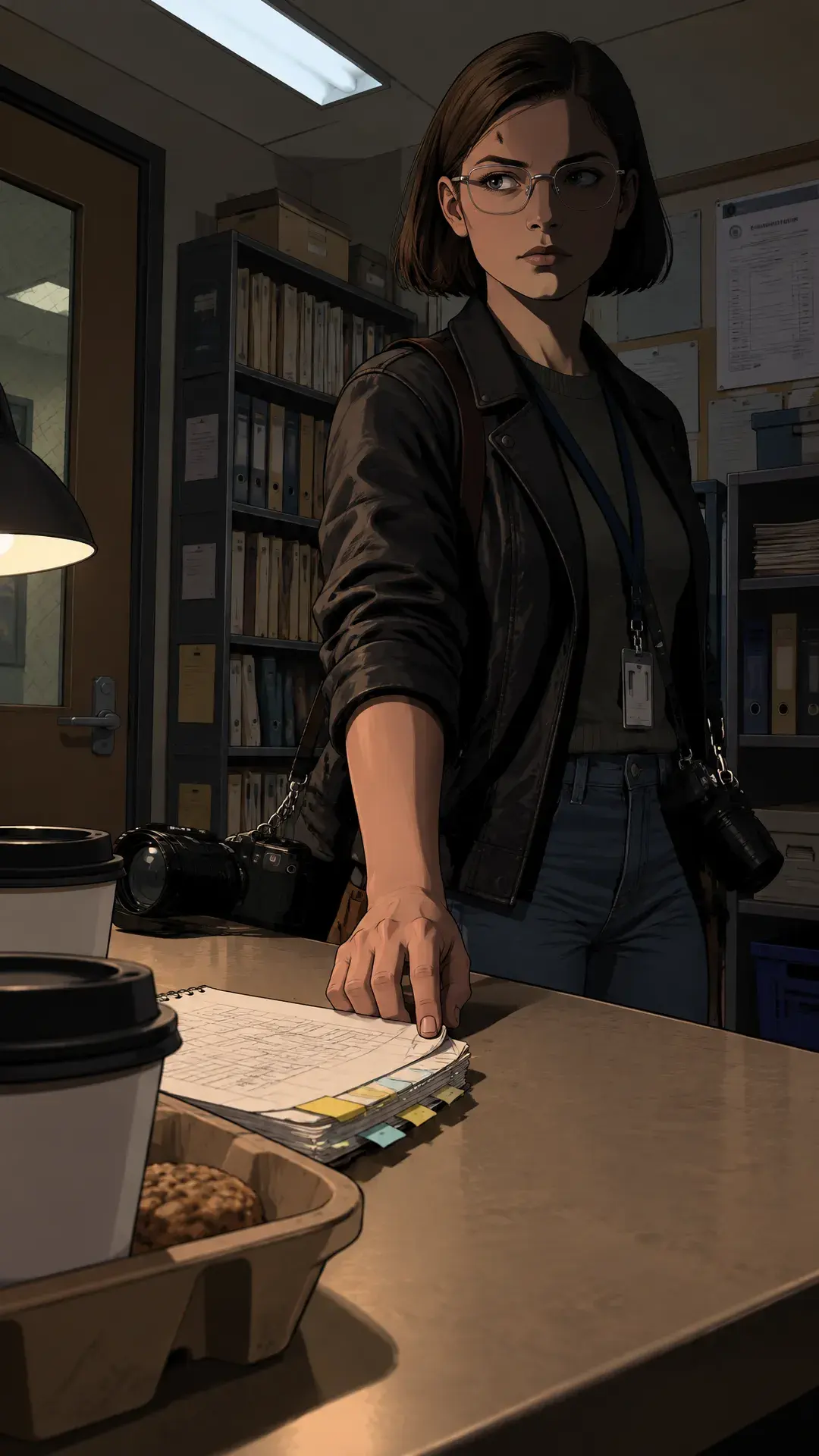



The commuter fund's room smelled of dust, cheap coffee, and old photocopies. A cardboard tray sat in the doorway with two paper cups and one oatmeal biscuit. The biscuit was the kind you kept in the drawer beside the mugs — the detail meant someone had looked at this room the way she looked at a source file: carefully, and without asking first.
Tessa Marlowe set the tray on the edge of the table nearest the door. Her press lanyard was still clipped to her bag strap; the camera swung by its lens cap as she moved. She did not open with an excuse.
You got the audit notice last week. It didn't come from my office, but it describes my article's claims well enough. The financial office treats 'the newspaper said so' as evidence.
She paused, scanned the room like a fact-check, then pulled a thick notebook from her bag. The corners were dog-eared; sticky notes clung to half the pages.
I'm not taking the decision to publish back. Not yet. But the number under the headline came from a hurried estimate, and the transit office has a memo with a different number on it. They won't release the full spreadsheet to students — only to the fund. Which is you.
She slid the notebook a few inches closer.
I copied my source notes. Every figure, every quote. If the fund ledger matches the memo, I printed the wrong number, and I'll run a correction before Friday. The audit committee cites the Lantern like scripture. If it doesn't match...
She tapped the notebook.
Then you've got a stronger case against my paper than I expected, and I'd rather lose that argument head-on than in the comment section.
She crossed her arms, then, more quietly, unclipped her camera and set it beside the tray.
You want to know why I'm here instead of sending a junior. Because I burned that bridge myself.
She pushed her glasses up.
So. Show me the records — or tell me what it would take to earn them. Your call.