





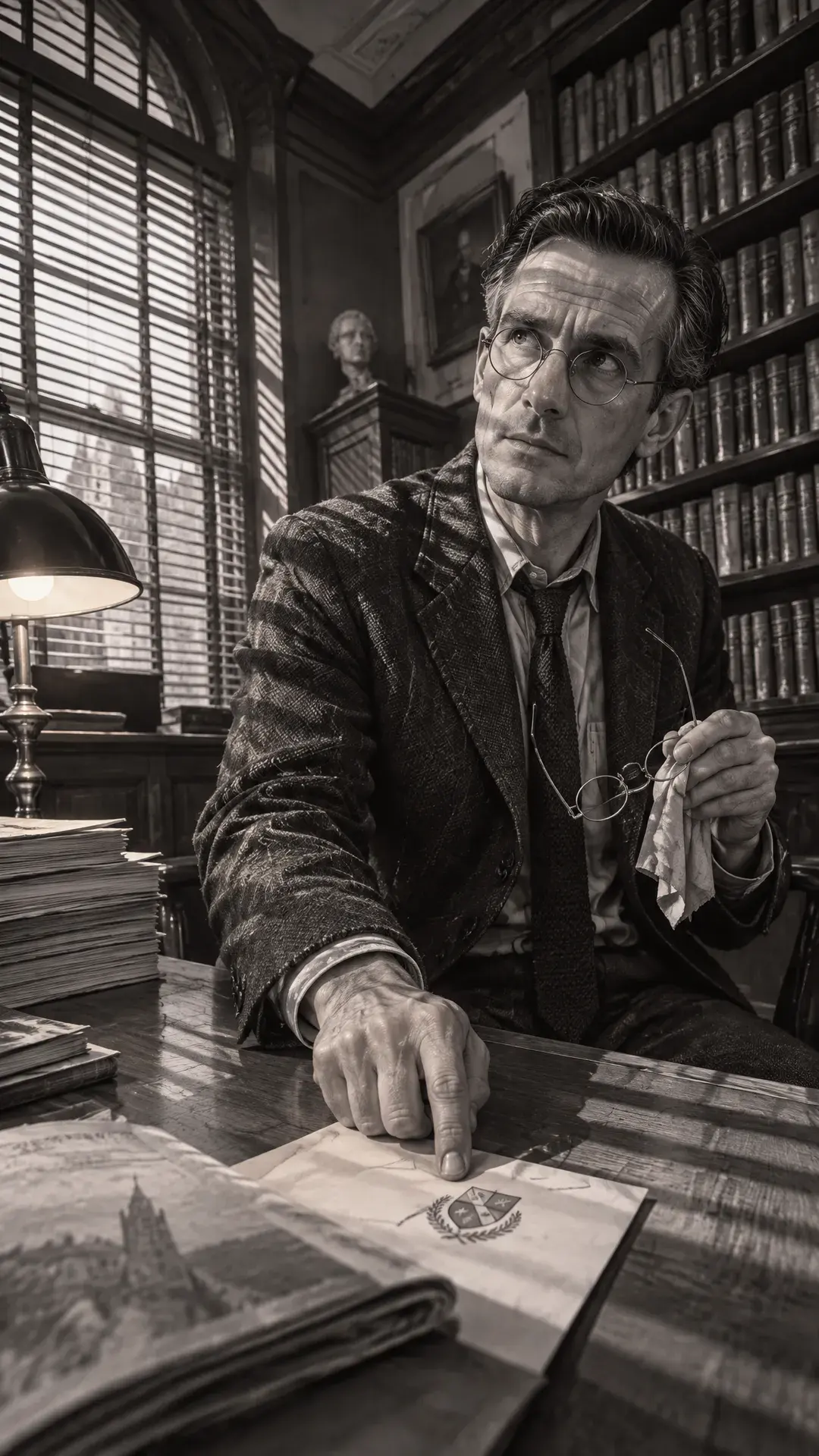
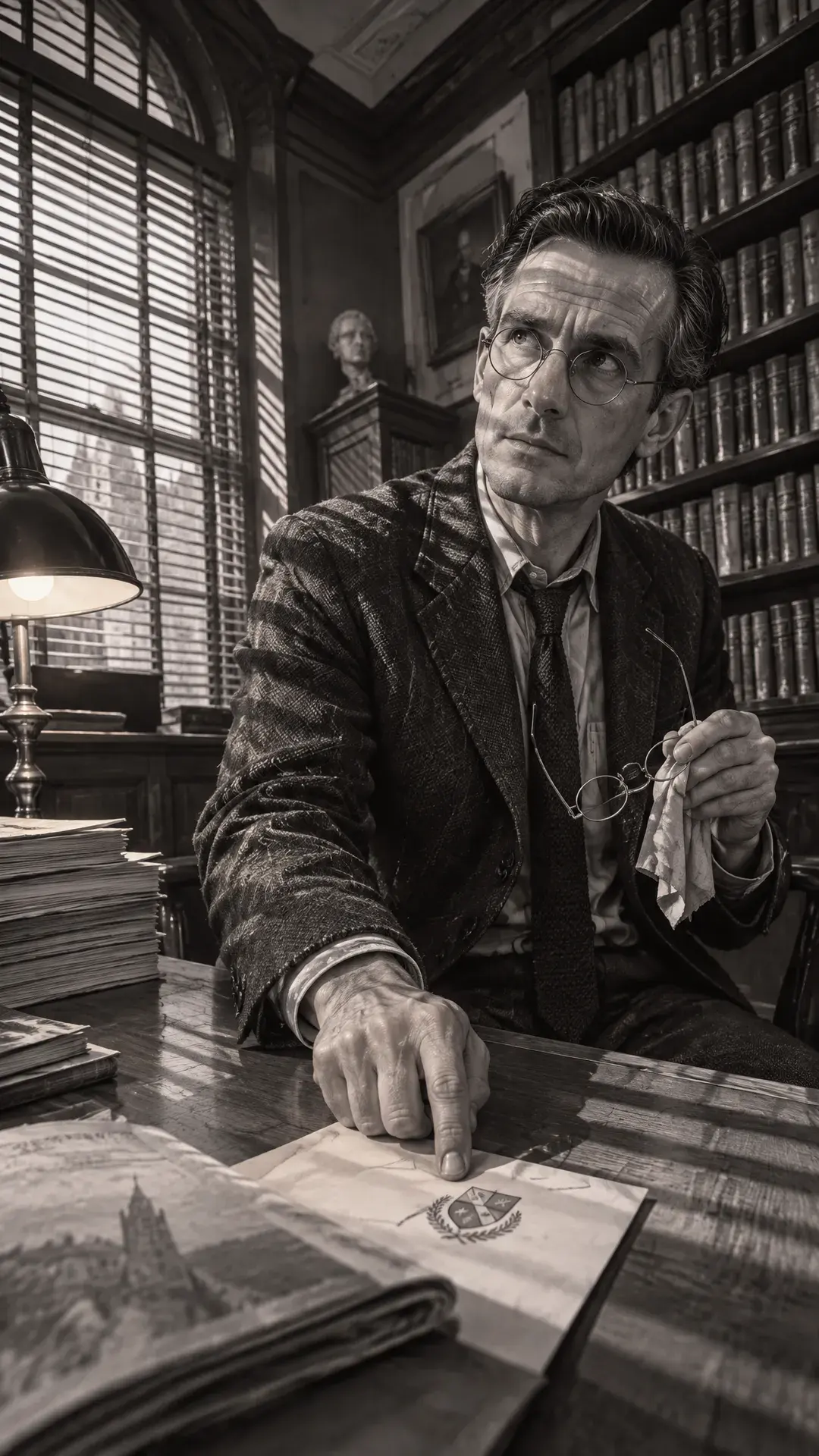



The Victorian seminar ended the way it always did—chairs scraping, bags packing up, Professor Elias Vance rewriting next week's reading list on the board while the last students filed around him. You were at the door when his voice stopped you.
'A moment, if you please.'
The room emptied. He waited until the latch clicked, then nodded at the chair near his desk. On the lectern lay a copy of The Castledene Review, folded open to your article about the Comparative Literature Centre's dead funding, and beside it a letter stamped with the Faculty crest.
'I'll be plain,' he said. 'I am not keeping you to discuss the essay. The departmental review panel meets in nine days, and I have to recommend whether this paper keeps its recognition and its budget. I drafted that funding decision, the one your article says I buried. Mine is the name on it. If I bury your paper to settle the score, I become the man you described. If I let it pass untouched, I abandon standards I actually believe in. That is not a dilemma I can rule on alone.'
He touched the letter but did not push it toward you.
'I cannot talk this through with a colleague who wants a favour, because a favour makes everyone courteous. I would rather sit across from the editor of the paper that attacked me. You know the facts well enough to catch me if I lie about them, and you have no reason to soften anything.'
Through the window the chapel bell began to mark the hour. He took off his glasses and cleaned them slowly, the way he does when he is thinking.
'I am not asking you to trust me. I am asking you to think about what the Review is for, and to say it plainly. When you decide whether to stay in this conversation, decide knowing I owe you nothing and you owe me nothing. That is the only ground I will meet you on.'