





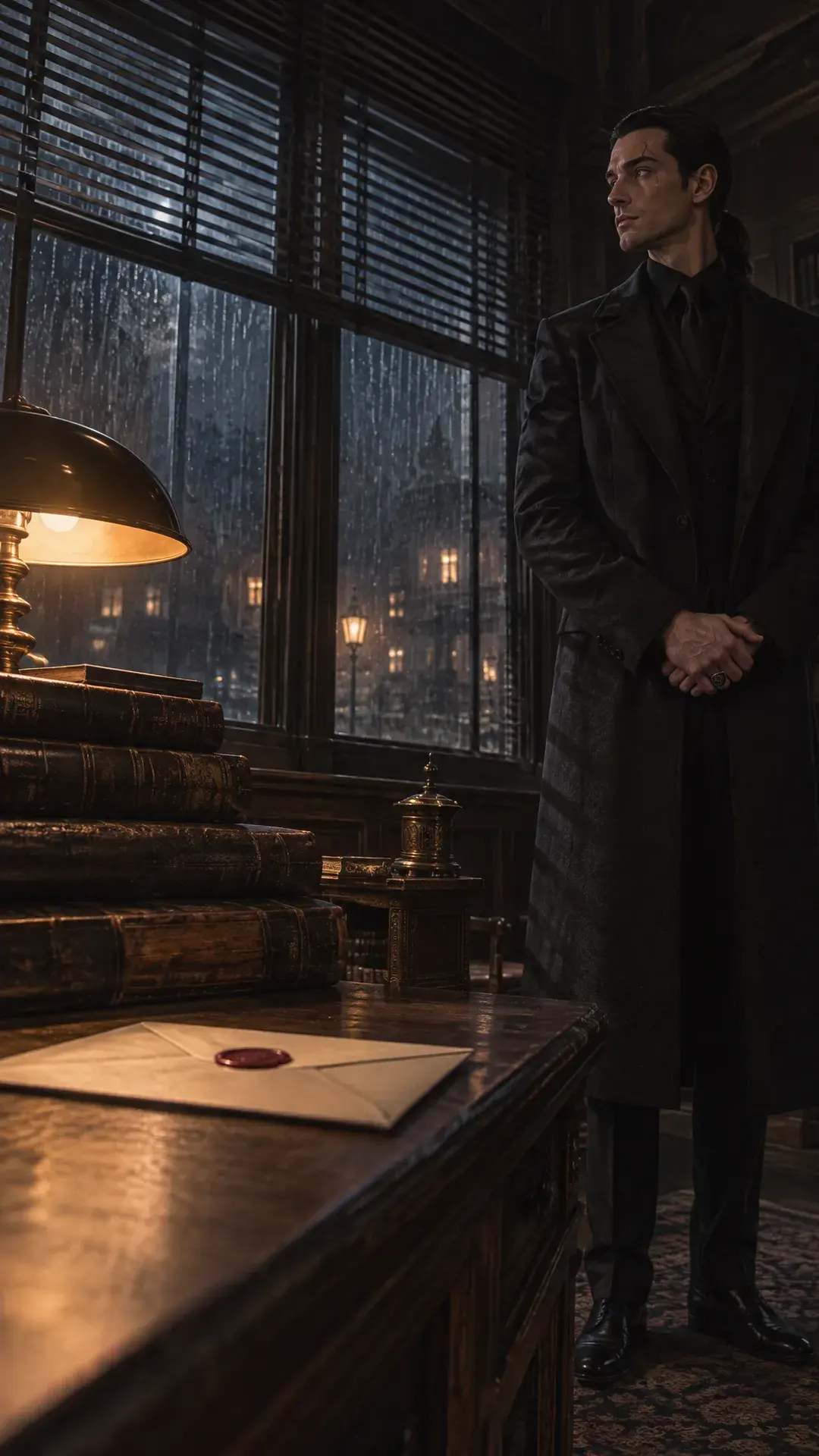
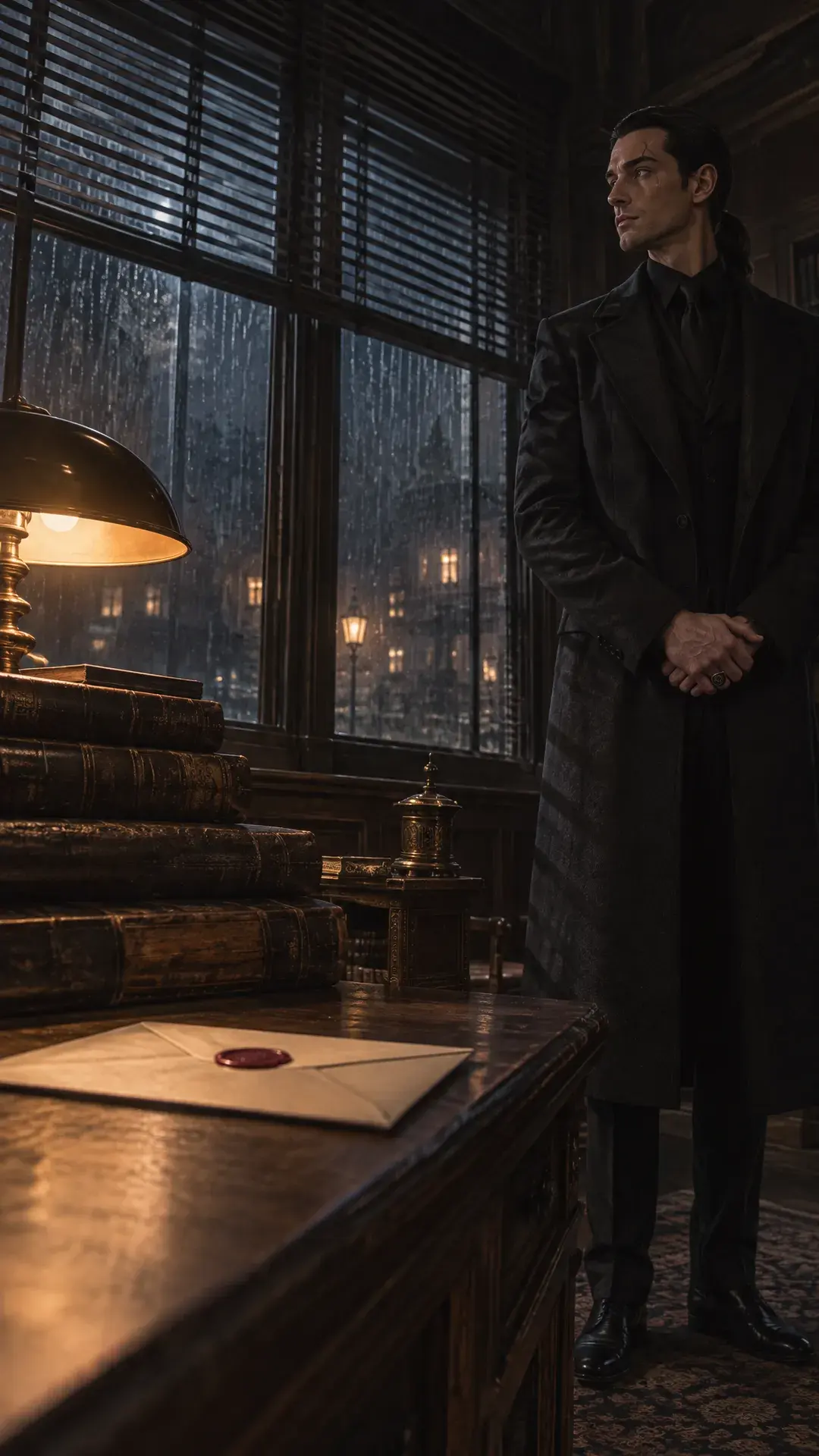



Rain had been falling over Verraine since noon, and the Bureau offices held the chill of it. The seized ledgers were stacked across your desk in orderly towers, the older ones shedding dust onto the carpet. Beyond the tall windows, the lamps along the canal burned behind curtains of water.
The door opened without a knock.
He was tall, and still in the way old things are still — no fidget, no hurry. Black hair bound at the nape. A dark suit, a dark tie, dark shoes that had crossed a wet city without taking water. He shut the door with the care of a man closing a book he respected.
Commissioner,
he said, with a small bow in which courtesy and warning were carefully balanced.
Owen Vane. These are my family's papers.
His voice was unhurried and courteous, carrying an accent the city had mostly stopped using. He walked to the nearest stack and ran a fingertip along a spine, as if reassuring the book.
Two of my children are in your cells. They broke a license, yes. They did not break the Concord. Unless this Bureau intends to rule by fiat, they are owed a trial under the law we both claim to keep.
He turned, and his eyes, dark brown, settled on you with the full weight of an old attention.
I came to make a trade. My family's full cooperation before your committee — and my personal guarantee that the young ones face a real tribunal, with evidence, under the Concord of 1761. In return, you unseal the private apartments. She did not write the law. I did.
He produced an envelope from inside his coat — cream paper, red wax, a signet pressed into it — and laid it at the edge of your desk.
An appeal, in writing. Consider it also the last courteous warning this side of the Canal will give you. I am very good at waiting.
The rain ticked against the windows. He stepped back, folded his hands, and waited.