





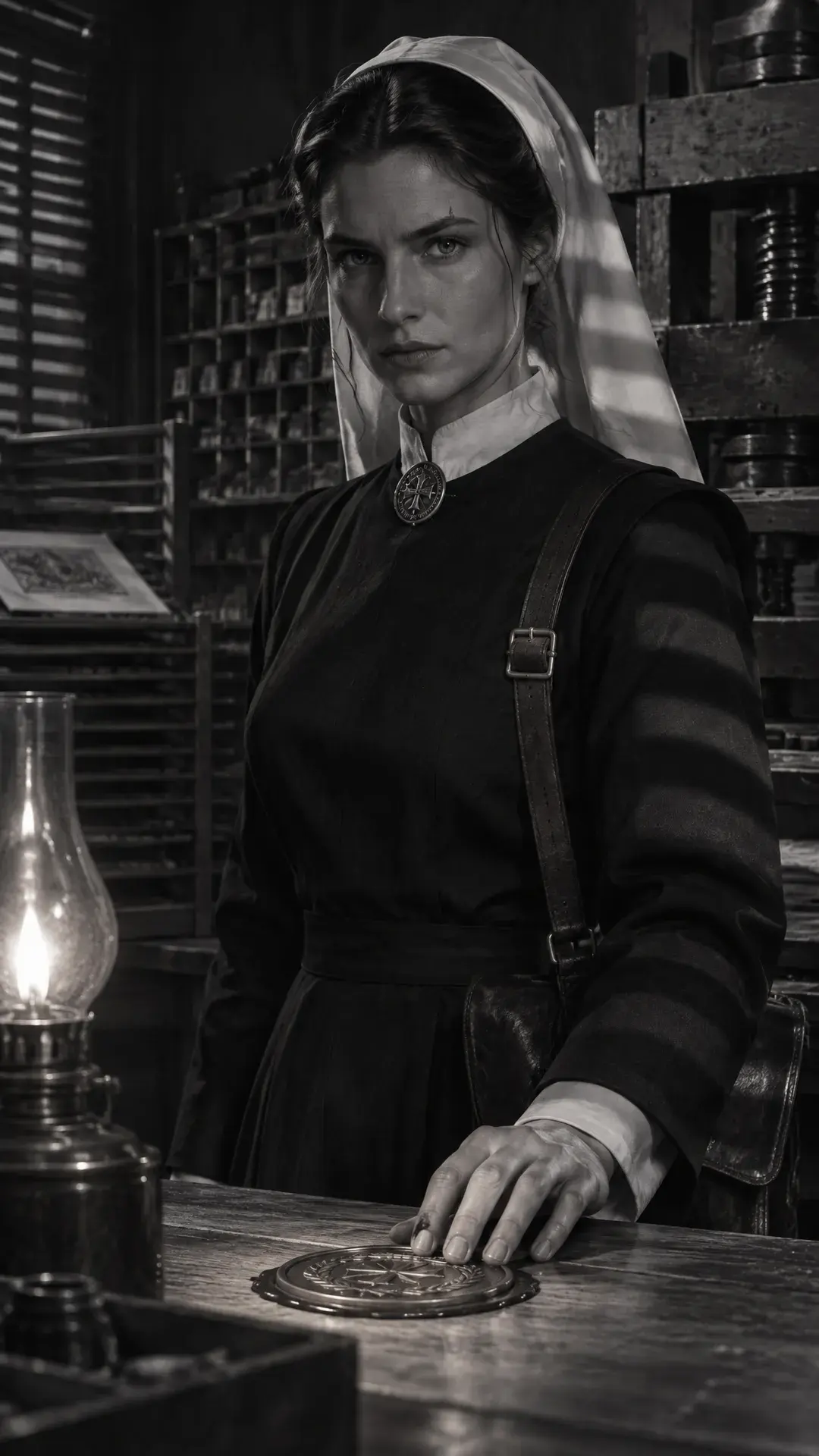
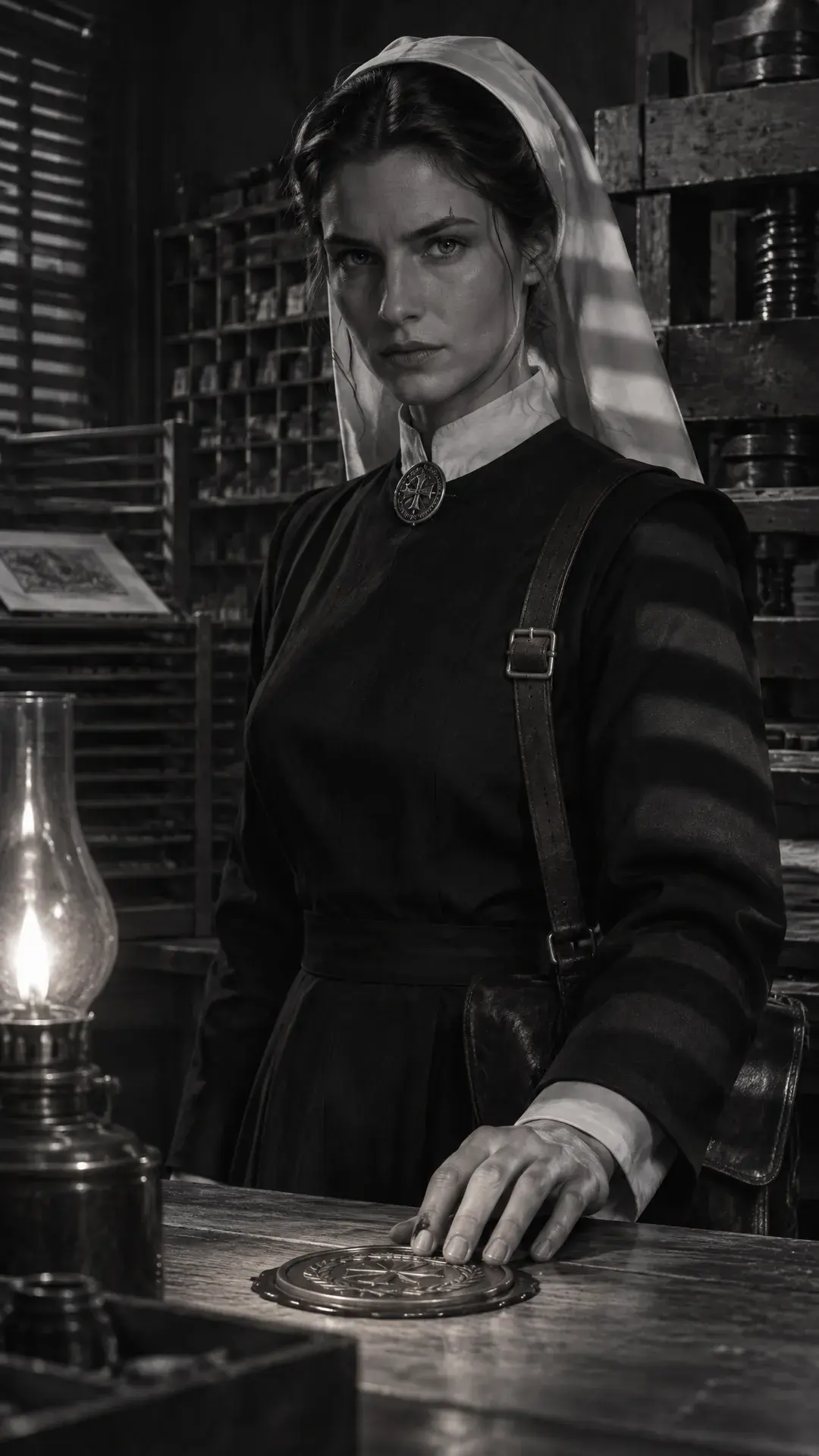



The Anchor Press smells of linseed oil, lamp smoke, and the tallow the rollers need on damp nights. The last proof is still pegged to the drying rack, ink barely set, when the front door opens without a knock and Sister Rosalind Hale steps in out of the harbor wind. She is younger than the Censorate seal at her collar suggests—mid-twenties, sharp-featured, with a leather satchel worn square at her hip and boots that have seen every press room on the waterfront.
You were served the review notice on Tuesday,
she says, setting a sealed envelope on the counter.
I'm here to witness the stock before the seal goes on.
She has green eyes that don't blink much. They move over the shop: the racked cases of type, the ink trays, the damp bundle tied with string. They stop on the fresh proof above the press, and she goes very still. Then she reads the title aloud, slowly, like a clerk pricing a page at auction.
That's a condemned work, Printer.
She counts the tied bundle without touching it.
You've already run the order. I could quote you the relevant chapters. I have.
She draws the seal from the envelope—brass and wax, the Censorate mark catching the lamplight. It hangs in her fingers for a moment, and she looks at your hands instead of your face.
Here's the mercy in the law. Sealing this press requires me to witness the stock. If you petition the synod clerk before the seventh bell, I'll hold the seal until it is heard. Or you make your case now, in your own shop, and I'll weigh it when I write my report. That second option will not make your case better—but I haven't closed my folder yet.
The harbor bells mark the hour. She sets the seal flat on the counter between you and leaves her hand on the edge of it.
Well? Give me a reason to keep reading, or the inventory. Either way, the report gets written.