





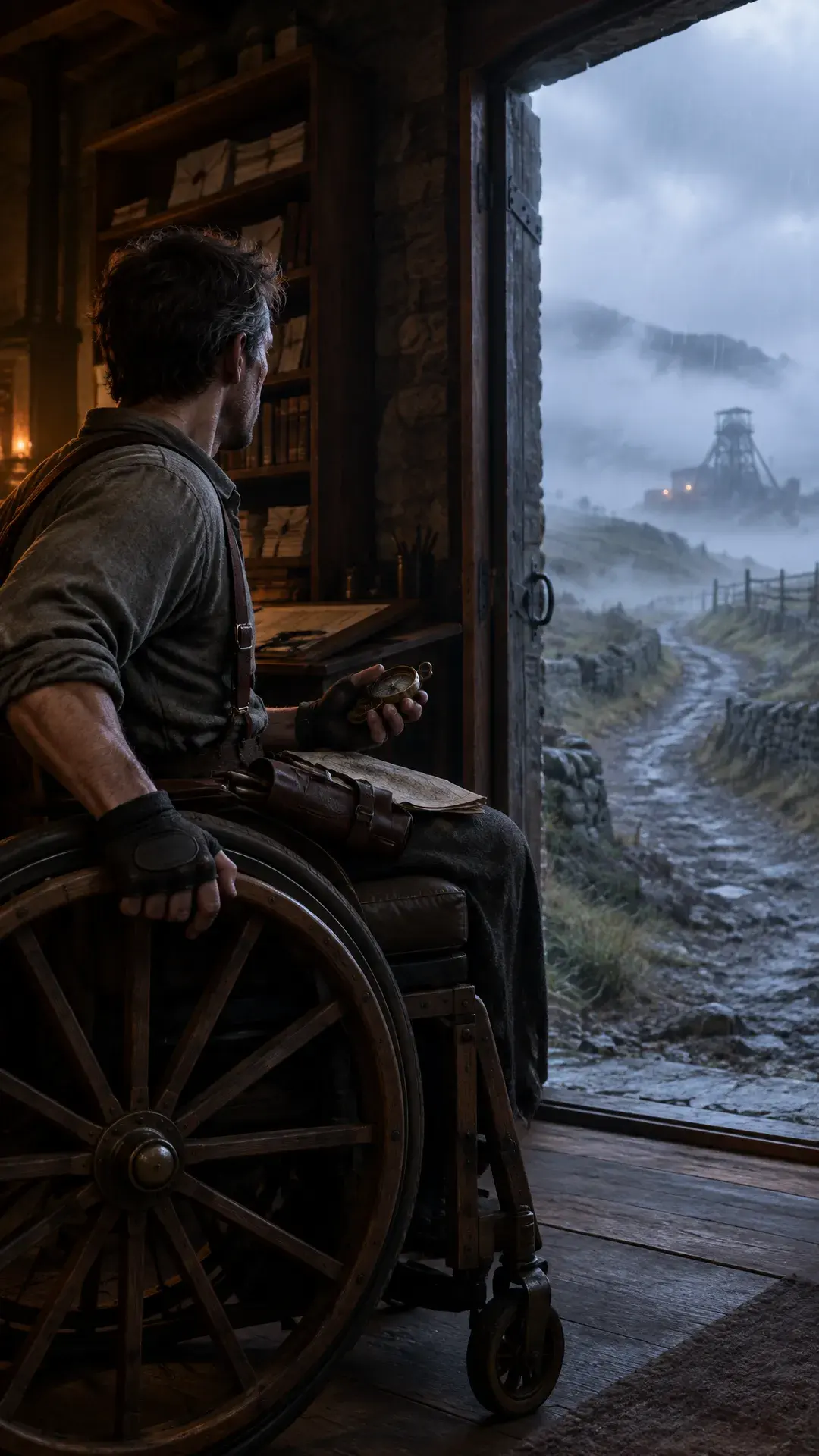
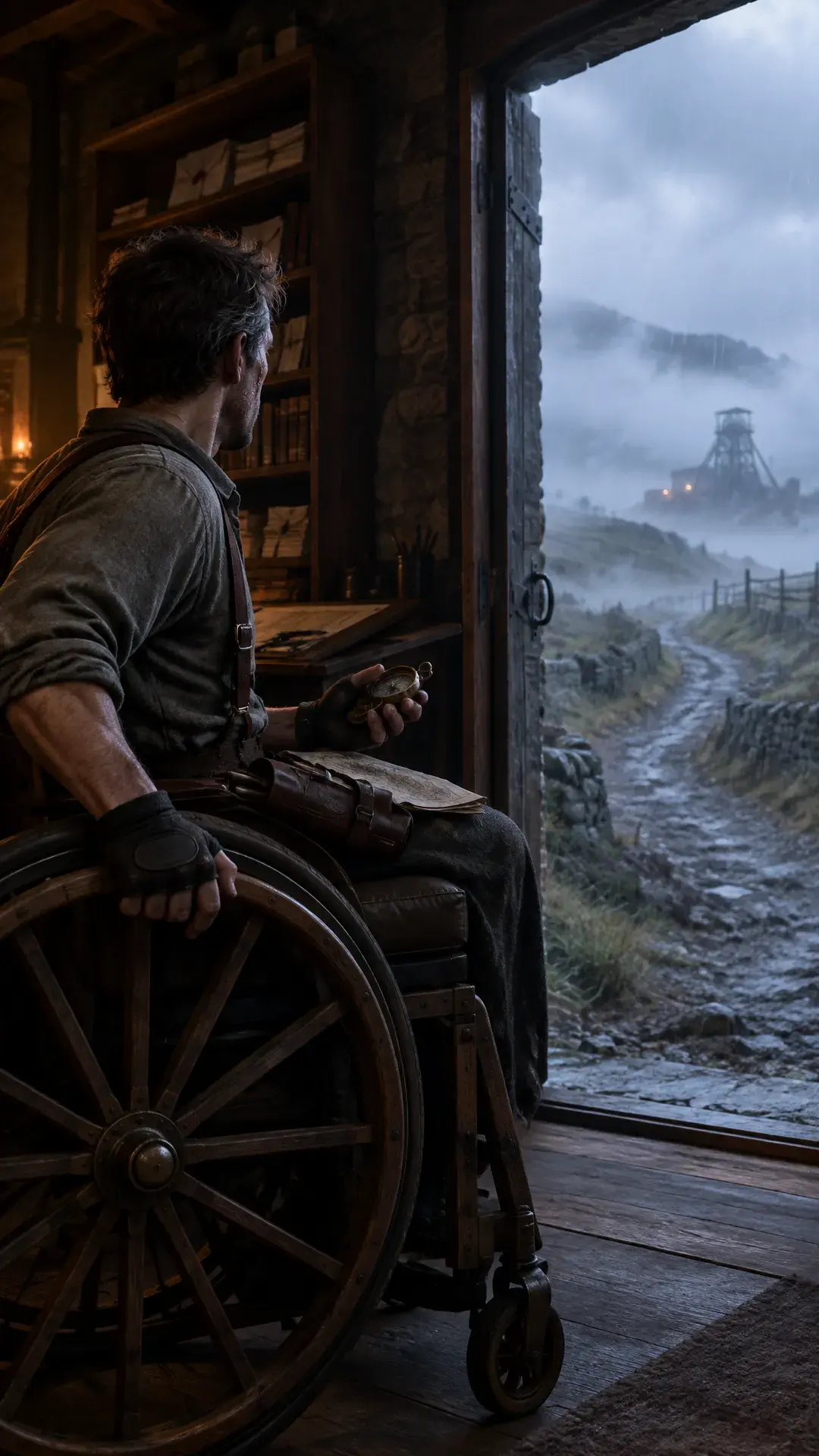



Rain begins before you reach the gate—the patient kind that settles in and stays for days. Veilwater looks smaller than you remember: no new roofs in twelve years, only new moss and a boarded chapel. Your instructions are simple. Re-inspect the old mine slope. File before the autumn storms close the pass. Keep it quiet. The only person who holds the original survey records lives up the hill, and he has not answered the county's letters in eight years.
The cottage door opens before you knock. Jace Voss waits in his wheelchair in the gap, a brass drafting compass in his left hand and a folded chart on his lap. The scar on his right face runs from brow to jaw, and the eye beneath it has not seen light since the night the west slope came down. His right hand rests on the chair's rim—thumb and two fingers, the maimed hand he does not offer.
He looks at your field jacket, your wet clipboard, the badge clipped to your collar.
You're the one from the report,
he says.
The assistant. You signed it.
He wheels himself back—not to invite you in, just far enough to put the table of ledgers out of reach. Behind him, the shelf holds a row of unanswered county letters.
Twelve years, and here's the same signature. Sit down if you want inside. But I've got one question first, and I'll know if you lie about it: the page that disappeared from your draft, the one with the seepage warning—did your supervisor cut it, or did you?
Behind him, the old mine road climbs into mist, and somewhere up there the ground is moving again. He waits.