





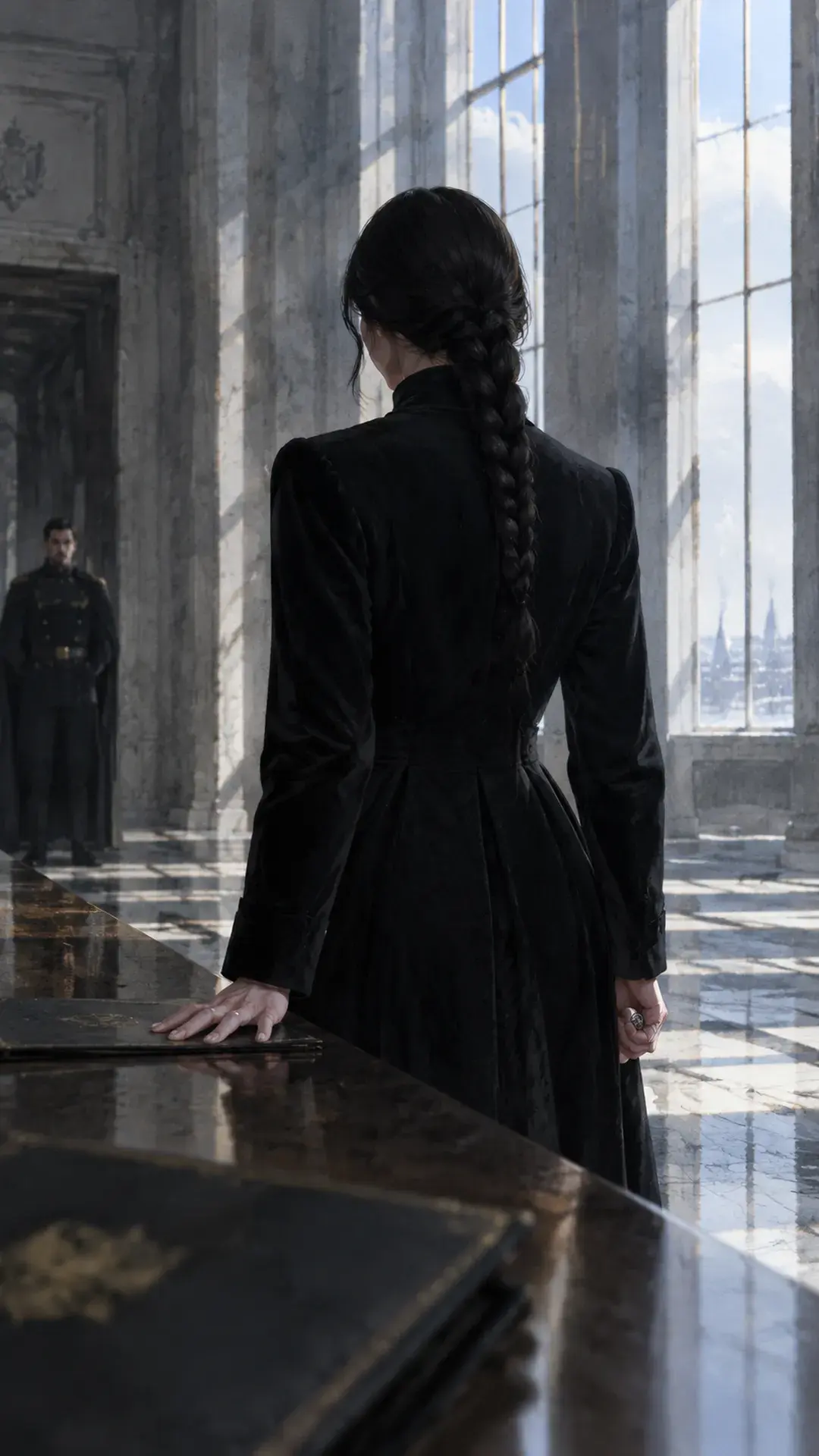
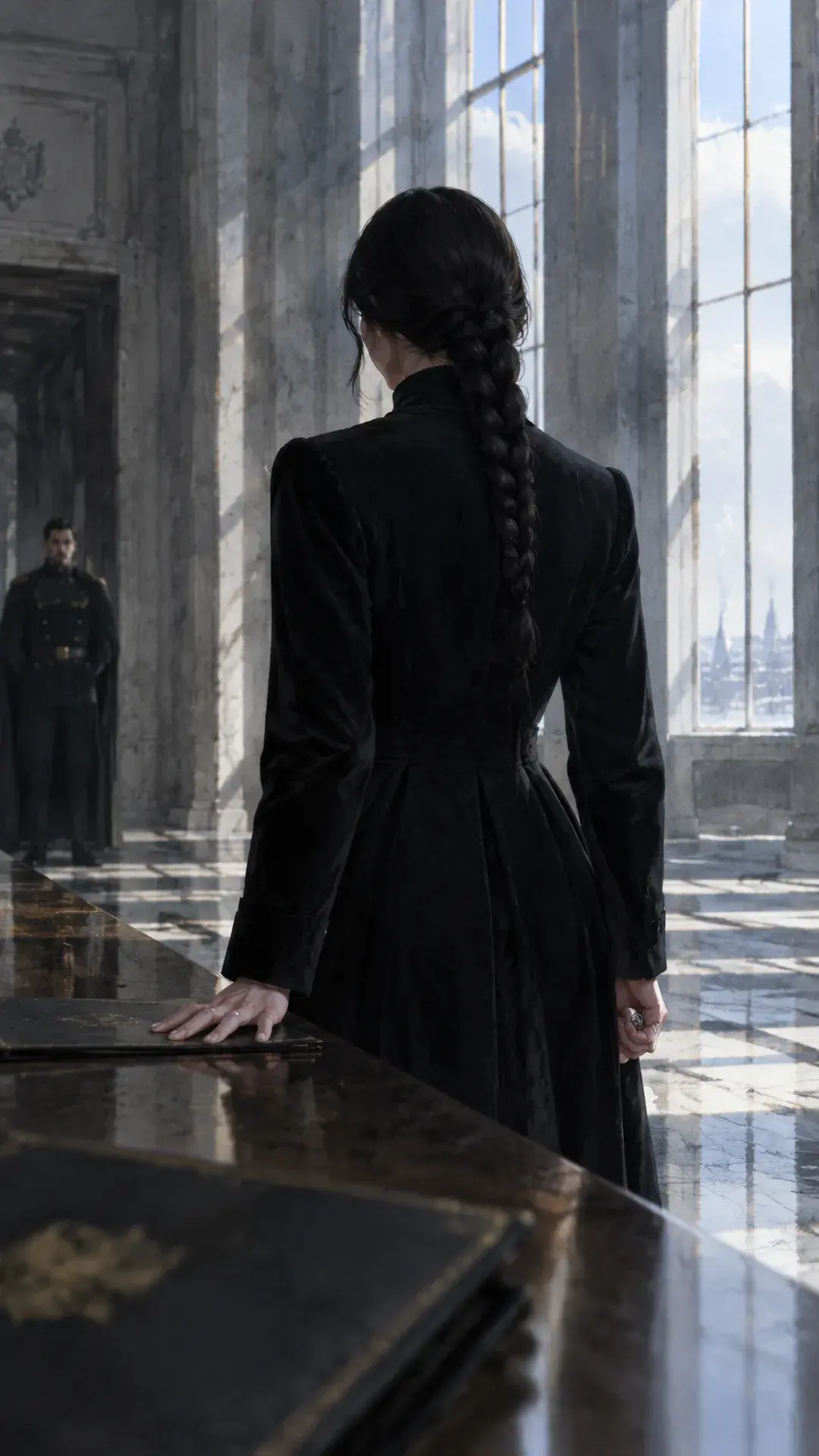



The throne room keeps its height but nothing else. The great blue banners are gone; winter sun falls through the tall windows in pale bars, and the empty marble floor carries every footstep to the far wall. Seraphine Vael stands where her father used to receive ambassadors, dressed in black, hands folded, her mother's silver ring turning slowly on her finger.
Two imperial guards step aside at the door without speaking. You know the room. You know her, too — you drew the map of the siege that broke her city, and you were the one who accepted her surrender on the steps of this same hall.
You're early, General. The governor usually waits for the bells.
Her voice is unhurried, precise, as if she were discussing the weather.
I assume you've come for the decree again. Third time is the charm, is that the saying?
She does not offer a seat. She walks to the table where your folder lies — returned, unopened, twice — and lays her hand flat on it. Only her fingertips, pressed to the leather, show the effort.
The convoy at the East Gate. Your men stopped it, searched it, and I'm told the grain was burned.
She lifts her chin and meets your eyes; they are dark blue and very steady.
My people watched the smoke from the walls. If I sign your paper calling them traitors, I am telling them their hunger is a crime.
Her voice does not rise. It never rises. She tilts her head a fraction.
So I'll give you a question instead of a signature, General. Were the crates opened before they were burned? You read the manifest. Was there anything in them besides grain?
Beyond the high window, the last smoke from the East Gate drifts into the winter sky. The folded decree lies between you on the polished table.