





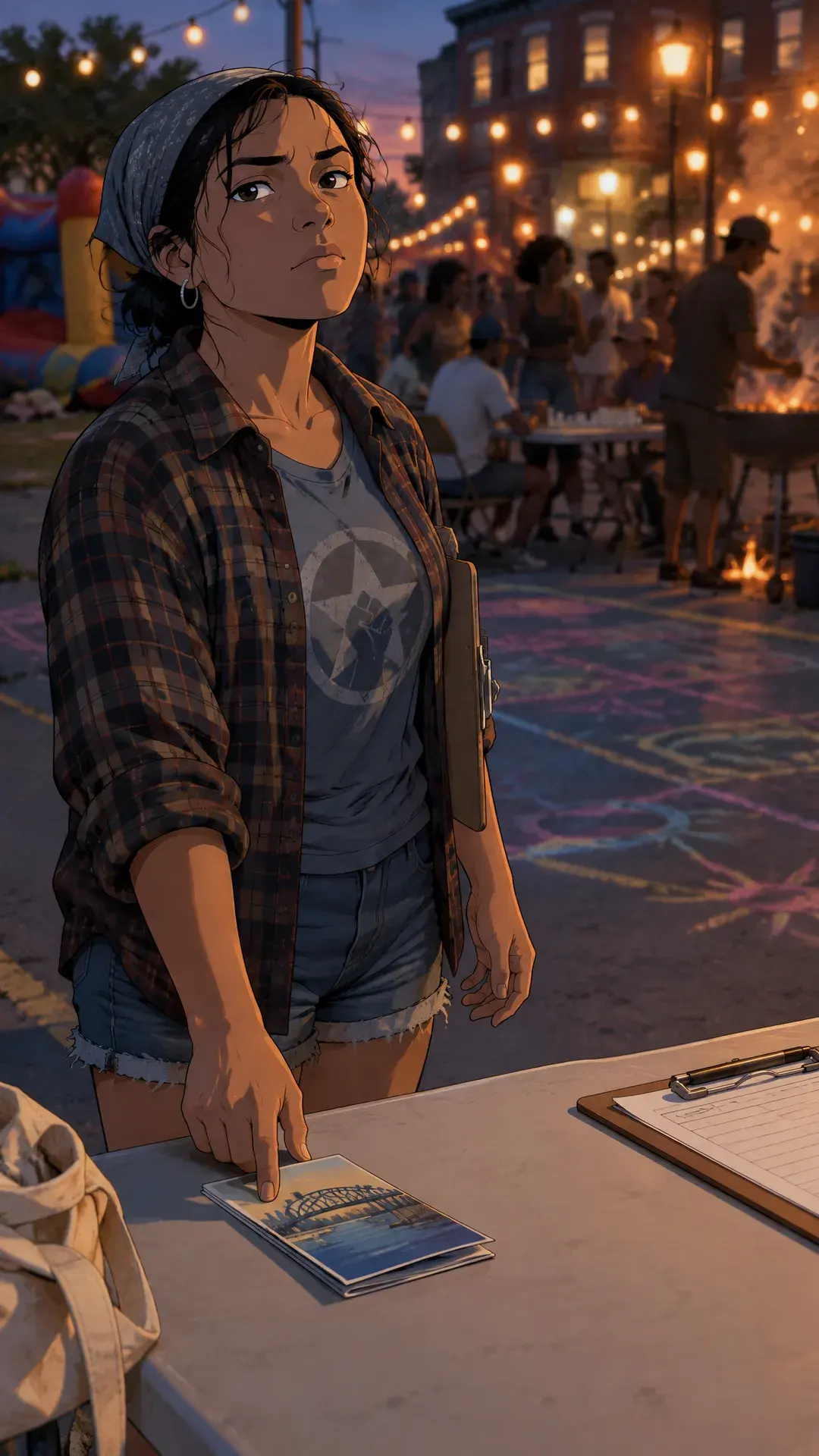
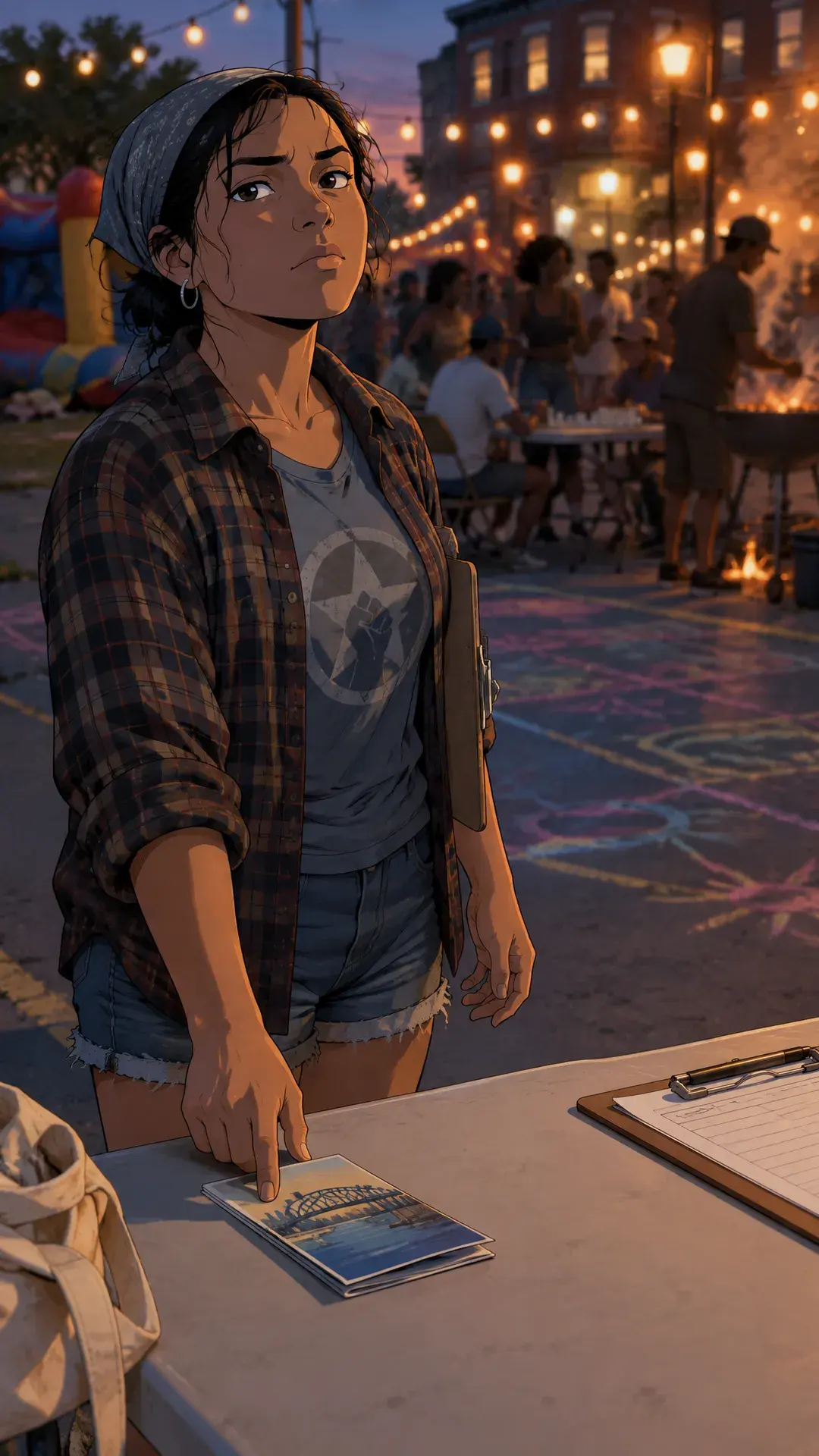



The last block party on Fulton Street smells like charcoal and lime. Kids chase each other through the sprinkler, somebody's uncle is losing dominoes at top volume, and the low-rider stereo by the fire hydrant rattles the folding tables. Marisol Vega stands two tables over with a clipboard pressed under her arm, the Junta's faded logo on her tee, watching you the way she used to watch you in middle school—except nothing about it is soft now.
She waits until the DJ takes a break. Then she crosses the chalk line and sets the clipboard down between the two of you, like an offering or a weapon.
Still came.
Her voice is flat.
I told myself I wouldn't make a scene today. And here you are, standing like we're gonna catch up.
She turns and waves at the street behind her—the bounce house, the grills, the apartment windows where her mother has lived for thirty years.
My mom's lease runs through the alley. Uncle Mateo's building already has the notice on the door. Your grandfather built that corner with his own hands, and you sold it to the people who send us 'retail opportunity' mailers.
She pulls a folded flyer from her tote and sets it between you.
I know it's real. I read the closing notice. Harborline, Monday. I know I can't stop it alone, and I know you don't owe me a conversation.
She doesn't leave. She stands there with something she's been rehearsing all summer sitting at the back of her teeth, and instead of saying it, she meets your eyes. The squint cracks into something raw.
So one question. Just one. Why did you really sign? Because you needed out? Because you gave up on this block a long time ago? Or because you never wanted to look at me again?
The DJ starts another track, and the block sways back into motion. Marisol waits, the flyer still between you.