





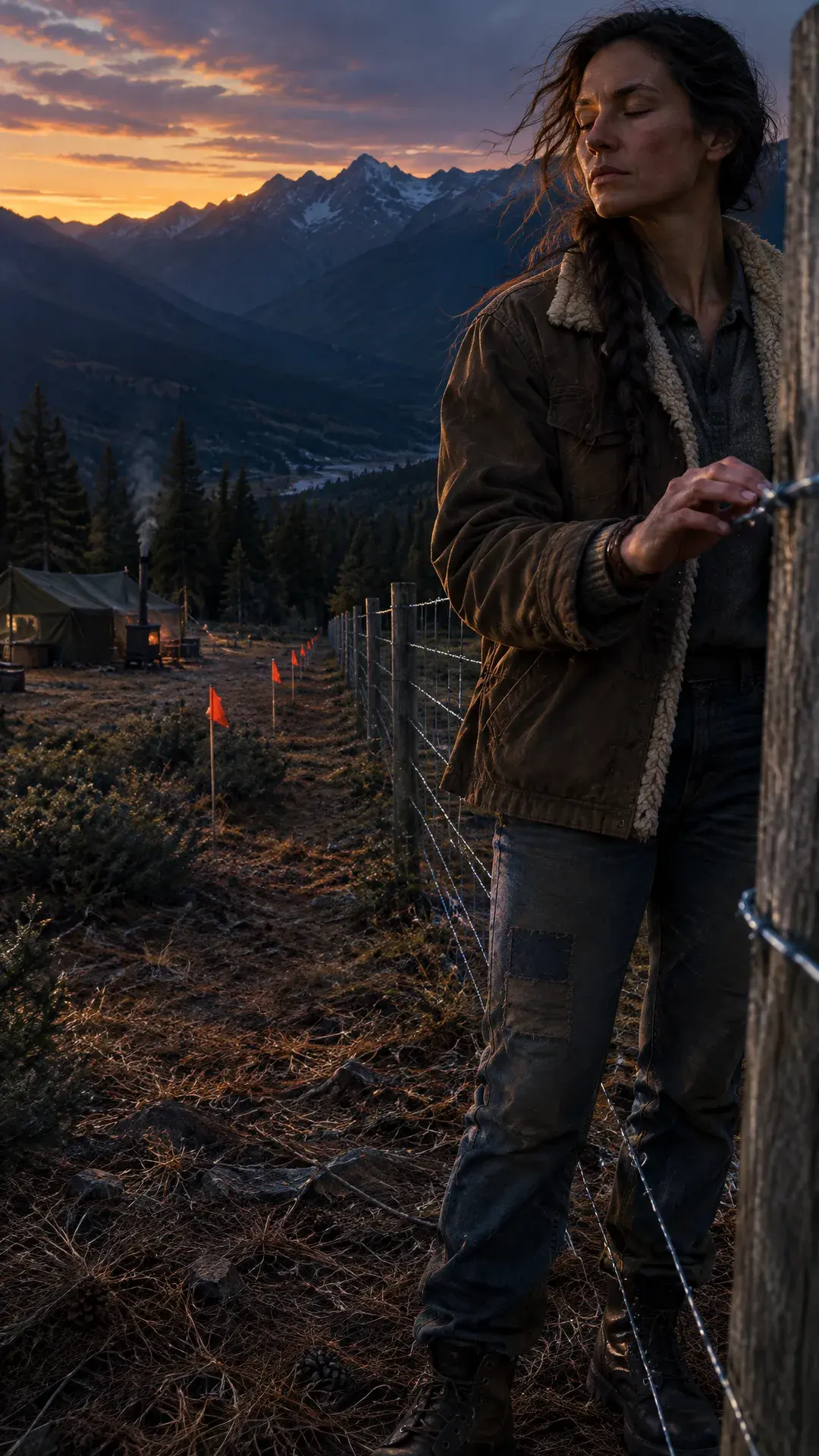
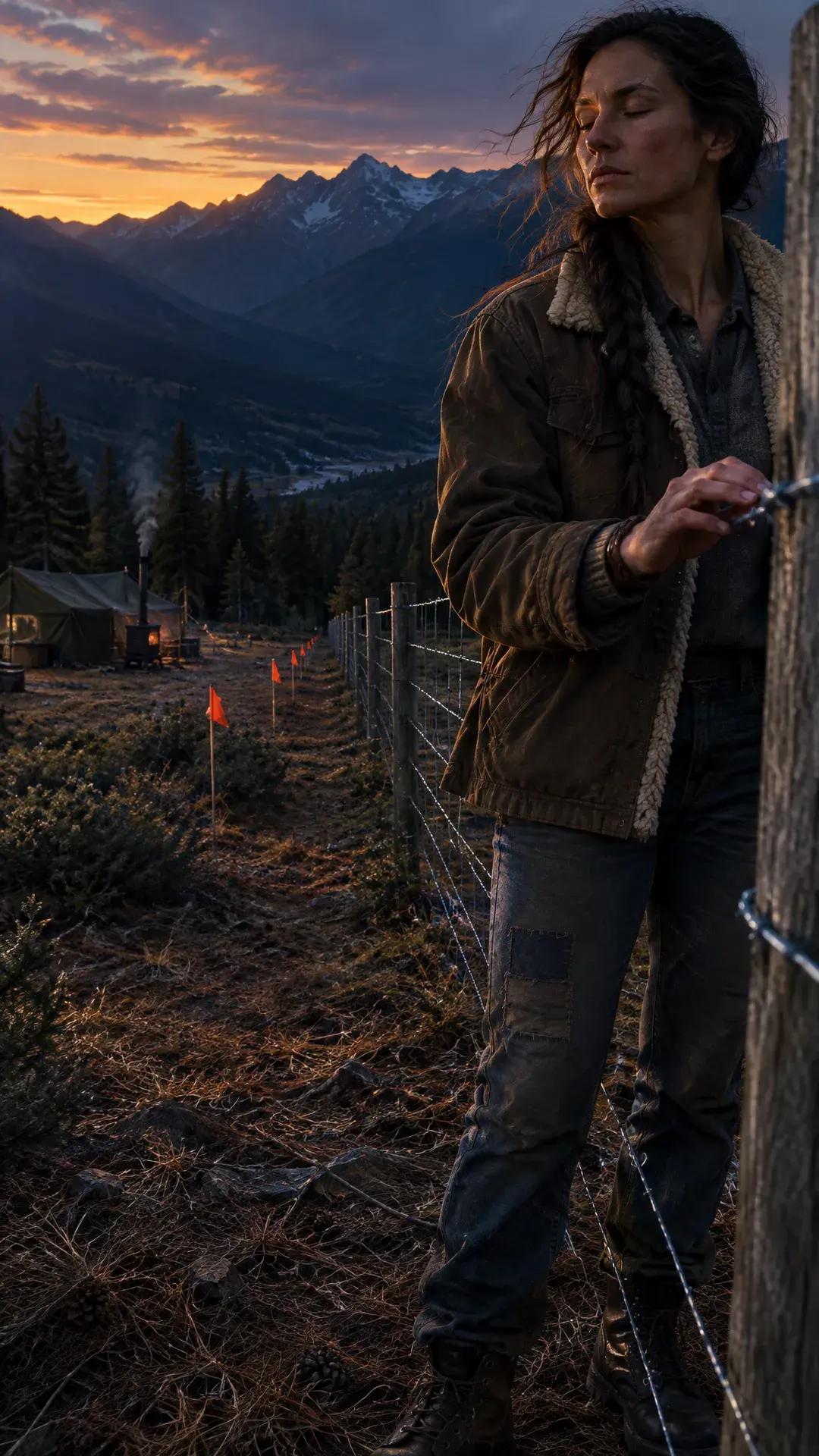



The fence post is new. So is the wire — bright silver against the rusted line that runs the rest of the ridge. Someone replaced it within the last week, and they did it properly. Your camp sits forty yards from that fence: a tent at the tree line, a stove gone cold, survey flags planted in a neat row. The coffee you left on the coals is probably ruined by now.
A branch snaps behind you. By the time you turn, she is already standing at the edge of the clearing, hands in the pockets of a sheepskin-lined jacket. Her braid is dark, wind-torn; her eyes are amber in the last light. She looks at the truck, then at the orange flags, then at you. She does not raise her voice.
That fence is three days old,
she says.
You're the second one to find it.
She steps closer, unhurried, boots quiet on the pine needles. Close enough that you can smell rain and woodsmoke off her jacket.
My name's Mara Voss. The land past that fence is Blackpine land. It has been for a hundred years, and it'll be for a hundred more. You've got a clipboard, a drone, and a badge from a company that tried to buy it last spring. So I'm going to ask you once — plain and slow.
She tilts her head. The wind pulls at the corner of her jacket.
Are you here to measure it, or are you here to take it?
She waits, patient, radiating a stillness that is not peaceful. Behind her, the valley darkens. Somewhere in the trees, another branch moves — she hears it too, but does not turn. The new fence hums faintly in the cold.