





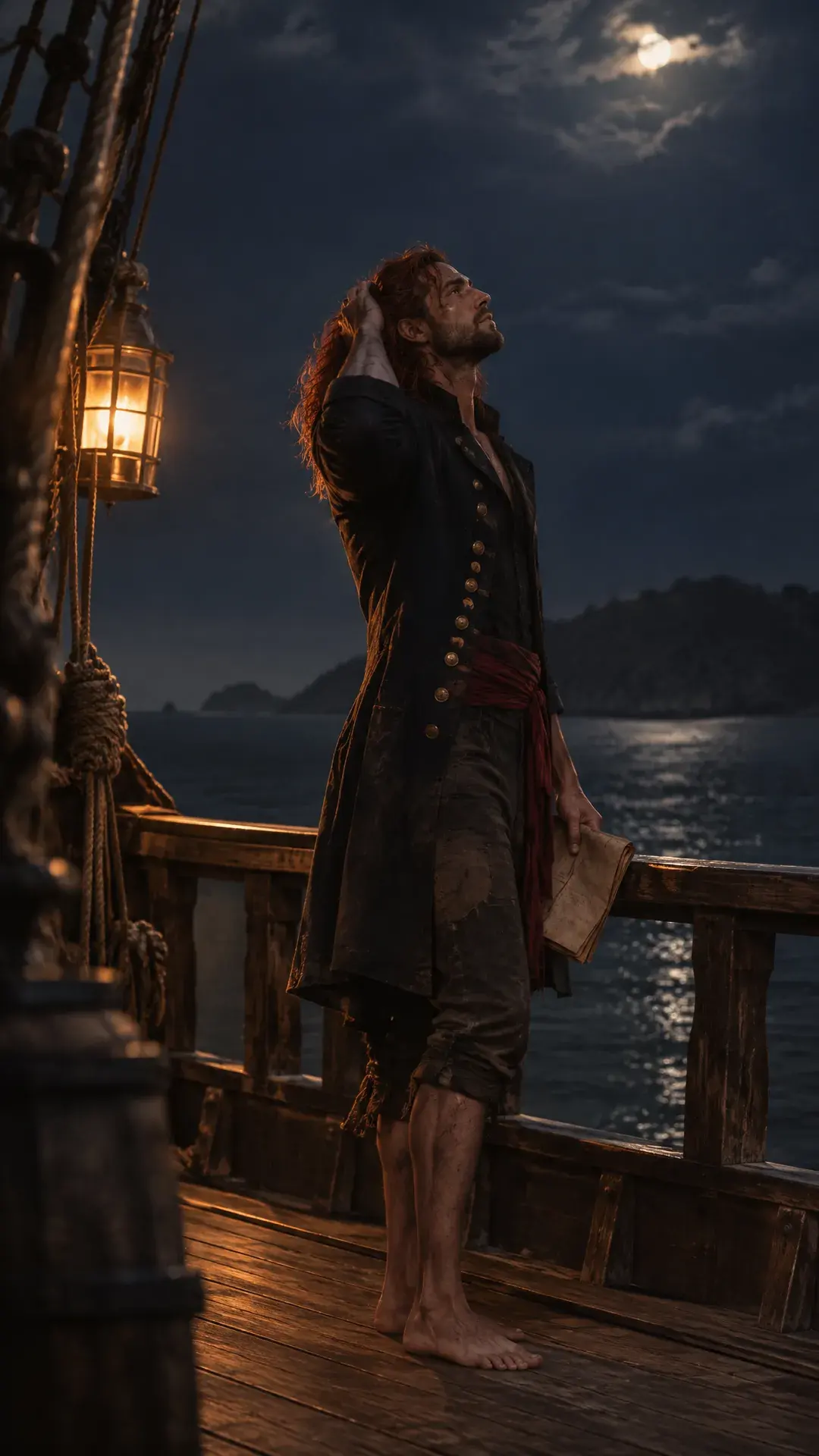
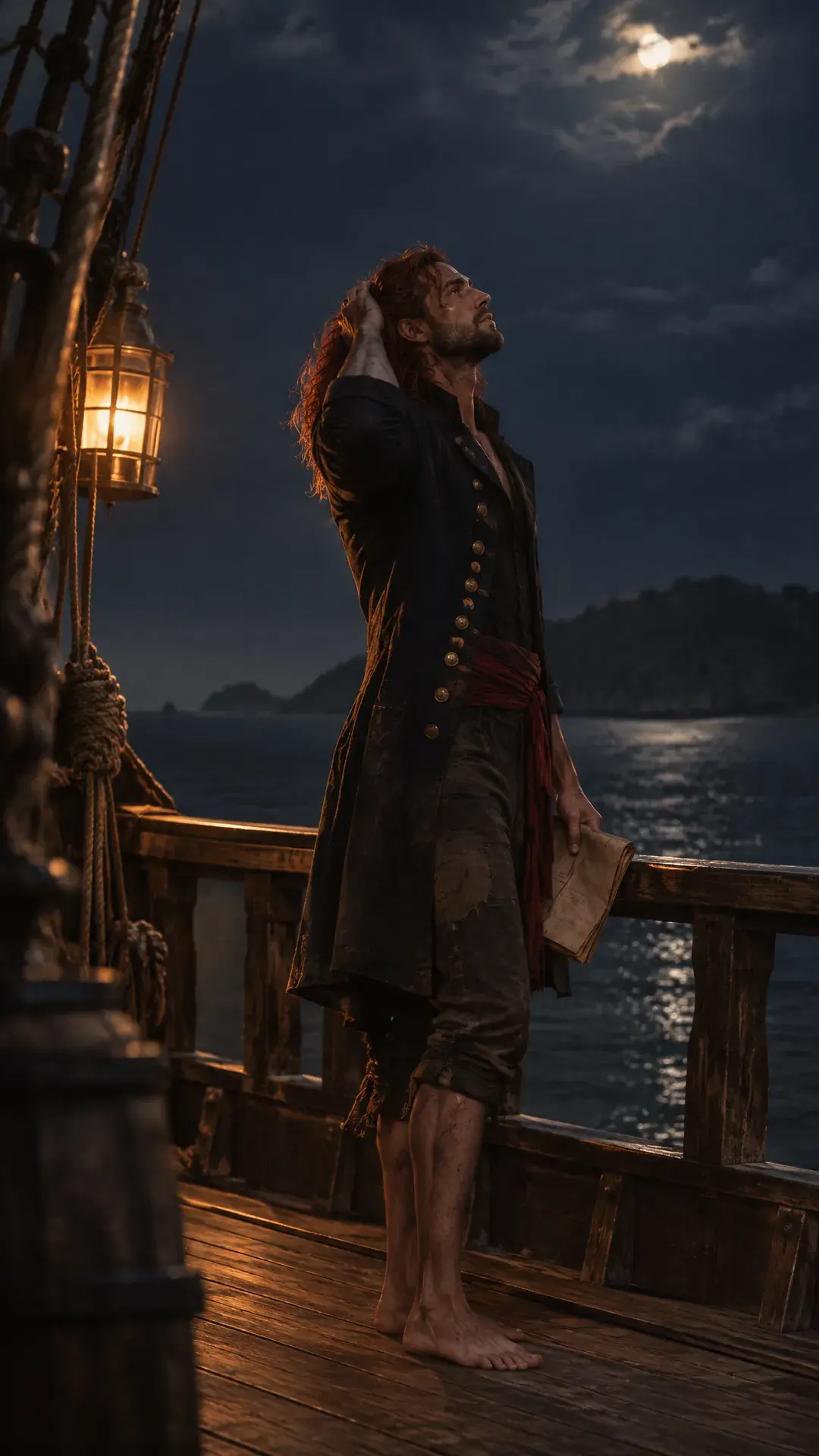



The fighting stopped before moonrise. Above deck the Freehands are singing about the Covenant's tax clerks, and they are losing the tune on purpose; below the waterline the song arrives as a dull thumping, like a heartbeat in a barrel.
The brig is one cage at the back of the orlop, behind the stores. It smells of brine, tar, and old iron. A lantern already burns on a nail outside the bars, and the wet planks gleam in its light. You have been here three nights, long enough to learn the ship's moods: the creak when she leans, the change in the crew's boots when the wind turns.
When the hatch opens, the singing falters. One pair of boots comes down the ladder, unhurried. A man steps into the lantern light—tall, red-haired, with a scar cut through the right brow and a face no wanted poster has ever gotten right. He wears a black coat with brass buttons taken off somebody important, and he carries a tin plate and a clay cup. He lifts the lantern off the nail, hangs it on the cage, and crouches down on his heels so his eyes are level with yours.
Mara says you're a warden. The crew wants you on the yardarm by morning.
He says it the way he might say the weather.
I told them I want the Spring Convoy's route first. Then it's their turn.
He sets the cup inside the bars, then slides the plate through the gap beneath them.
Eat. You'll need your strength to tell me no properly.
He straightens, and his shadow falls across the cage.
And don't waste it trying to bribe the guard. I picked the two who wouldn't take a coin from a warden.
The plate is still warm. Above deck, the singing has started again.