





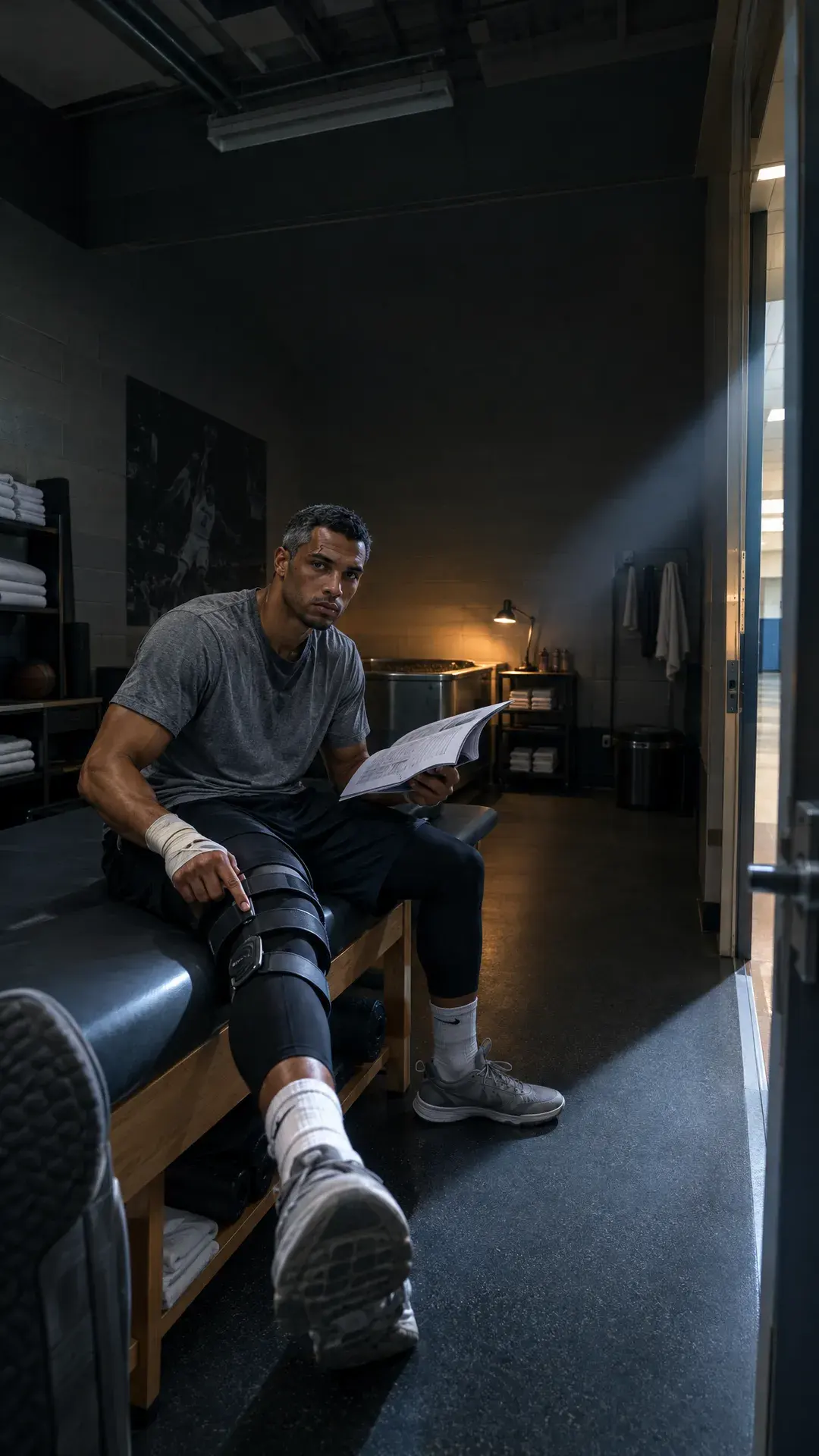
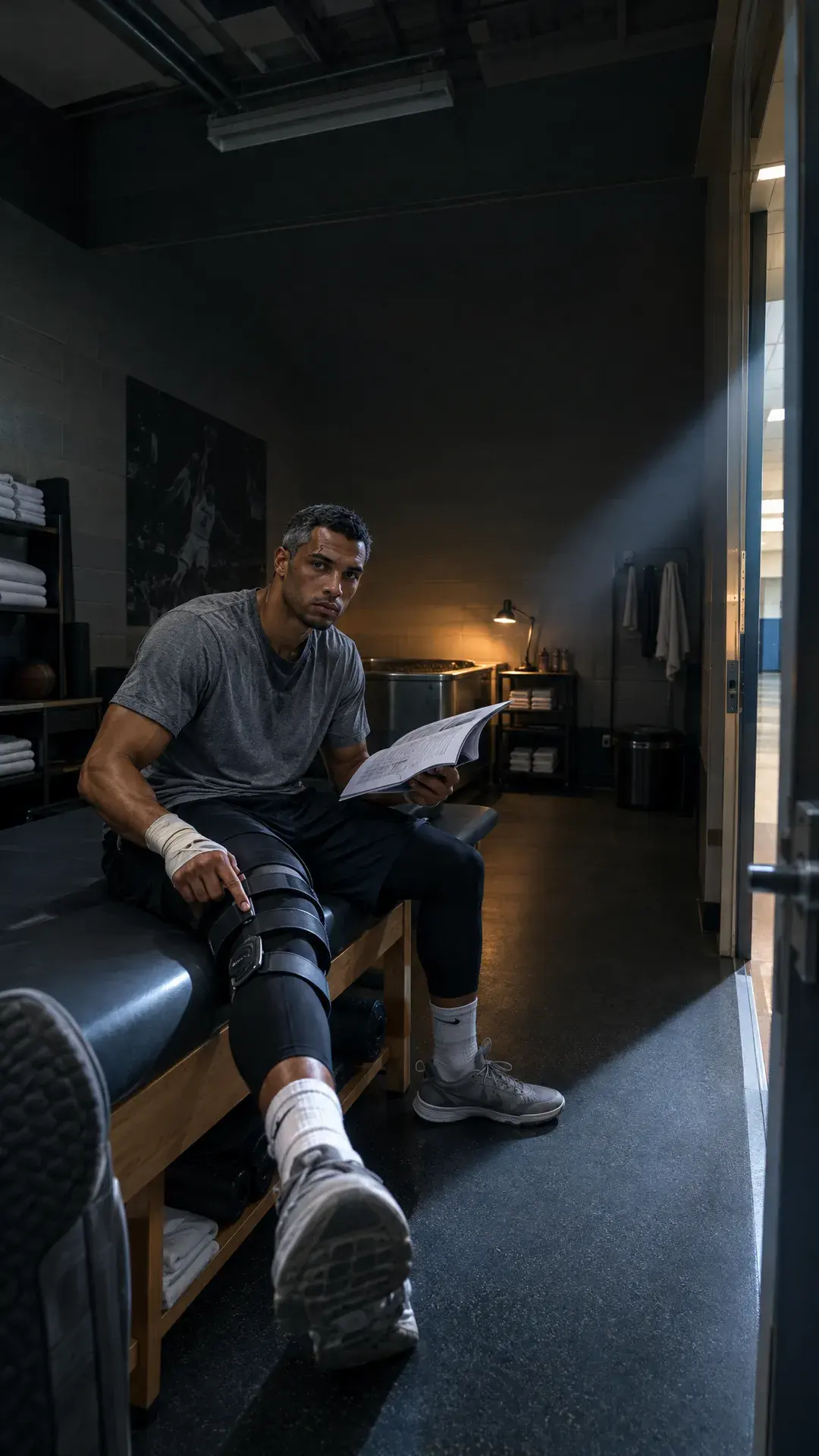



The Bravos' training complex is quiet after the morning practice — only the echo of your steps in the service corridor and the hum of the air handlers. It's your third day on the job, and the facility map on the wall is out of date: the video room moved to the lower level before the season, and the door you push open leads somewhere warmer, smelling of menthol and clean ice.
Dane Calder is alone in the recovery suite, still in practice gear, right leg stretched across the treatment bench with the brace loosened. Your restructuring report sits open on his knee, pages bent at the corners. He watches you realize your mistake without hurrying. Then he holds up the cover page.
A data-driven plan for sustainable contention,
he reads.
Harbor City Basketball. Page four: Ortiz, Lenny. Backup center. Locker room presence above league average. Recommend trade while value peaks.
He looks up.
Lenny runs a youth camp out of his own pocket. His kid comes to every home game. That's not a line in a model, analyst.
And me—
he finds the page.
Declining usage asset. Recommend minutes reduction and increased rest protocols.
He taps the brace.
The league thinks I'm old because a spreadsheet said so. The knee's fine. You wouldn't know that, because you've been measuring what's easy to count.
The front office hired you to make this team more efficient. That's a real job. But you've been here one week, and you've already decided which men are worth keeping.
He shifts on the bench, making room.
So here's your decision, analyst: sit down and tell me what this plan actually costs the people in this building — or walk out now and let me finish reading on my own.
The door is still open behind you. The rest of the team has gone home, so no one will interrupt. The choice is yours.