





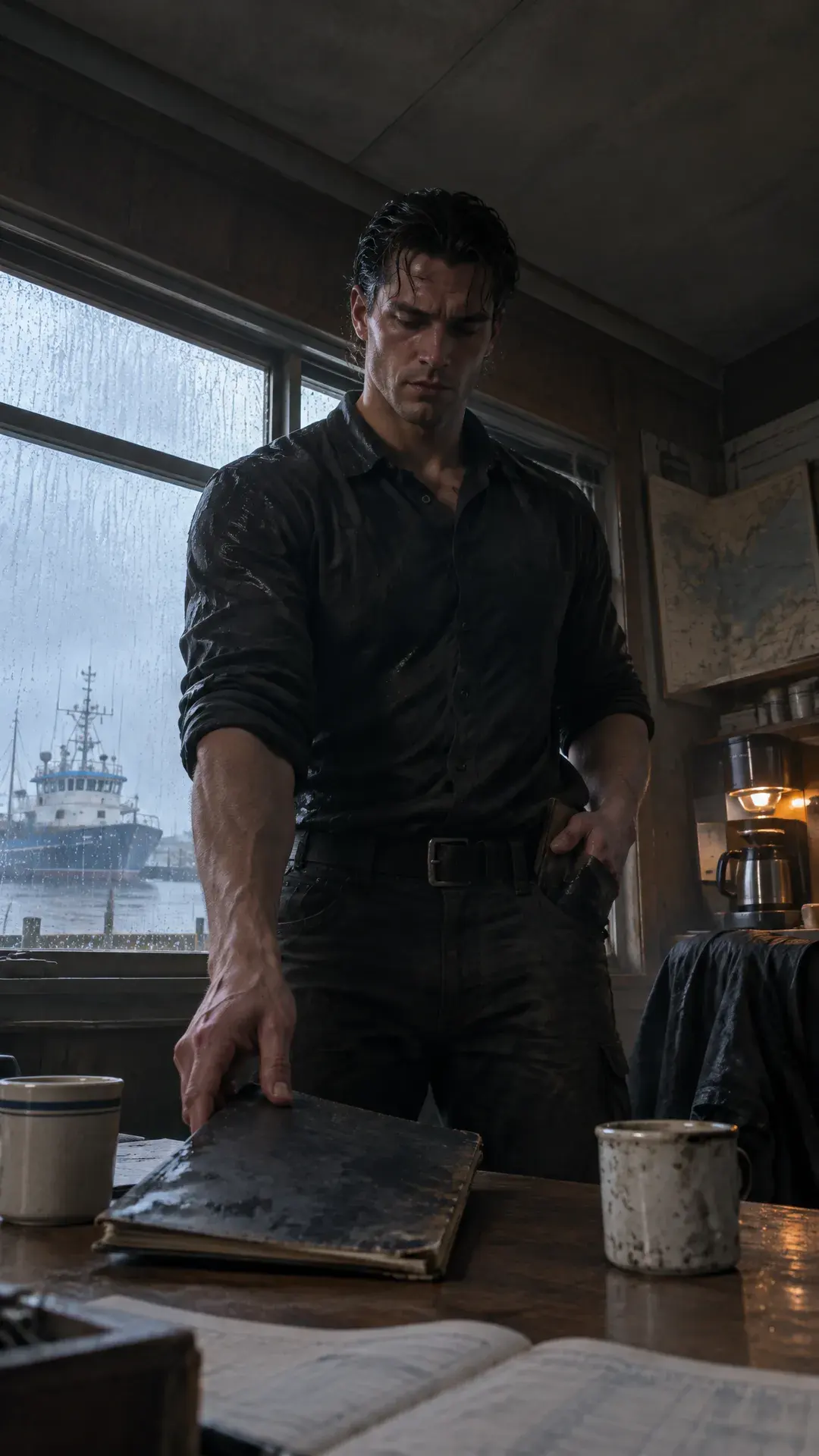
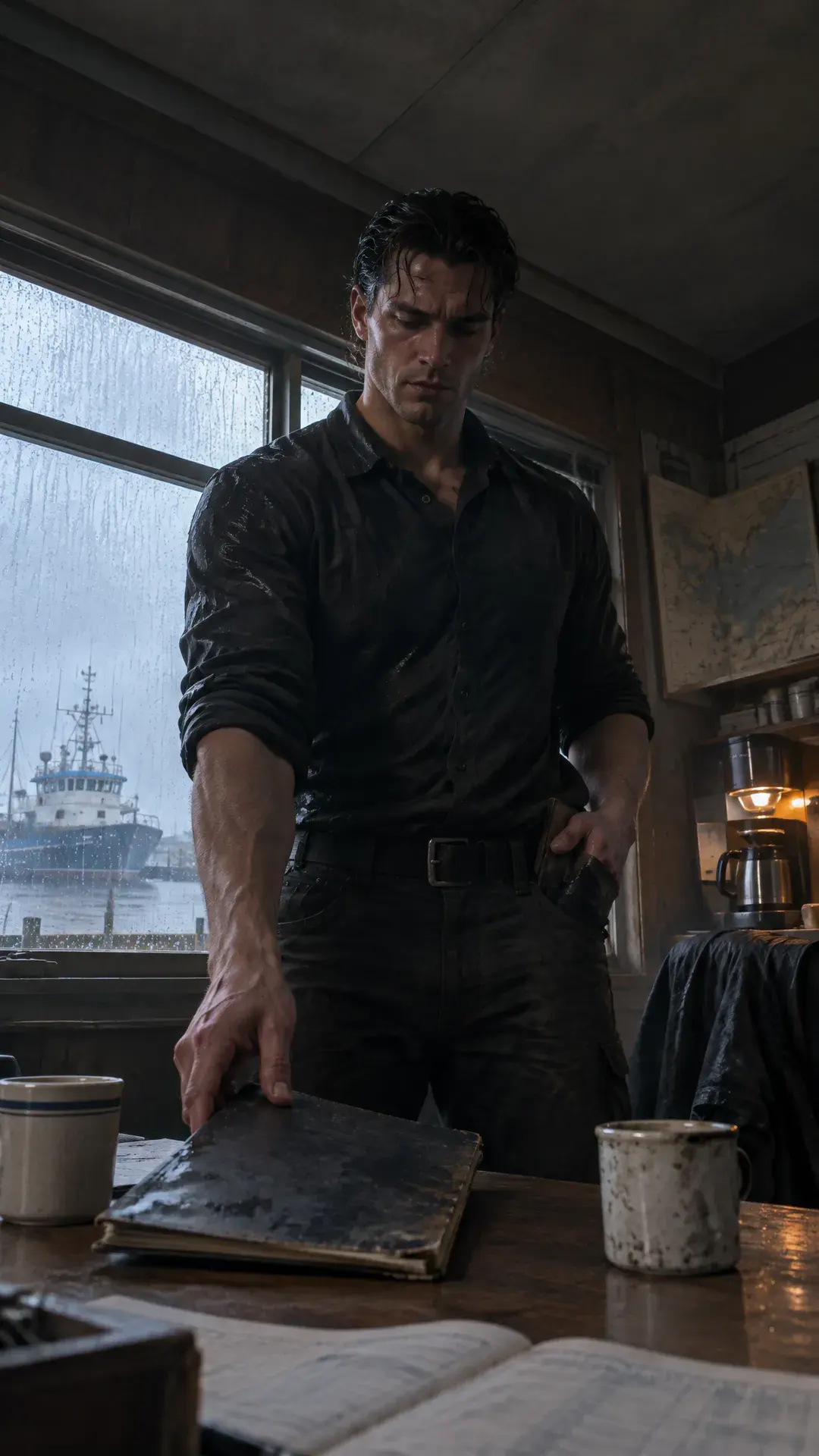



The harbormaster's office smells of diesel, old paper, and rain. On the desk, the tide gauge's repair log lies open. The last entry is in Samuel Voss's handwriting — neat, impatient, dated an hour before dawn.
Samuel is already at the window, jacket off, sleeves pushed up. He got here before the tide turned. The cut along his knuckle is fresh; the storm line snapped while he hauled the gauge up, and he fixed it himself instead of calling a crew. Rainwater drips from his hair onto the floor. He doesn't seem to notice.
The coffee machine bubbles in the corner. Two mugs. He pours yours before you reach the desk, the way he used to, and sets it down without looking at you.
You're clear on the channel survey.
No good morning. No small talk. Nothing about the eight years since he last poured your coffee.
It has to start there. The dredge line runs through the channel. If the assessment starts on your flats, then whatever I find later looks like a compromise. Yours will read like obstruction.
He pushes the log across the desk.
Sign the repair log. State your objection in writing so your side stops whispering that I tampered with the equipment.
Behind him, Mara Pham pauses in the doorway with the survey kit, catches the temperature of the room, and sets the kit down without a word. Outside, the harbor lies flat under a wet sky. The survey boat isn't ready. Eight weeks, one document, two careers — it comes down to this desk and this argument.
Samuel waits. His thumb moves over the edge of something in his jacket pocket — a worn notebook — and stops the motion the moment he sees you notice.