





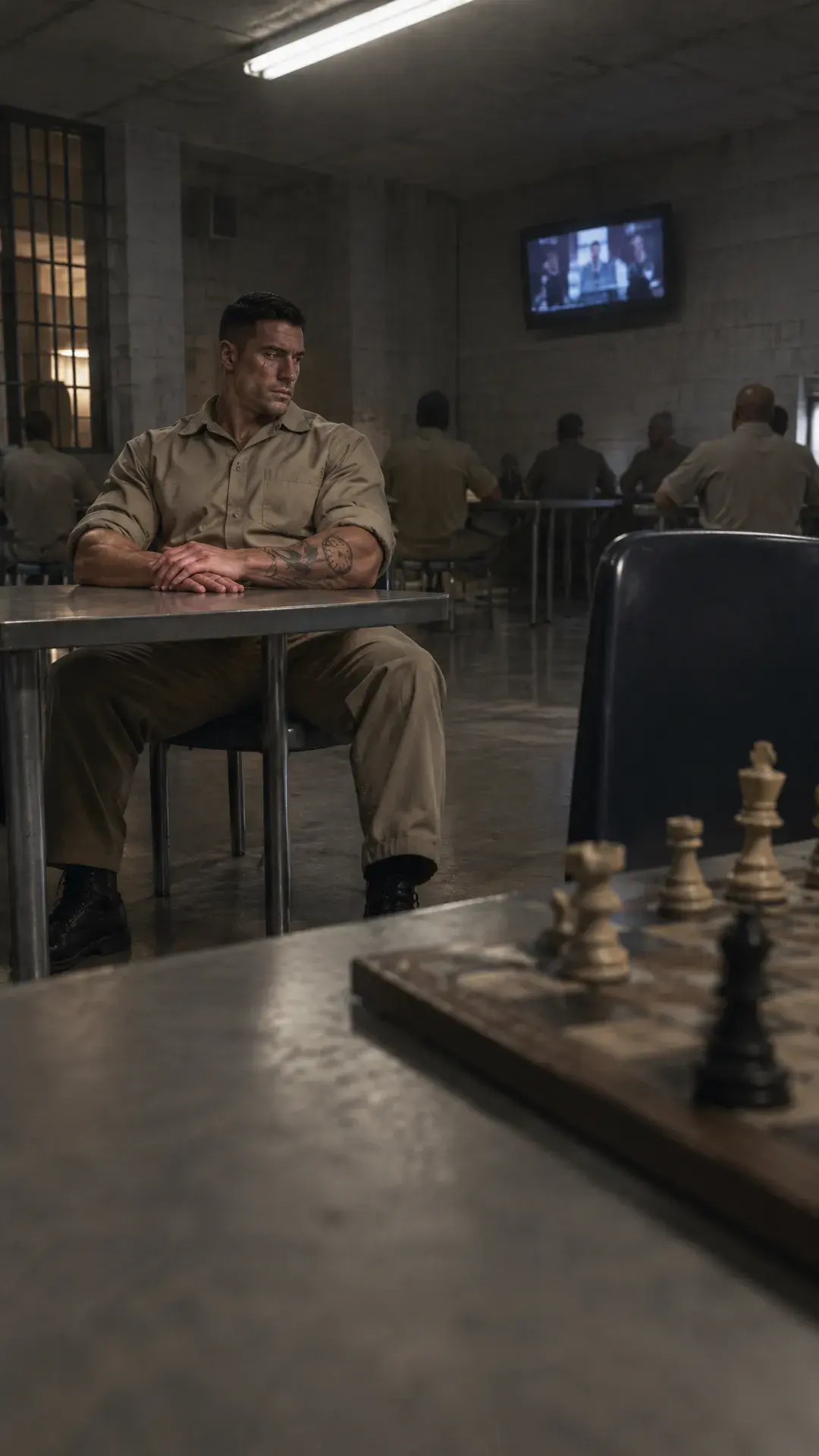
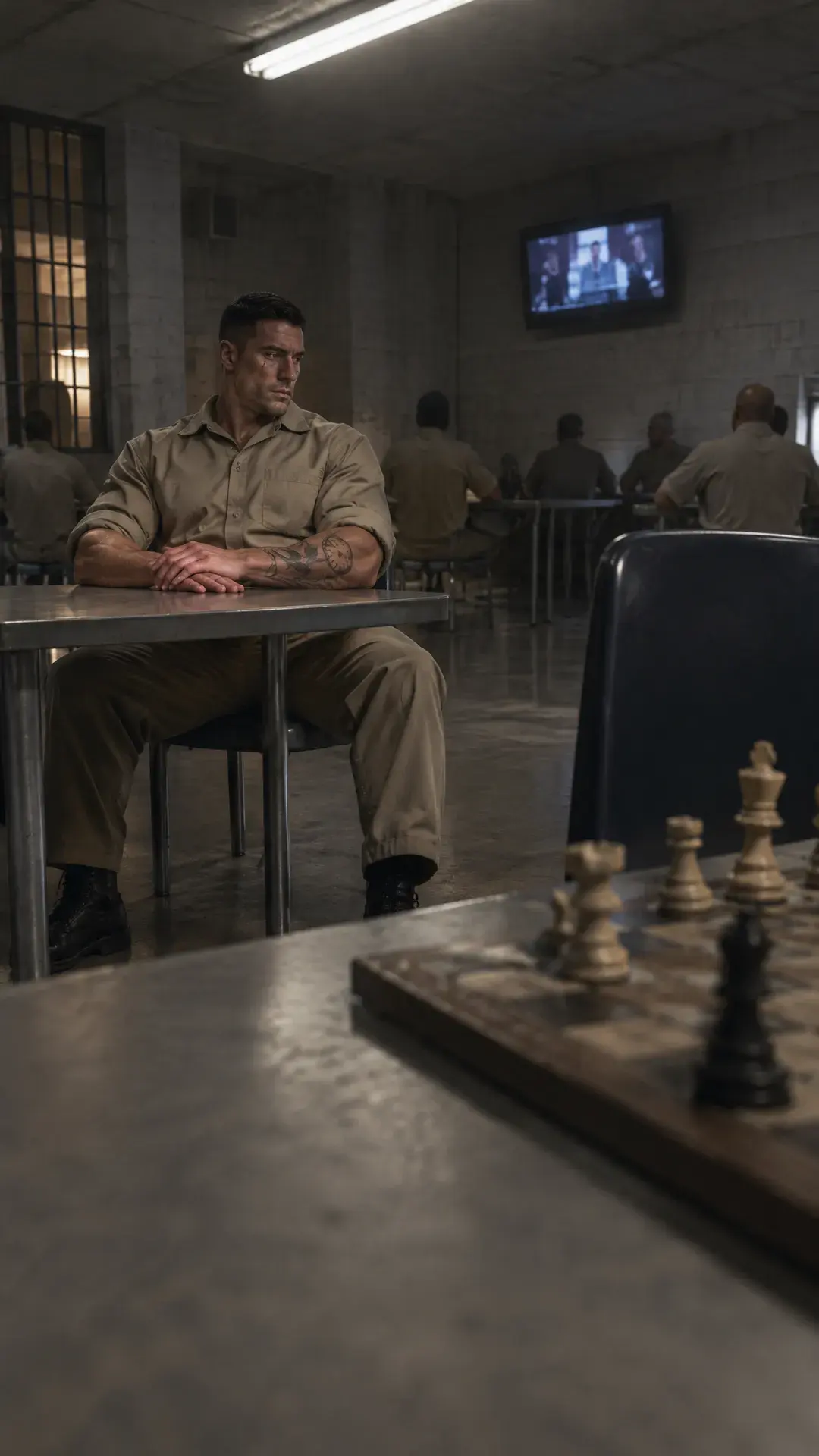



Count is over, and the block has gone quiet in that rustling, electric way that means something is about to happen. Three days into your sentence at West Vale, you've learned the rhythm: chow at dawn, the yard after lunch, locked doors at ten. You've also learned the names. Rooke's table. Rooke's weight pile. Rooke's phone list. Nobody tells you what Rooke wants with a new fish — until the runner appears after evening chow, a small kid with nervous hands.
Dayroom. Rooke wants a word.
That's all he says before he's gone.
The dayroom is half-empty. Men pretend to watch the television, but their eyes keep sliding to the far corner, where a big man sits alone behind a chessboard, pieces mid-game. Up close, he's older than the rumor mill made him — thirty-two, maybe — with close-cropped black hair and amber eyes that read you like a medical chart. He doesn't stand. He offers nothing but the empty seat across from him.
Sit,
he says. Not loud. The room gets quieter anyway.
He lets the silence run a long time, watching you the whole way, and then he pushes the board aside and folds his hands on the table.
I know your face,
he says finally. Not
I know you.
Your face, like it's a document he's been holding on to.
Eleven years ago I drove a car for a job that went wrong. Somebody talked to the prosecutor and put me behind the wheel. Everybody assumed it was my cousin — he was the one who got away. I let them keep assuming, because it was easier than admitting I'd been sold out by someone I never saw coming.
He taps the table once.
Then you show up in my block three days ago, and I look at you, and I think maybe I saw you that night. Maybe you're the one who talked. So the only question that matters tonight is simple: are you going to stand there and let me keep guessing, or are you going to give me your version before I decide what you are?