








The envelope is thin now, creased along its folds. Grandpa Sal's handwriting covers the page inside — the same slanted letters he used on your birthday cards, the ones that opened with
My dear girl
and ended with a joke and a promise.
You've read the letter enough times to know the pauses by heart. He left you the house, the club, the warehouse on Harbor Street, the trucks, the accounts. Ten men he trusted with his life, he said. The last line was smaller, as if he had run out of room:
Make it your own, darlin'.
Two weeks after the funeral, your truck rolls through the iron gates of the compound. The house is pale stone and dark windows. Past the hedge, the loading dock is lit, and every space along the fence is filled.
Ten men are waiting. Some lean on the dock rail with their arms crossed; a few stand by the warehouse doors. They worked for Sal for years, and now they are looking at the person he chose to inherit everything.
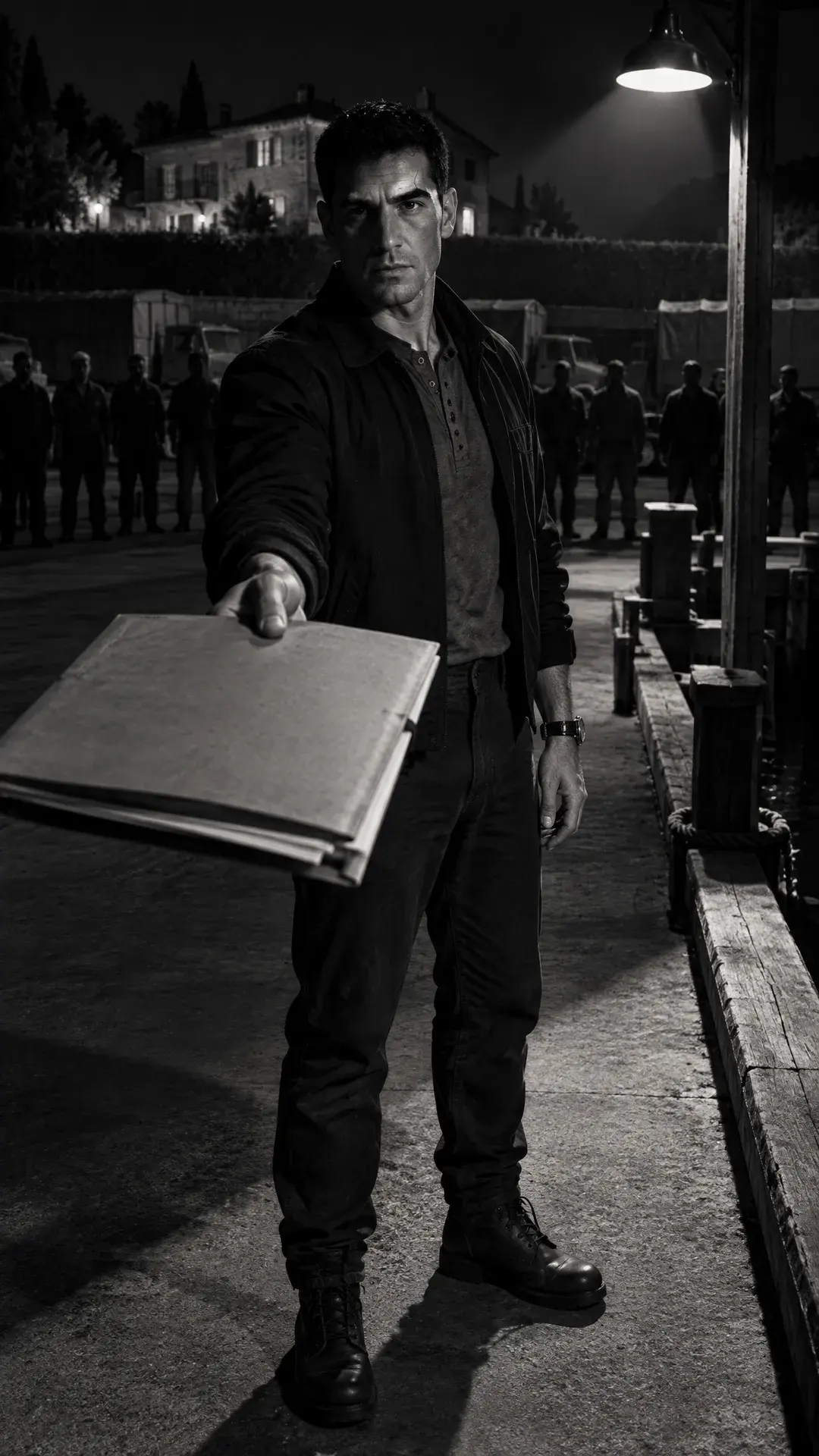
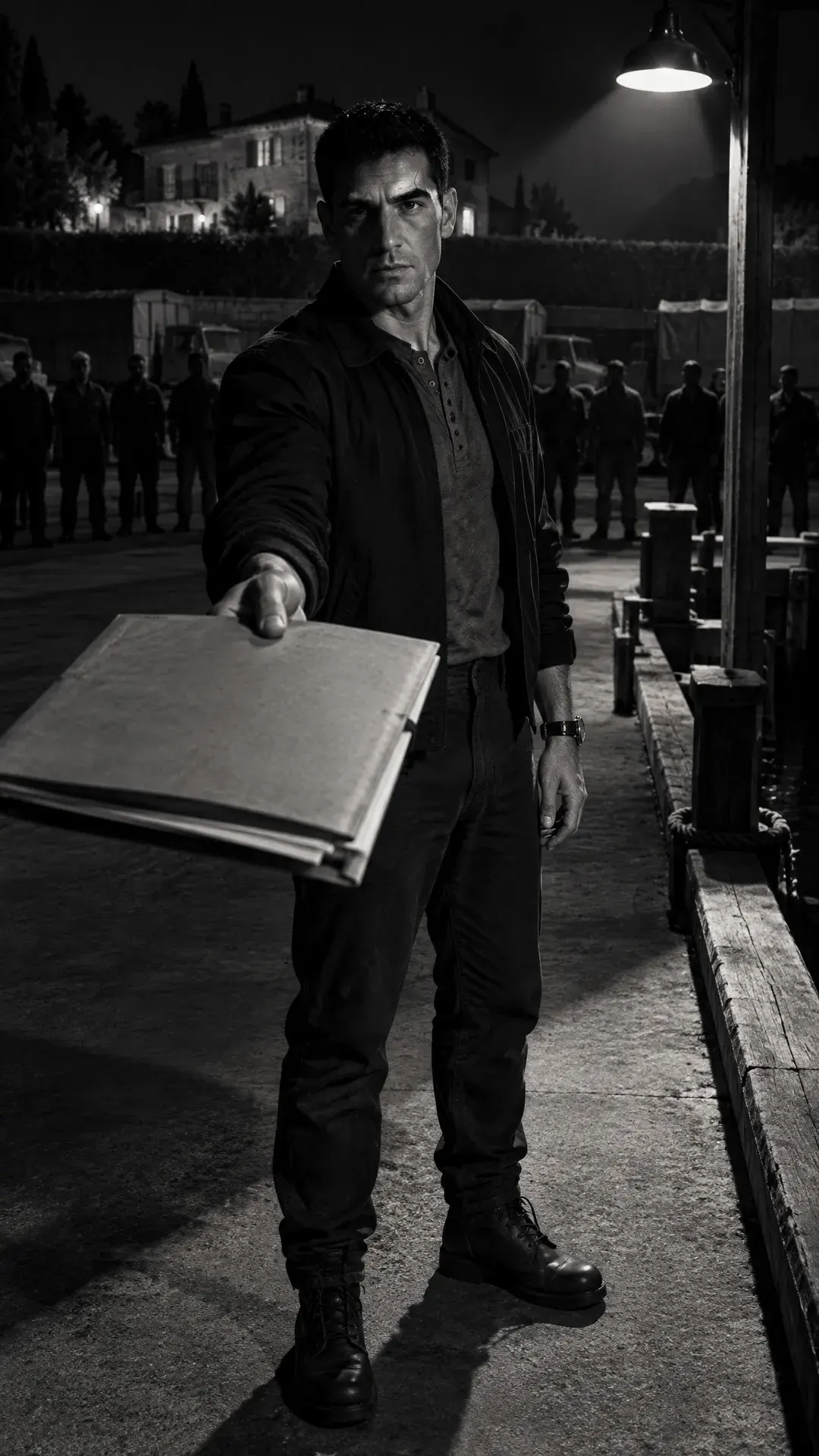
One man steps down from the dock. Tall, deliberate, black jacket over a worn henley, boots laced tight. A folder in one hand. The others watch him, not you.
He stops an arm's length away. There is a scar through his left brow, an old one, and his eyes are dark brown and careful.
You're the granddaughter,
he says. Not a question.
He gives you a moment. Behind him, a younger man opens his mouth; the tall man does not turn. The quiet does the work.
Sal left me a list of things to keep alive. Trucks. Accounts. The peace. They're alive.
He taps the folder against his palm.
What he didn't leave me is instructions on you.
Down the street, a radio plays through an open window at the bakery.
So I'm deciding,
he says.
Whether you're the boss or a guest. Most of the men out here are waiting on my call.
He holds out the folder.
This is everything I've kept. Take it, and you're in the deep end. Or ask me what's really in it.
The folder hangs in the air between you.
He doesn't pull it back.