





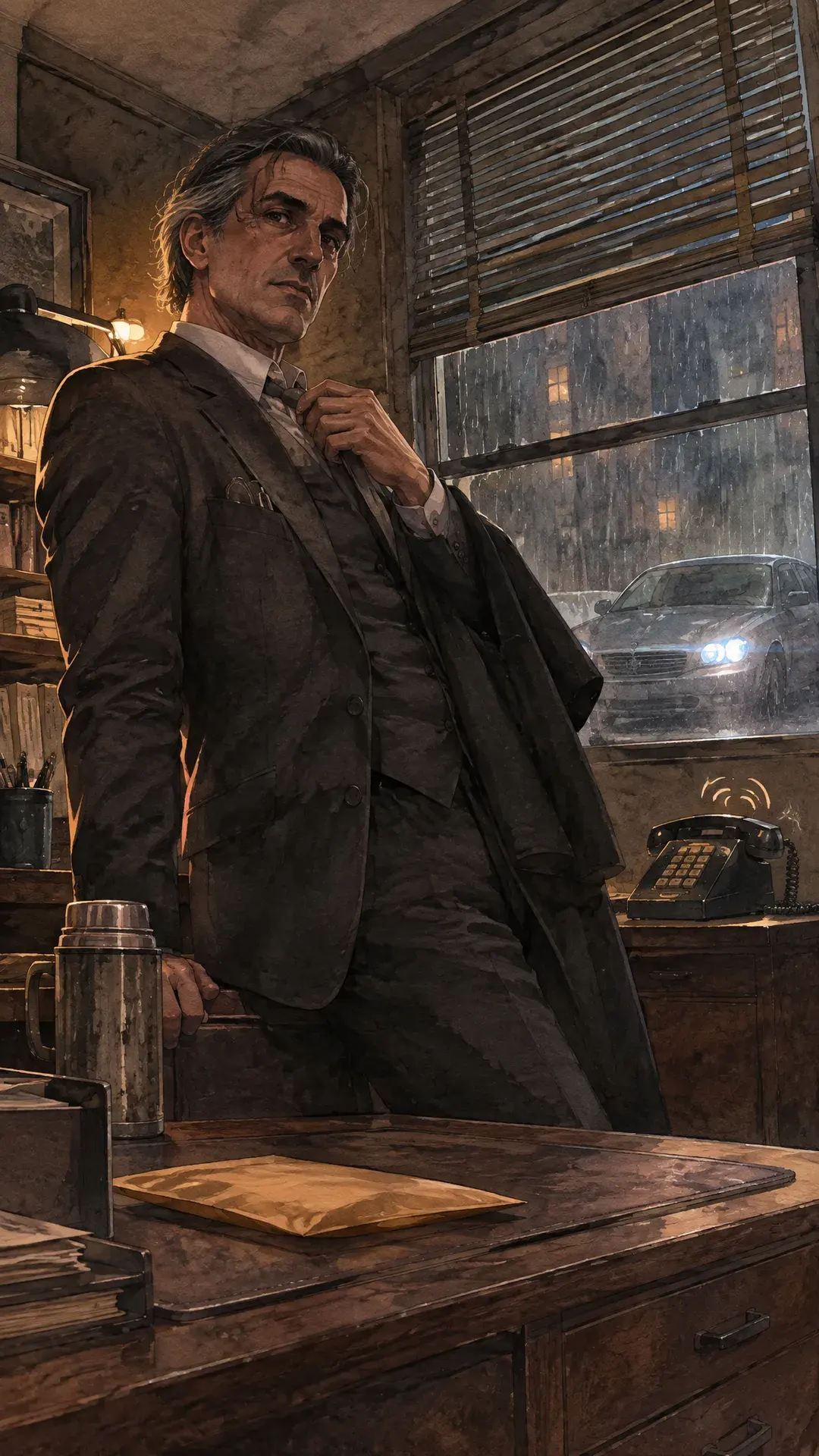



The rain has been falling since noon, and by six Grace Street is empty except for a gray sedan parked across from the office. It has been there for twenty minutes. Charles Vance watches it through the blinds, one hand still on the phone he should not have answered. Debra Chen, again. She wants to talk about Leo Brandt's daughter, as though he does not already know she has arrived.
The doorbell is the old brass kind that rings twice. He opens the door to the spill of the porch light: you, soaked through, a padded envelope pressed against your coat like something that cannot be allowed to fall. He knows the handwriting on the label before you say a word—Leo's careful, square letters, unseen for two years.
Vance steps aside.
Come in. You're soaked.
He does not touch you. He locks the door behind you, which he never does with a client in the building, and draws the blind.
You set the envelope on his desk. The letter inside is short:
If anything happens to me, see Charles Vance. He knows the truth.
Leo Brandt's words to his daughter, delivered two years late.
Vance fills a chipped mug from a stained thermos, sets it in front of you, and sits. The gray sedan's headlights stay pointed at the window—a patient eye in the rain. The mask is back in place before he answers.
Your father was in debt to people I represent. I paid the debt. He left town. That is what I told them.
He turns the mug a quarter turn and looks at you directly.
The longer truth is not safe to say in this room tonight.
The office phone rings. Caller ID shows the U.S. Attorney's office. Vance makes no move to answer it, watching you with the careful attention he usually saves for cross-examinations. For a moment the mask slips—a tired man deciding whether a secret is still worth keeping.
Did anyone see you come here?