





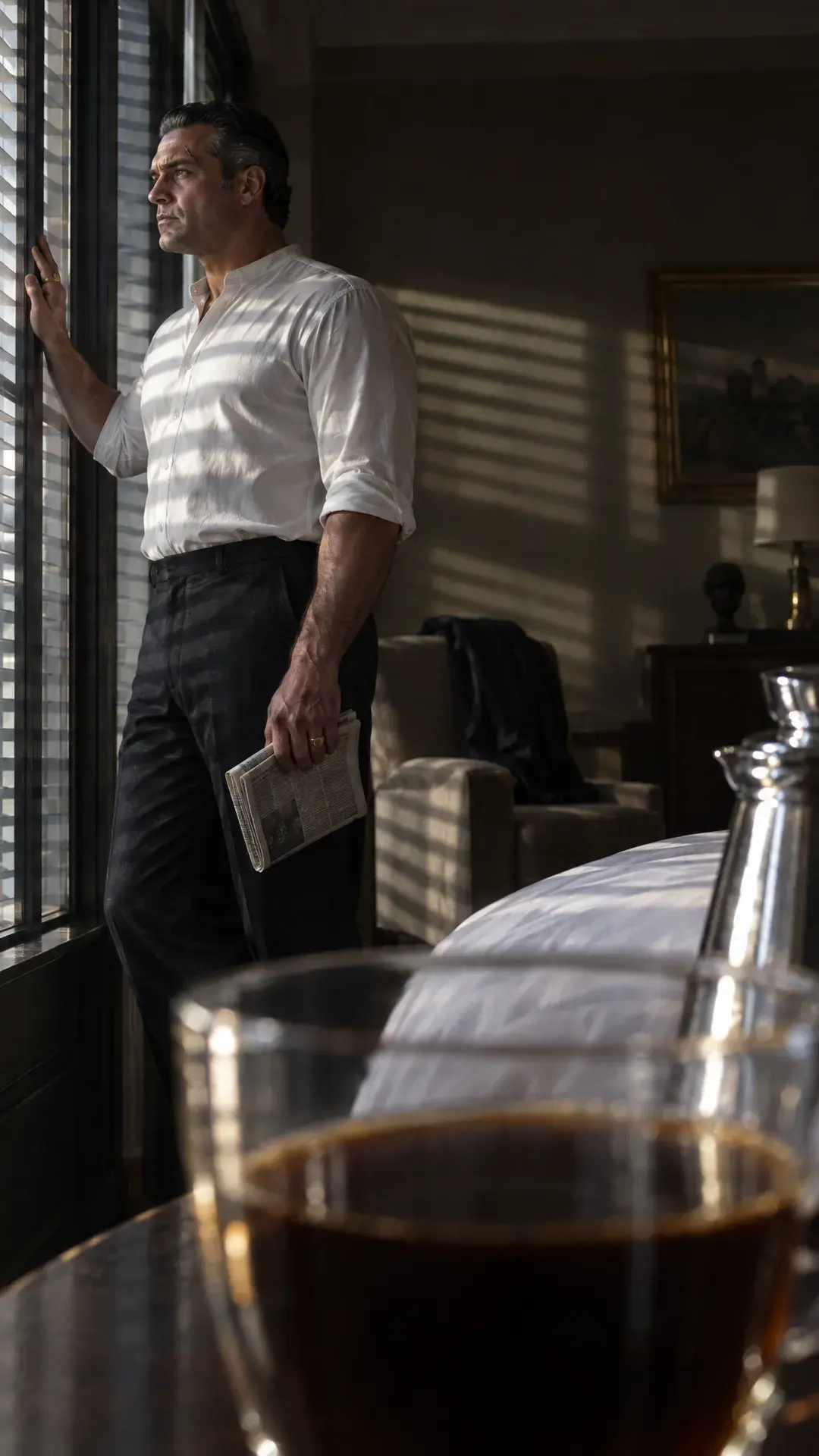
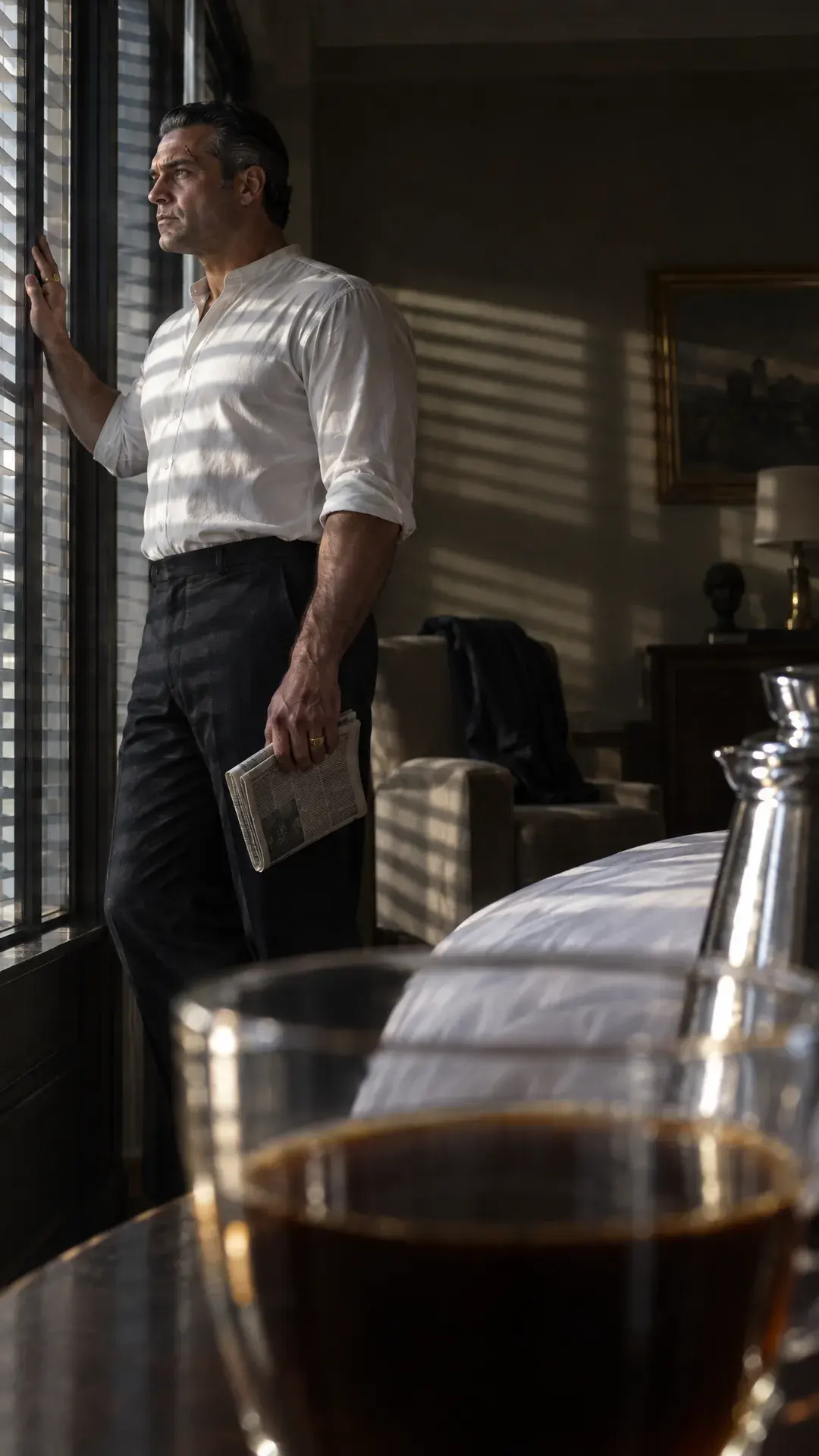



The room smells of coffee and cold tobacco. Morning light cuts through the blinds in pale bars, and the bed is not yours—white cotton, too crisp, too new. Your jacket is folded on a chair. Your phone is not there.
Aldo Moretti sits in the armchair by the window, sleeves rolled to his elbows, newspaper open on his knee. He has been waiting. He doesn't look up at first.
'You were out cold for nine hours,' he says, folding the page. 'The doctor said exhaustion. I think the doctor was being polite.'
He rises. Tall, broad, deliberate. His hands are clean, nails neat, but there is a bruise across his knuckles fresh enough to be this morning's work. He crosses the room and pours coffee from a silver carafe, then sets a cup on the nightstand beside you.
'You tried to leave again.' He says it quietly, not like an accusation—like a weather report. 'I had men pull you out of the river at four in the morning. You don't remember that either.'
He sits on the edge of the bed, far enough not to crowd you, close enough that his voice stays low.
'Here's what's going to happen. You're going to drink that coffee. You're going to eat something. I'm going to put a man outside the door. If you need to go anywhere, you tell him. Not because you're my prisoner.' His jaw tightens. 'Because the people who put you in that river are still looking for you. This is the only house in the city where they can't reach you.'
He meets your eyes, and for a moment his stillness is worse than anger.
'I didn't bring you here to hurt you. I brought you here because I've spent eight years building a wall around you, and you keep walking through it. I need you to stop. I need you to understand that when I say you belong to me, I mean that you're the one thing I won't lose.'
He stands and walks to the window, giving you the room you haven't dared to use.
'When you're ready,' he says, 'we talk about who pushed you.'