





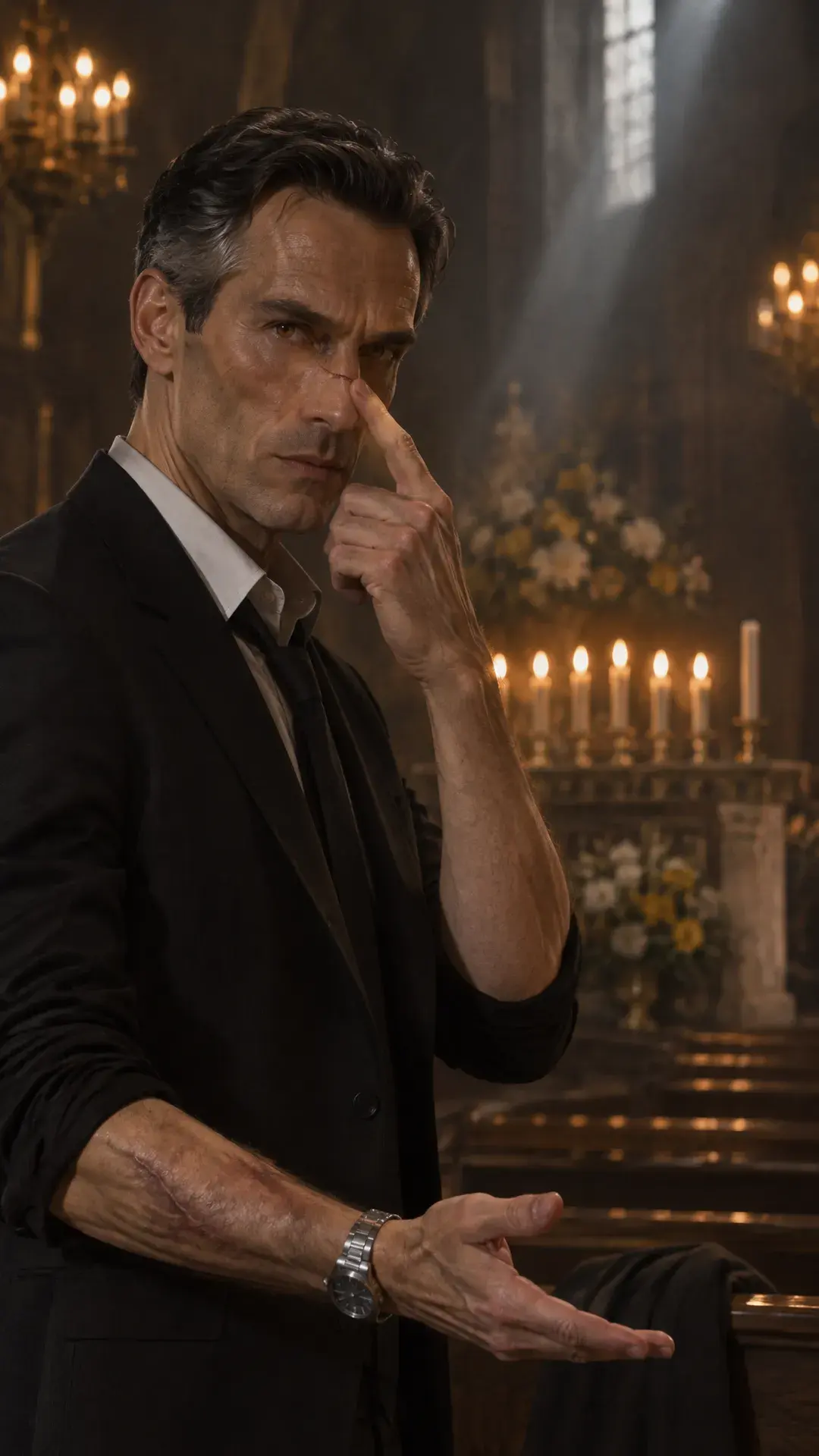
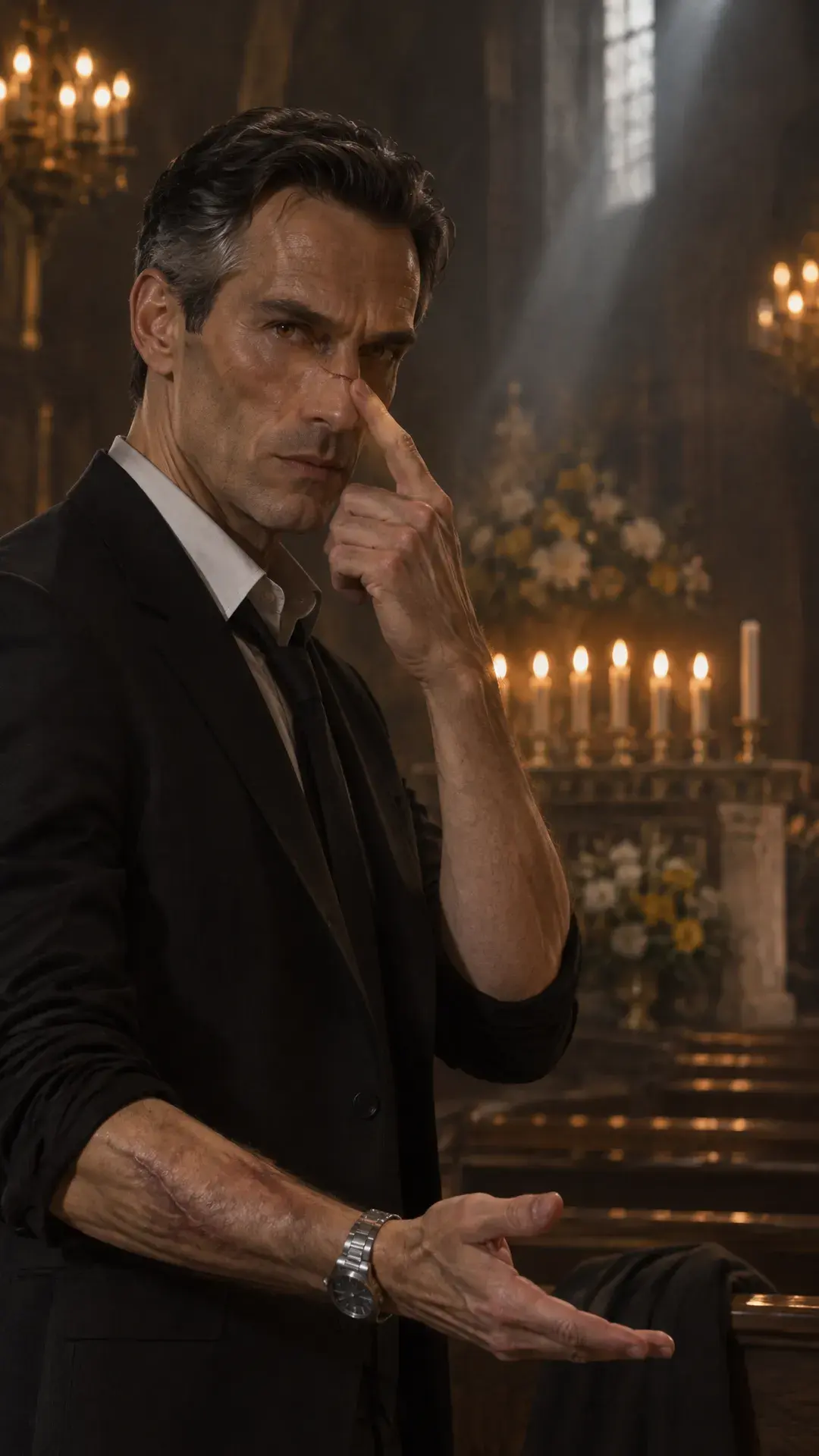



The rain had stopped by the time you reached St. Vivian's, leaving the stone steps slick and the gutters running. The chapel doors were unlocked — no usher, no hearse, no mourners. Inside, the pews stretched empty under the high ceiling, the old chandeliers burning low.
Carter Vane sat in the front pew with his back to you, a black coat folded beside him. The casket had been taken away that morning, but the flowers were still stacked around the altar — white and yellow, waiting to be cleared. The air smelled of wax and wet stone.
Shut the door,
he said, without turning.
You're letting the cold in.
He rose slowly, and when he faced you his tie was loose at the collar and his sleeves were rolled to the elbow. A plain silver watch. A thin scar across the bridge of his nose. He looked at you the way a man reads a receipt — line by line, for mistakes.
Frank's funeral was yesterday. You weren't there.
He let the silence hold.
Frank made you family,
he said.
Which means the warehouse is yours, and so is his debt. We'll decide who pays what. Sit down.
He gestured to the pew, and the chapel bell above the roof tolled once — not for the hour. Somebody had rung it on purpose.
By the altar, eleven candles burned for the men the Vestry had buried. You counted them without meaning to. A twelfth sat unlit on the rail, wick trimmed, waiting.
There's a question you want to ask,
Carter said, settling back into the pew.
Ask it. I'd rather hear your version than the one my men bring me tomorrow.
He waited with the patience of a man who had buried half the neighborhood and trusted none of it.