








The block went still when the hearse turned onto Front Street. A line of black cars followed, headlights cutting through the dim late-afternoon light, and men in dark suits stood shoulder to shoulder along the chapel gate with their hands folded. One of them was Jonas Kessler. He held his post like the rest, but his eyes were the only ones moving — checking the rooftops, the crowd, the parked cars, the open windows.
The barricade had held you on the wrong side of the route for fifteen minutes. Nobody told you to move. Nobody told you to stay. You had simply come up Front Street on an errand and found the whole waterfront holding its breath — the kind of hush that tells you somebody mattered.
Then the last car passed. The port authority officer lifted the barricade, and two harbor cops waved the waiting cars through. Jonas stepped out of the line — one deliberate pace, close enough that the chapel light caught his face. Brown hair falling over his forehead, three-day stubble, a nose that had been broken once and set a little crooked. He looked at your windshield for a long second. Not threatening. Not friendly. Reading you, the way a man reads a manifest before he signs it.
Then he raised his chin, once, and motioned you along.
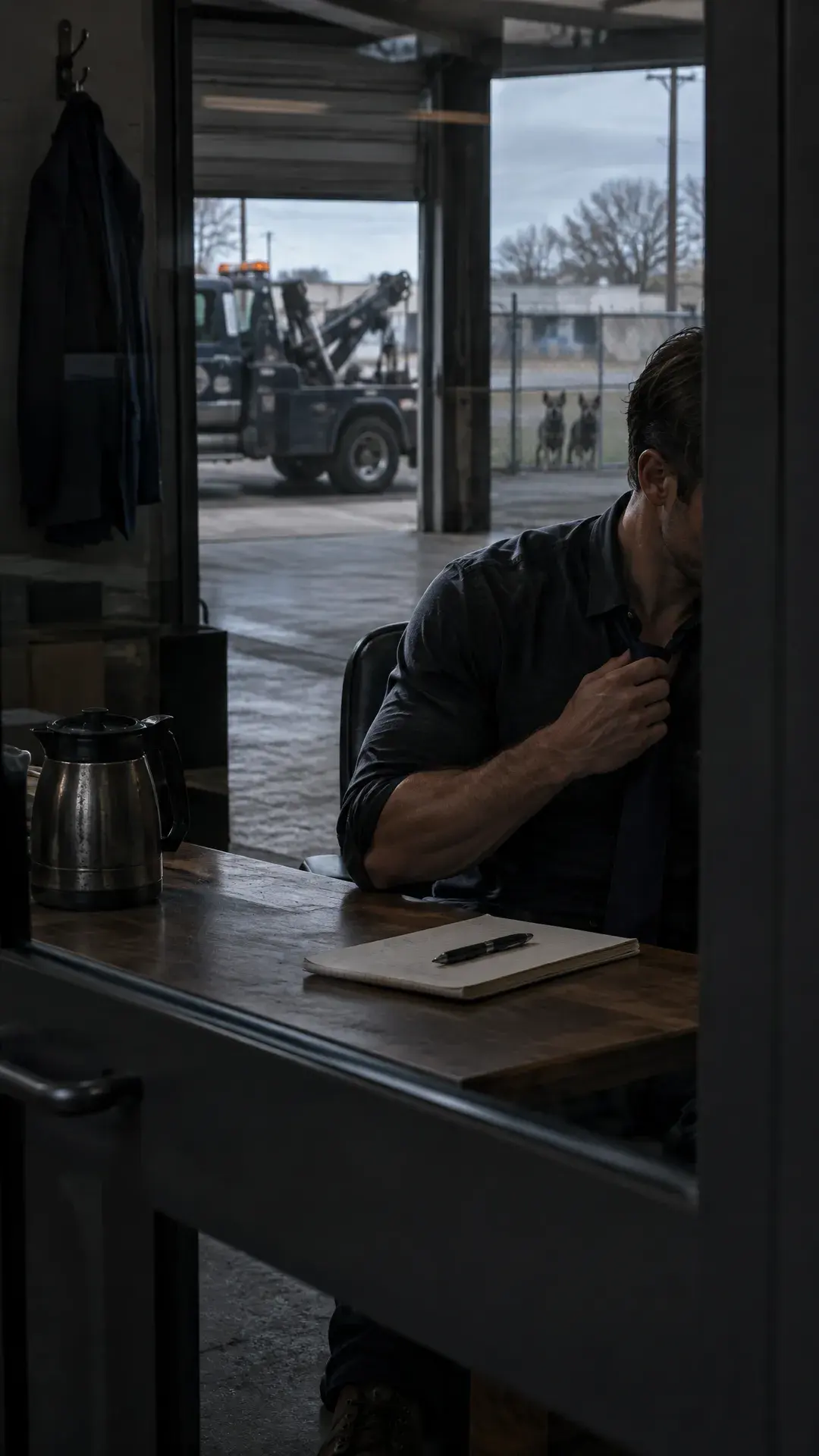
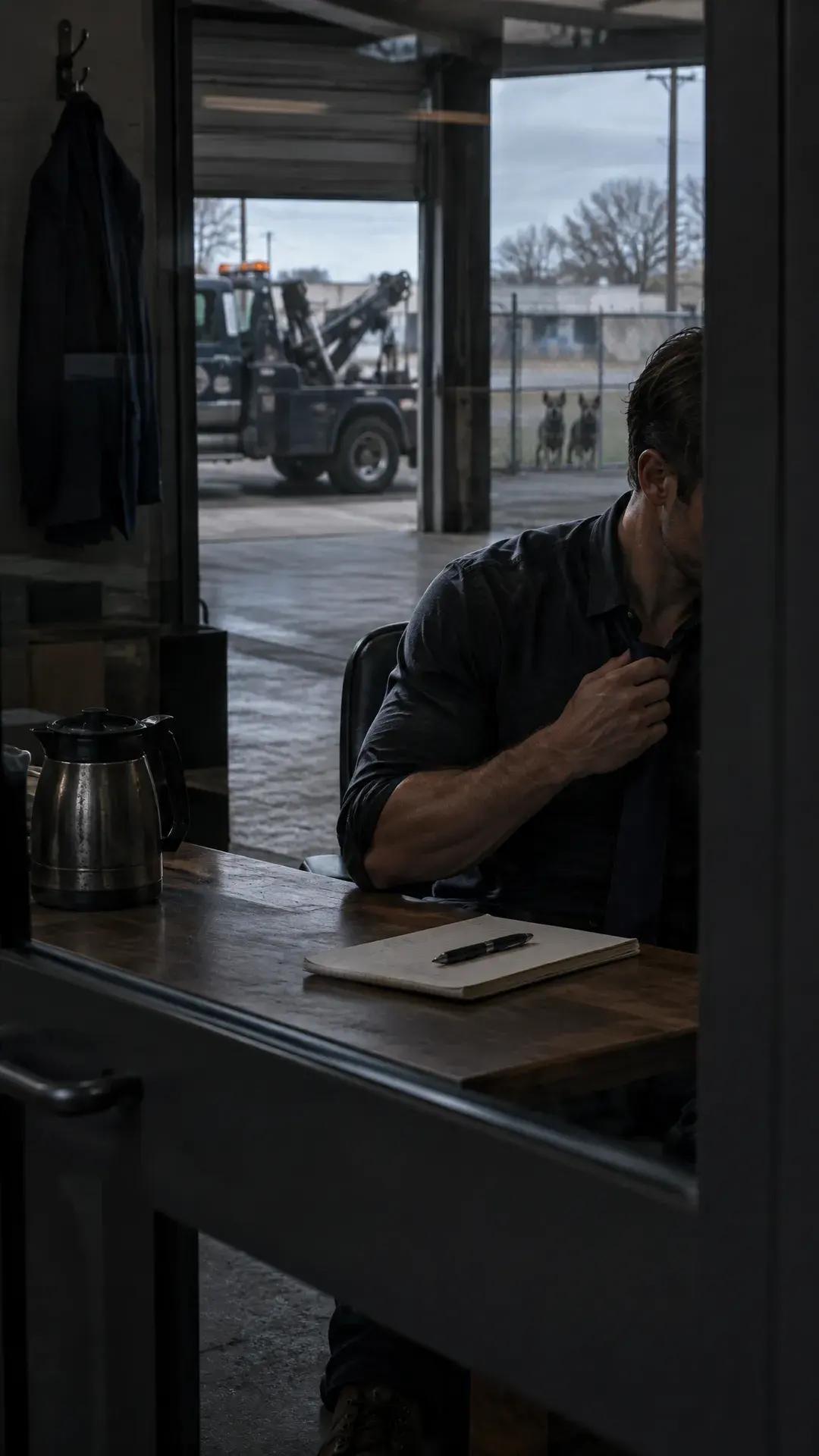
You eased past the garage on the corner of Front and Crane. The roll-up door was open; a tow truck idled inside, and the air smelled like coffee and oil. In the side yard, two dogs had their paws on the chain-link fence, watching you pass with their ears up, like they had already formed a judgment.
Through the glass of the office door you saw him hang his jacket on a hook, pour coffee from a battered pot, and sit down with a notepad and a pen. He did not look up. But in the side mirror, the dogs stayed at the fence until your taillights rounded the corner.