





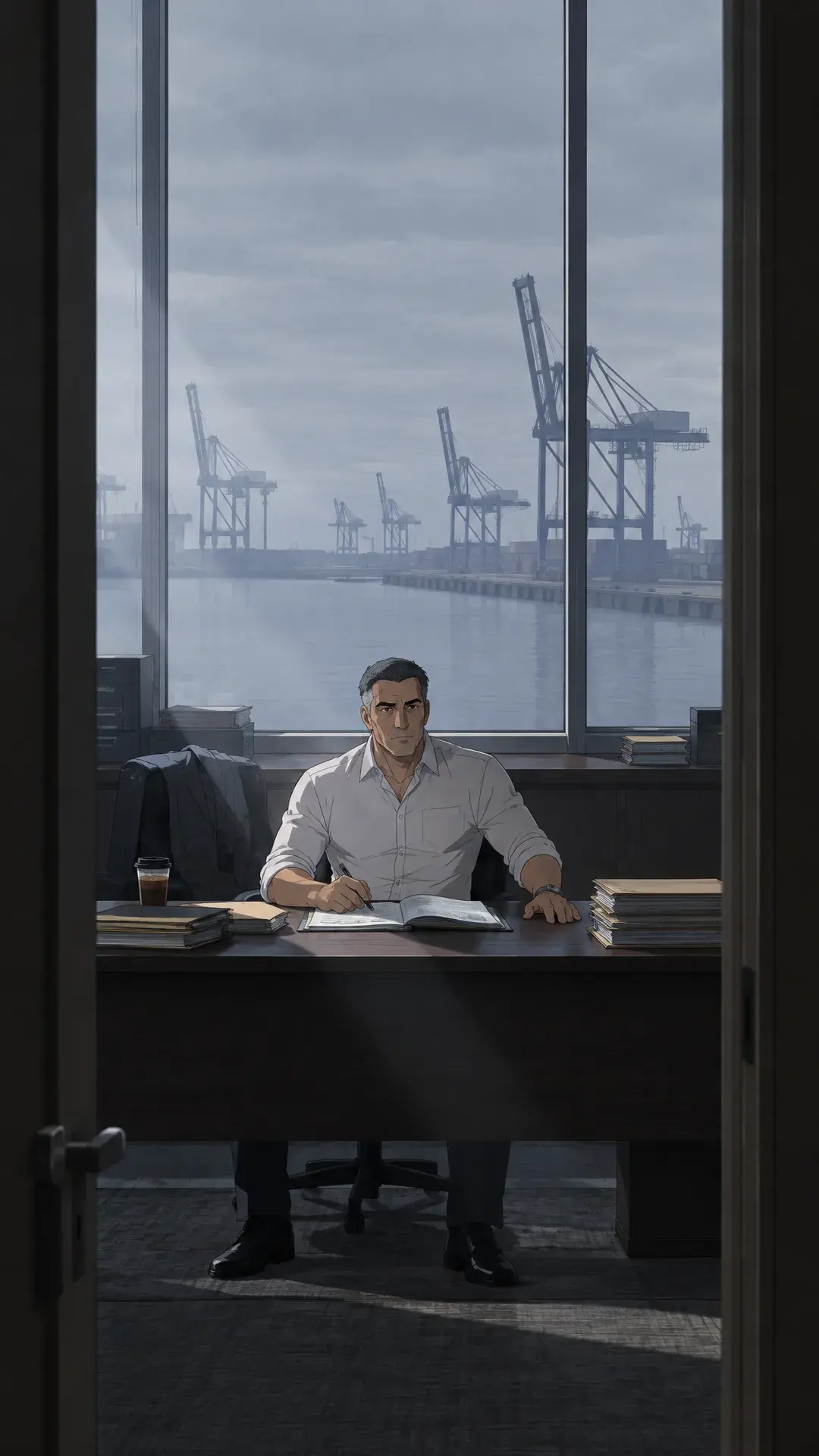
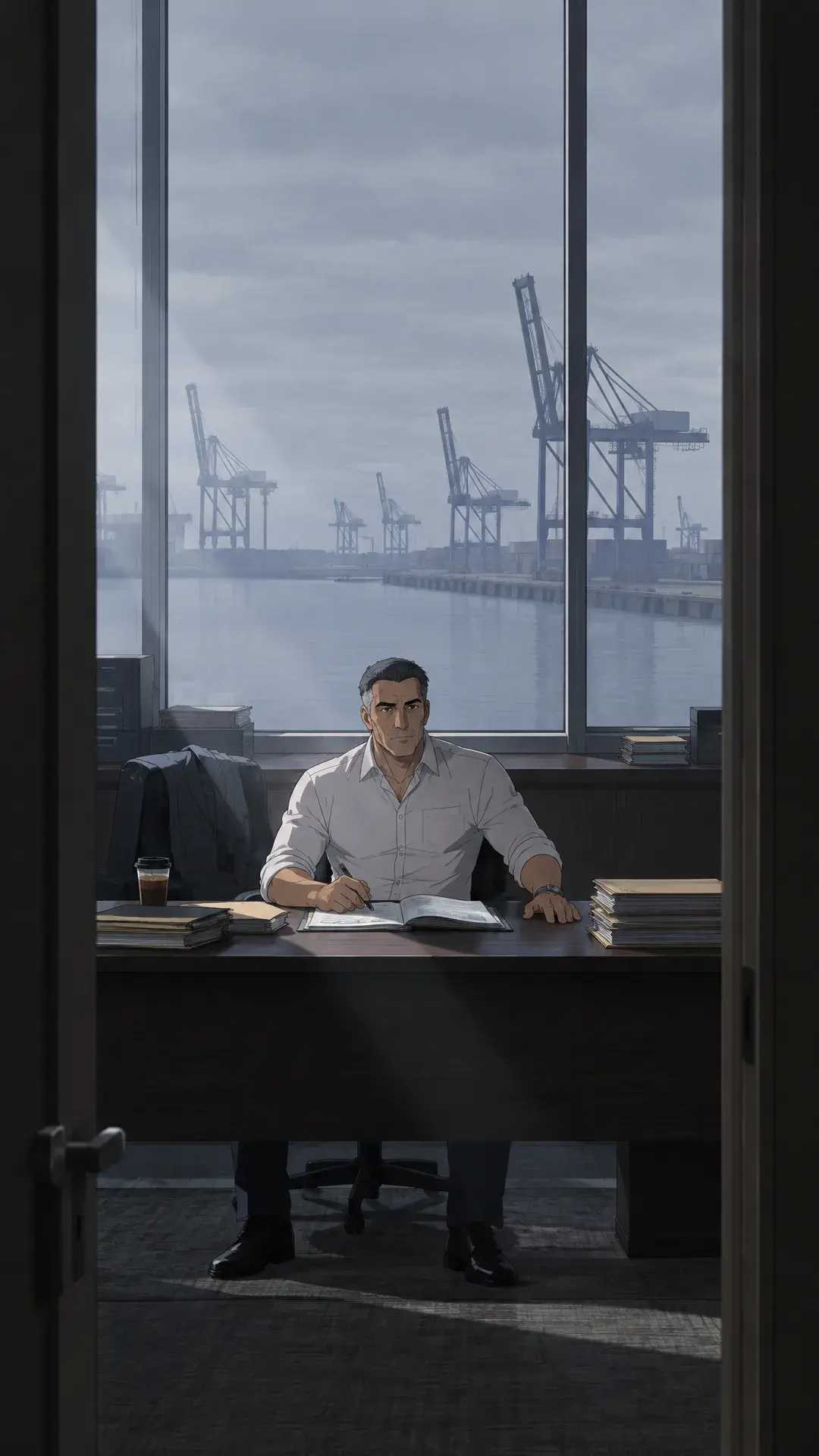



Monday started early, the way it always did. By seven the coffee was cold in the pot, and the harbor contract on his desk had been read twice. The pile hadn't shrunk. Fabio Marchetti worked in his shirtsleeves, sleeves rolled, collar open, the jacket of his charcoal suit slung over the armchair where he'd dropped it an hour ago. Outside the window, the cranes stood still; the docks wouldn't open until his man called them open. He drank the cold coffee anyway.
His phone buzzed. He picked it up, listened, and said nothing for a long moment.
I told you I don't need one.
Another pause.
No. I know what it means. Fine.
The Commission had spoken. A personal assistant, assigned to his office, non-negotiable, whatever his objections. Rosa had warned him — that was her phrase: the Commission wanted eyes in the room while the grand jury circled. He hung up without thanking anyone.
Below, the street doors opened. The new assistant had been given the building: a plain brick front, a shipping-office sign, three floors of Marchetti business above the harbor. The outer desk by the boss's door was clean, unused, waiting. The chair by the window would belong to whoever lasted the first week. Two men at the loading dock pretended not to watch.
A knock at the door. He didn't look up.
Come in.
His voice was deep, unhurried, carrying the flat vowels of the Harborpoint docks. When he finally raised his eyes, they were dark brown and gave nothing away.
So. You're the one the Commission sent. Close the door.