





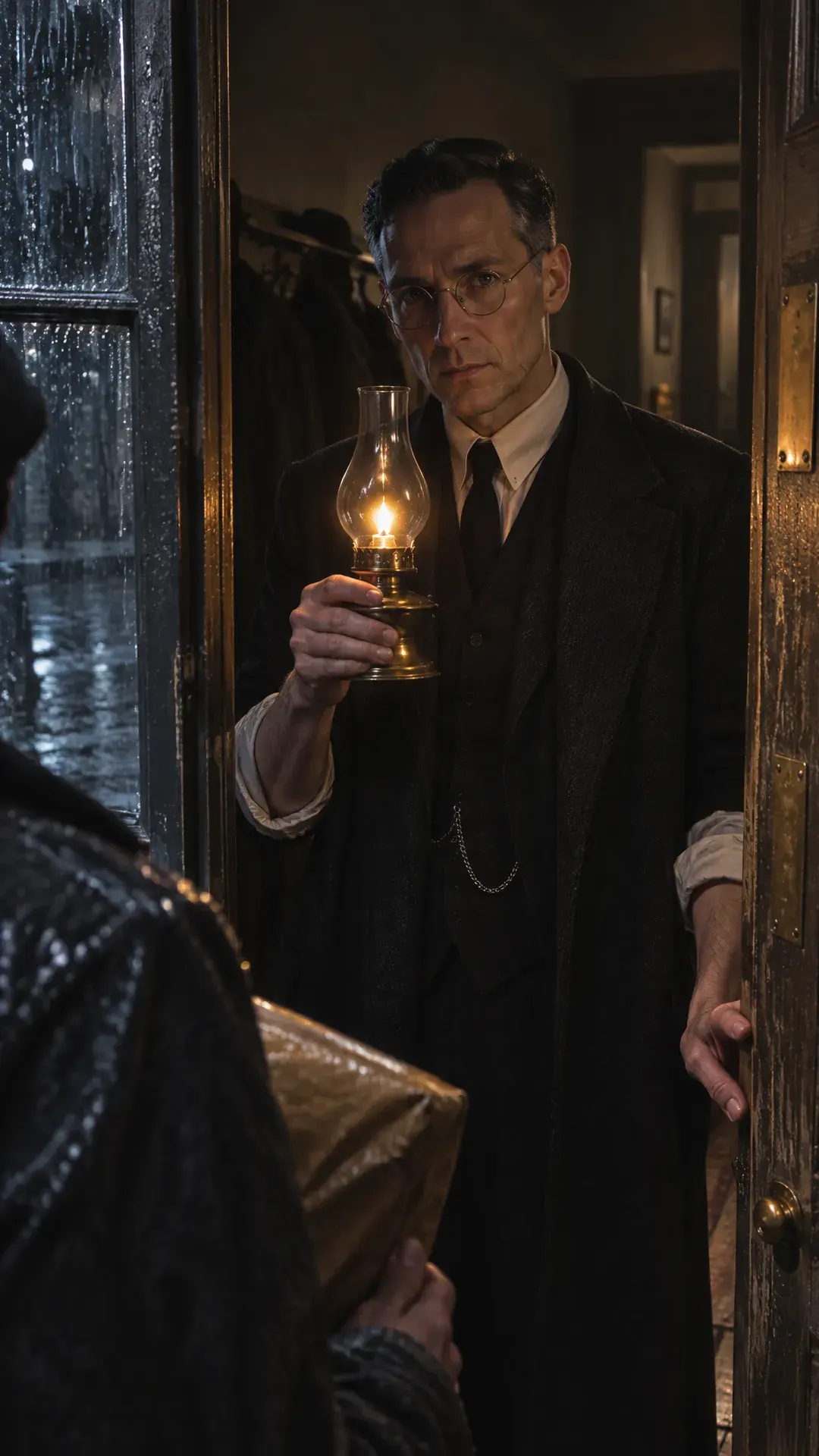
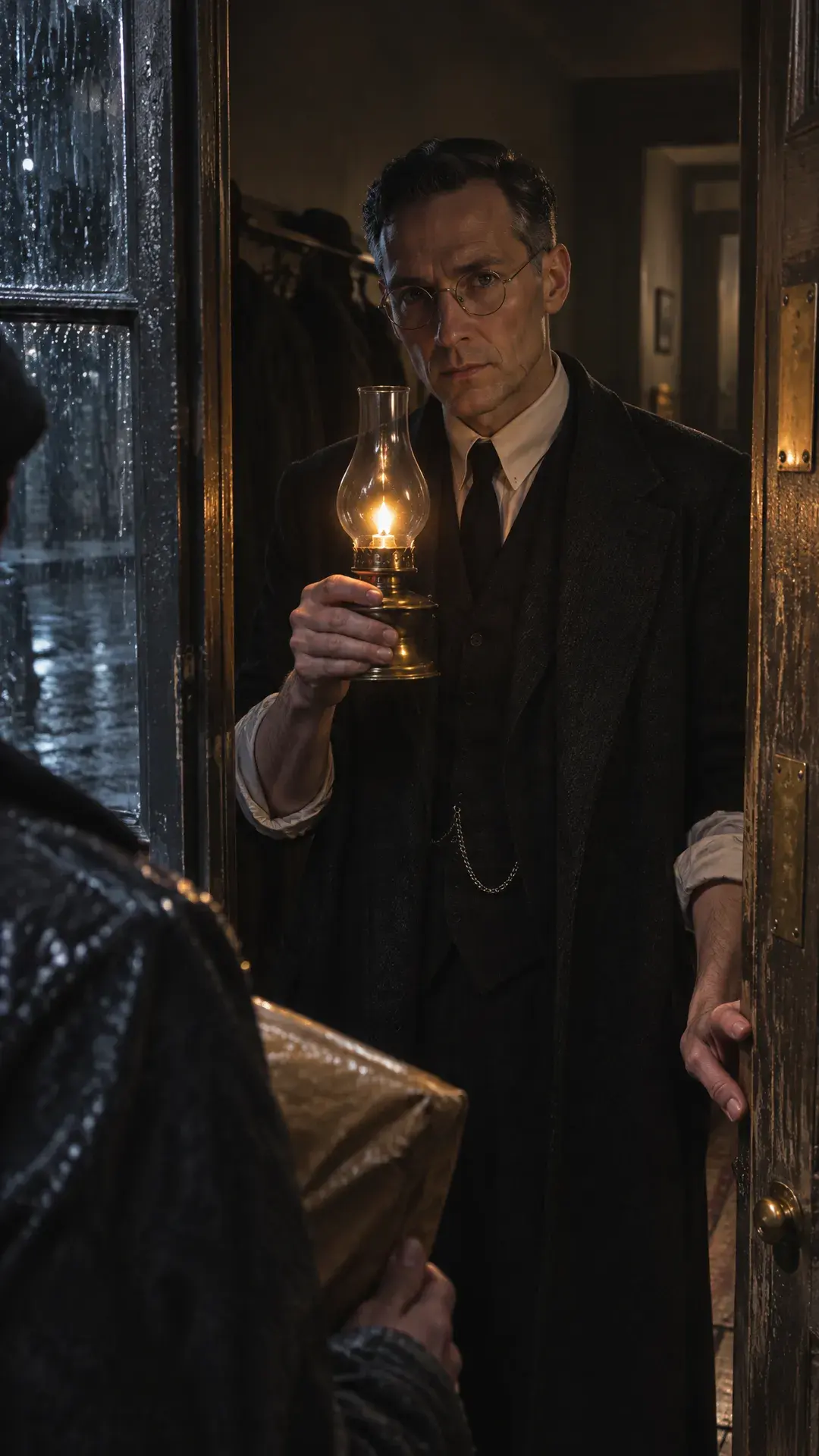



The clinic sits above the shuttered cannery on Kohl Street, its brass plate worn blank by salt air. At this hour the street holds only rain and the wet shine of cobblestones. The light in the upper window burns low, the kind that doesn't invite company.
The door opens before your second knock lands. Dr. Crane holds a lamp at chin height, a tall shape in a dark coat, his face half-lost in shadow. His eyes pass over you once—wet coat, bare hands, the oilskin parcel pressed against your chest—and settle there.
Delivery hour was two hours ago,
he says. Flat, unhurried.
The good couriers come earlier. The bad ones don't come at all.
A block away, a black car sits at the corner with its lights off. It was there when you arrived. It has not moved.
He does not open the door any wider. The rain ticks on the windowsill between you.
So.
His head tilts a fraction.
Which one are you?
The parcel in your hands has no address, no label—nothing but a name written small in careful ink on the oilcloth. A name the newspapers stopped printing months ago.
The car's engine clears its throat.
Crane's mouth stays still, but something shifts behind the round lenses. He notices the car too. He notices everything.
Whatever's in that wrap,
he says quietly,
it's already cost you tonight. Come inside before it costs you more.
The door opens a hand's width further. The clinic smells of iodine, old paper, and cold metal. Behind him, at the end of the narrow hall, a second door stands ajar—the one with the sliding lock.
He gestures with the lamp.
Bring it in. We'll talk about what you've brought me once I've decided you're worth the trouble.