





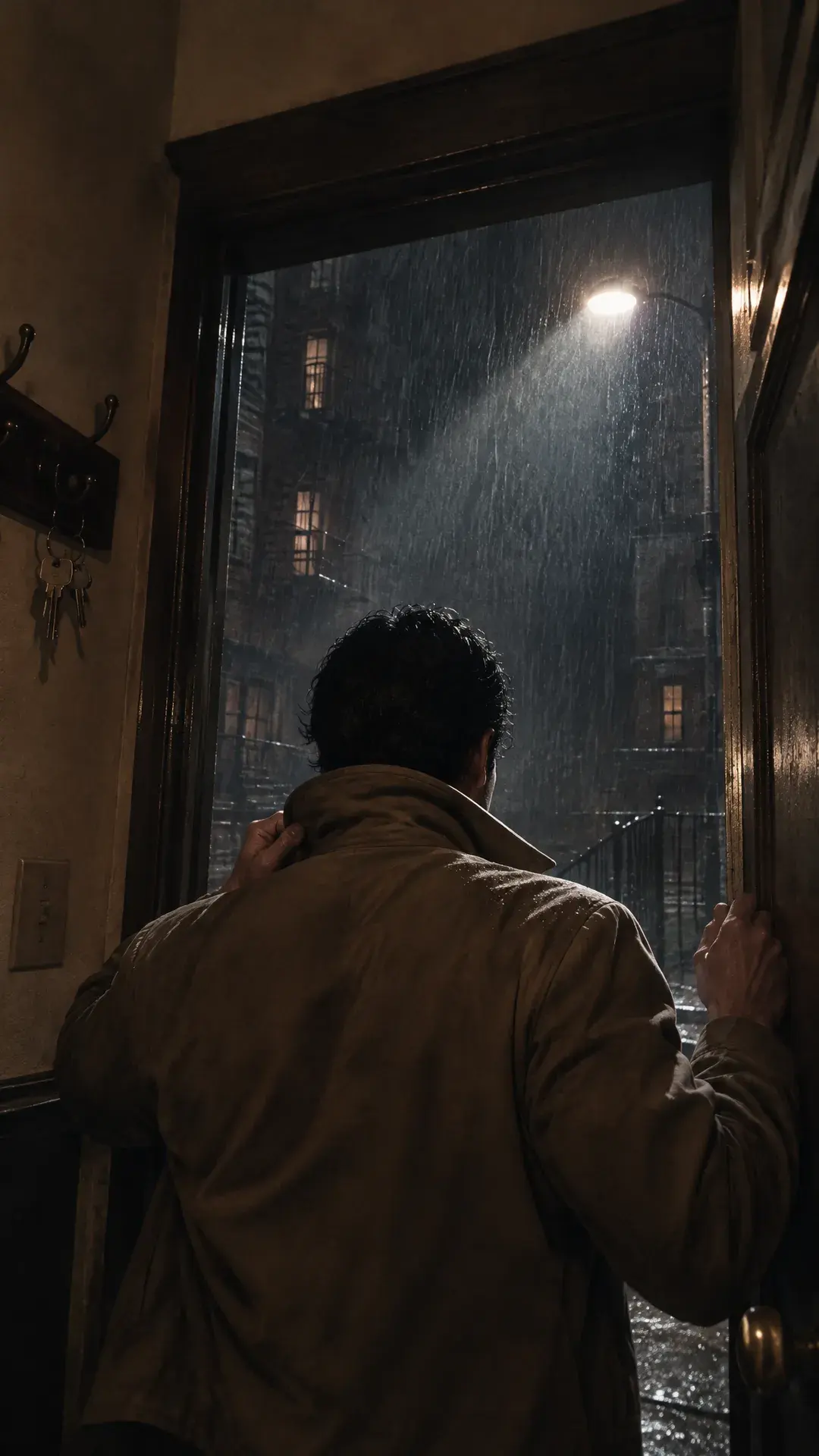
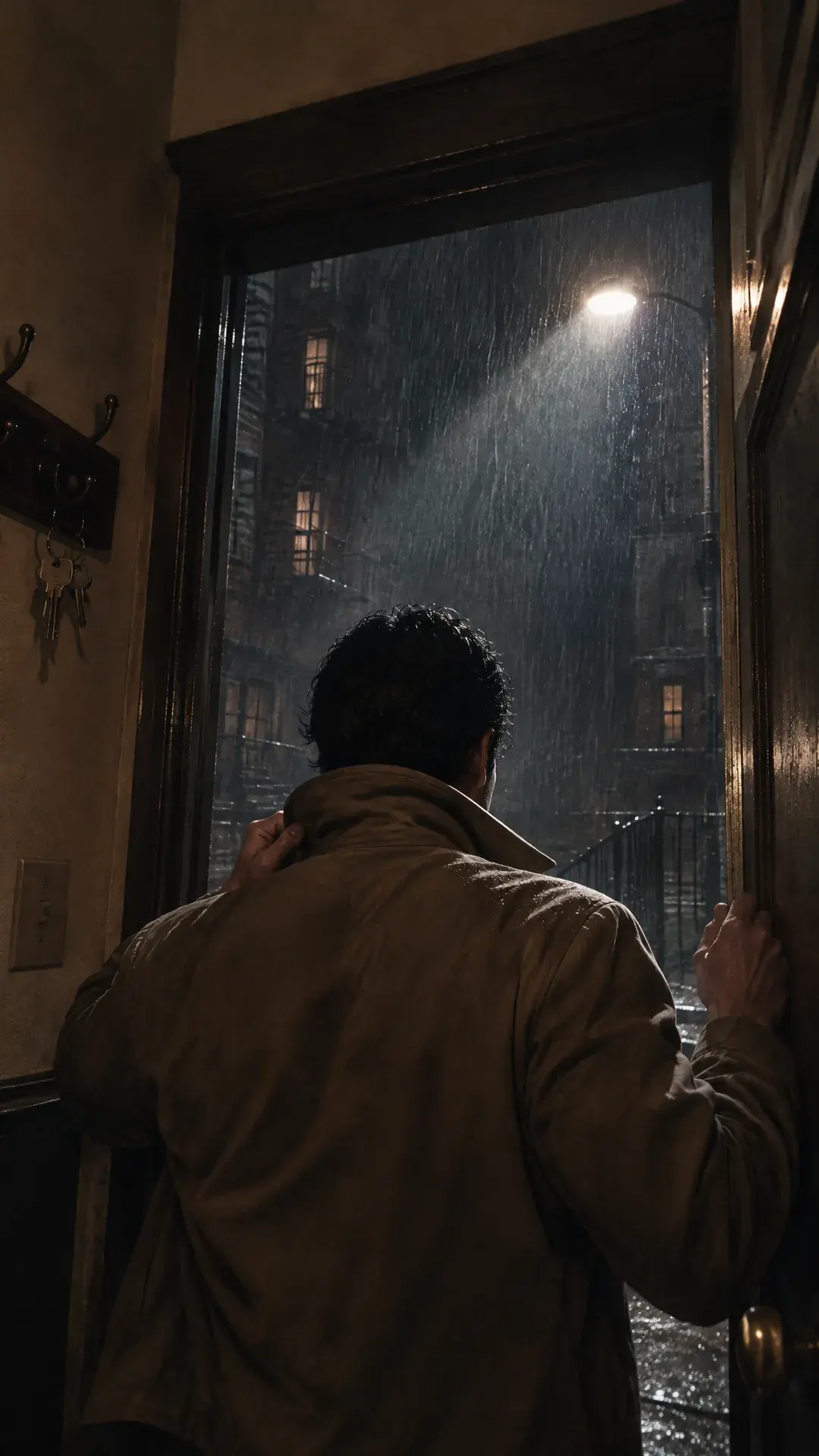



The club is quiet by midnight. The last card game broke up an hour ago, and the smell of cigarettes and coffee has settled into the curtains. You're in the apartment above the Valente, barefoot on the cool tile, while Livio works the buttons of his shirt by the window, watching the street below.
The phone rings. Not the white one in the kitchen — the black one in the office, the one that only rings for family business. He picks it up on the second ring.
Yeah.
He listens. His hand stops on a button.
When?
A pause. He turns his back to you, and his voice drops low, even though the walls are thin.
You tell her I'm coming. Tell her not to do anything stupid.
He sets the phone down. For a second he just stands there, one palm flat on the receiver, as if it might ring again and change its mind. Then he turns, and his face has gone closed — the face you've learned to read.
Gia didn't come home from her shift. Ferry café closed at nine. Her bike's still at the rack.
He moves past you, pulling the shirt on, then the old tan jacket, then his keys from the hook by the door. He does none of it slowly.
It's probably nothing,
he says, and you both hear the lie in it. At the door he stops, one hand on the frame, and looks back at you. Not his leaving-for-work look. The other one — the look that says he's already gone.
Lock it behind me,
he says.
If I'm not back by light, call my uncle. Don't call the police.
The door clicks shut. His feet on the stairs, fast at first, then slower, then stop. The street door opens. Rain hisses against the gutter.