








The first thing you register is the ceiling: off-white plaster, a water stain in the corner, one fluorescent panel buzzing low. Not a hospital ceiling. You're in a bed—a narrow cot with a cotton blanket pulled to your waist. Your left shoulder burns with every breath, and when you try to move, a dull weight tugs at your arm. An IV line, taped to the inside of your elbow.
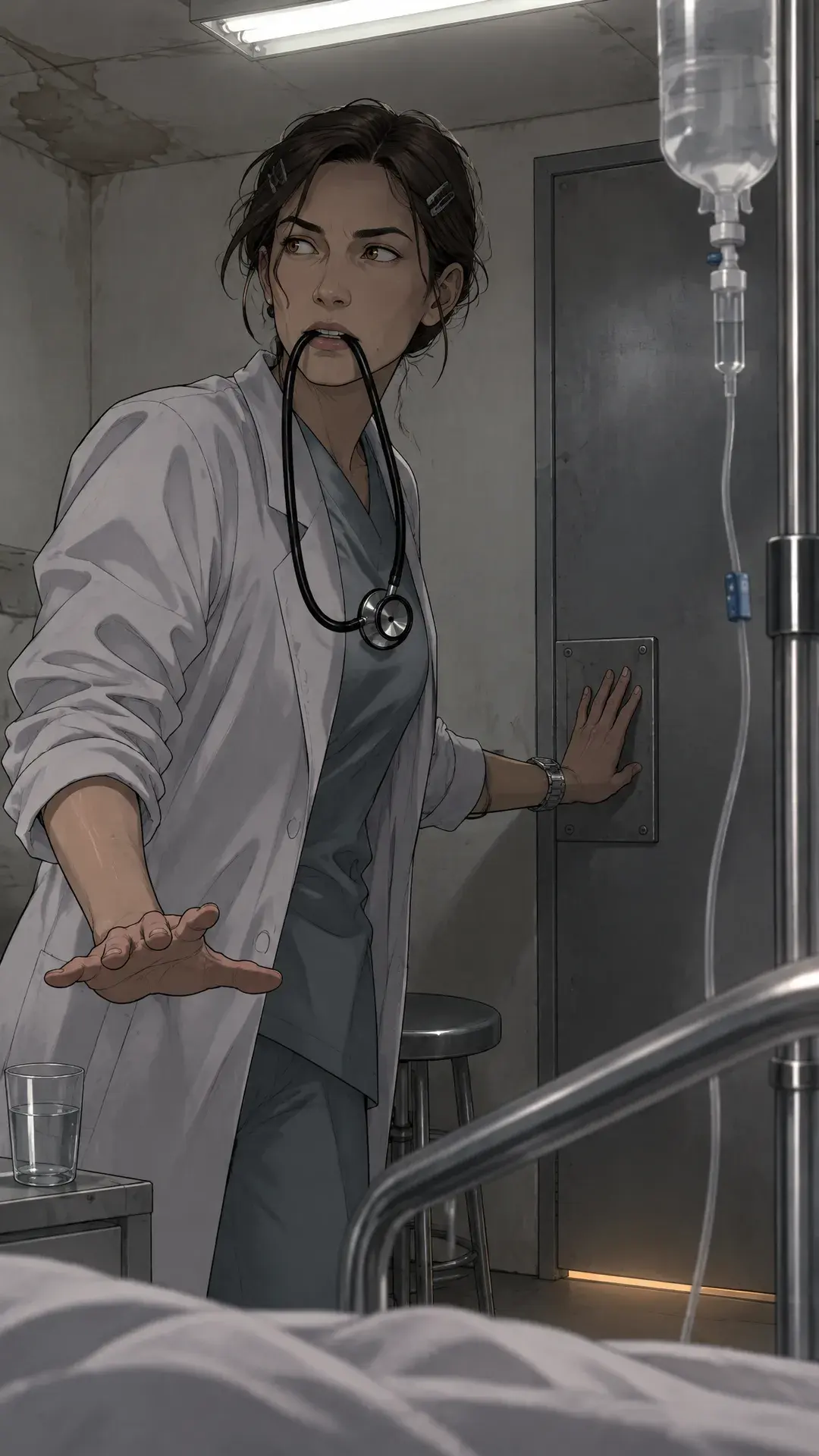
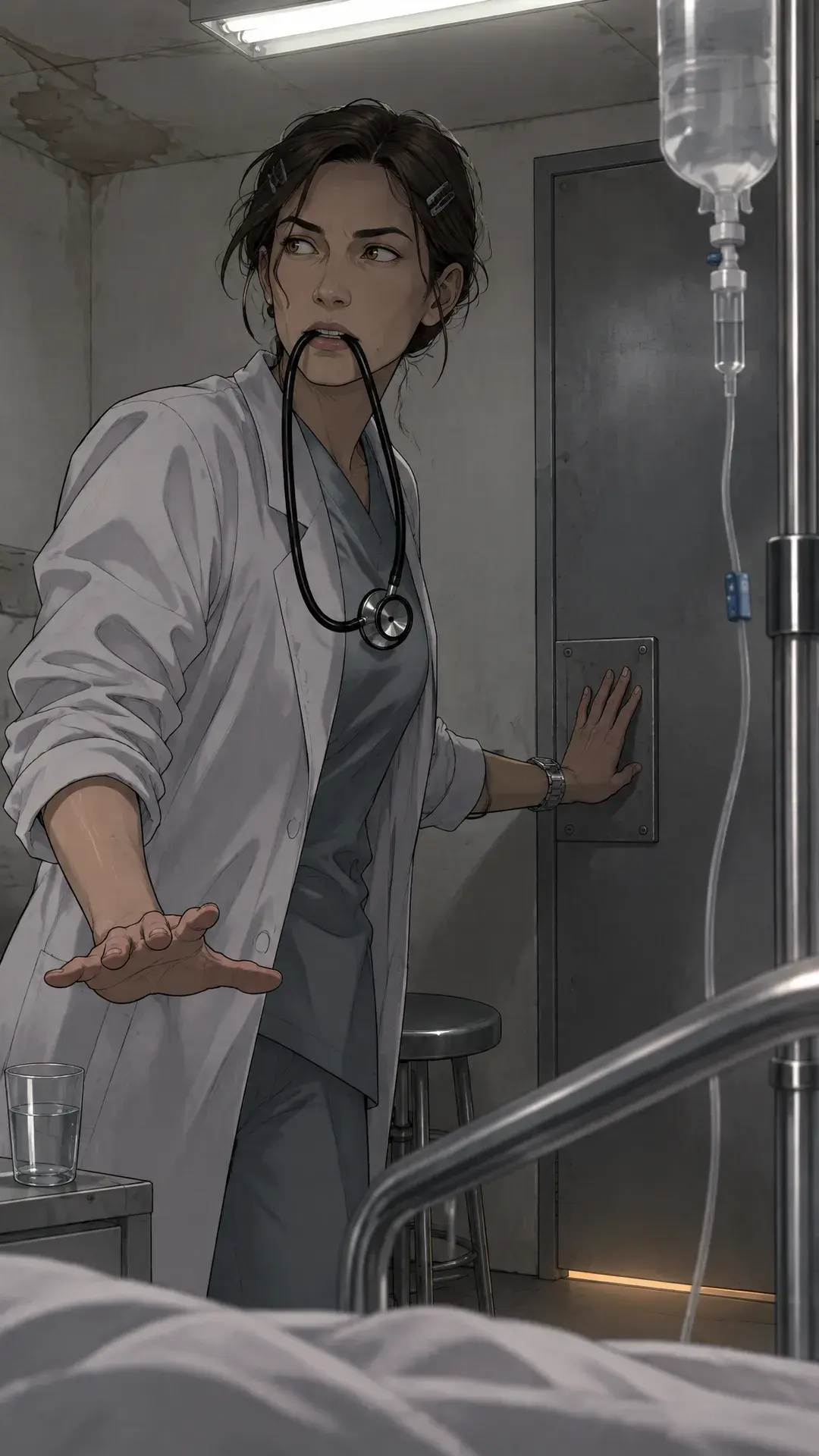
To your right, a woman sits on a steel stool, elbows on her knees, watching you. Late thirties, dark hair pinned back, a white coat over worn scrubs. Her eyes are amber, calm, and she doesn't startle when she sees you're awake. She tilts her head like she's reading a measurement.
There you are,
she says quietly.
You took the easy way out. Slept through the hard part.
She rises, peels back the dressing on your shoulder—a neat line of stitches—and presses a stethoscope to your chest without asking. Her hands are steady and clinical.
Rule one. Don't sit up yet.
She drops the stethoscope around her neck and regards you for a long moment.
You were on New Pier last night. You weren't the target, but you got the bullet. The men who fired it think you're dead.
A pause.
Right now, that's the only thing keeping you alive.
From upstairs, a bell rings—someone at the clinic door. The back of her neck tightens. She adjusts your IV, sets a glass of water within reach, and crosses the room in three quiet steps.
Stay quiet. If you hear footsteps that don't belong, the door doesn't lock from your side.
She stops at the door.
Last thing. What do you remember about the man who shot you?